How to Grow Hazelnut in Australia
Updated September 2026
A cool climate nut that fits a backyard, as long as it has a partner
Hazelnuts, also called filberts, grow as a multi-stemmed bush or a small tree of 3 to 5 m. They are one of the few nut crops that fit an ordinary backyard, they bear within a few years, and in winter they are hung with long yellow catkins when little else in the garden is flowering.
They are also strictly a cool climate crop, and every hazelnut needs a compatible partner to set nuts. This guide covers where they grow in Australia, choosing a pair of varieties, planting, pruning, pests and harvest.
When to Plant in Your Region
Hazelnuts are planted as dormant bare-root or potted plants in winter. Plant from June to August in Melbourne & Victoria, Adelaide & SA, Tasmania and Canberra & ACT. It is not suited to South East Queensland, Northern Rivers NSW, Sydney & Coastal NSW, Perth & WA, North Queensland and Darwin & Top End. Choose your region below for the local calendar and any regional note.
Climate and Where It Grows in Australia
Hazelnuts want long cold winters and mild summers. Without enough winter cold the flowers do not develop properly, and hot, dry summer winds scorch the leaves and give poorly filled nuts.
The site lists hazelnuts as suited to Melbourne, Adelaide, Tasmania and Canberra, planted in winter. Within those regions the cooler, moister spots do best, such as Tasmania, the Victorian ranges and the Adelaide Hills. They are not reliable on the Sydney coast, where the upper Blue Mountains is the nearest district that suits them, or on the Perth coastal plain, where only the cooler south west works. South East Queensland, the Northern Rivers and the tropics are too warm.
- South East Queensland: not suited. Not viable in SEQ. Needs long cold winters and mild summers.
- Northern Rivers NSW: not suited. Not viable. Hazelnuts need long cold winters and mild summers. Too warm and humid here.
- Sydney & Coastal NSW: not suited. Not reliable on the coast. Needs cold winters and mild summers; the upper Blue Mountains is the nearest district that suits it.
- Melbourne & Victoria: plant from June to August.
- Adelaide & SA: plant from June to August.
- Perth & WA: not suited. Not reliable on the coastal plain. Too little chill and too much summer heat. Only the cooler south west suits it.
- Tasmania: plant from June to August.
- Canberra & ACT: plant from June to August.
- North Queensland: not suited. Not viable. Hazelnuts need long cold winters. Impossible in the tropics.
- Darwin & Top End: not suited. Not viable. Hazelnuts need long cold winters. Impossible in the Top End.
Choosing a Variety
Ennis
A main crop variety with large nuts and heavy crops. It needs a compatible pollinator flowering at the same time.
Barcelona
An old, dependable main crop variety with round nuts, widely planted for generations. Also needs a partner.
Tonda di Giffoni
An Italian variety with round nuts whose skins rub off easily after roasting, which bakers value. Plant it with a compatible pollinator.
Planting
Plant in winter. In cool districts give hazelnuts full sun; where summers run warmer, a spot with afternoon shade and shelter from hot northerly winds is better. They like moist, rich, well drained soil with a pH of about 6 to 7.
- Spacing. Allow about 4 m between plants.
- Plant the pair together. Put your two varieties in the same part of the garden. Pollen moves on the wind in midwinter, and plants close together pollinate far more reliably.
- Planting. Set the plant at the depth it grew in the pot, water in and mulch thickly. Hazelnut roots are fairly shallow and suffer when the top of the soil dries out.
Care
Watering
Keep the soil evenly moist from spring through summer, especially while the nuts are filling. A thick layer of mulch does a lot of this work. Dry spells in summer are the most common cause of small, empty nuts.
Feeding
Spread compost or a balanced fertiliser in late winter. Hazelnuts do not need rich feeding, and too much nitrogen gives leaf at the expense of nuts.
Pruning
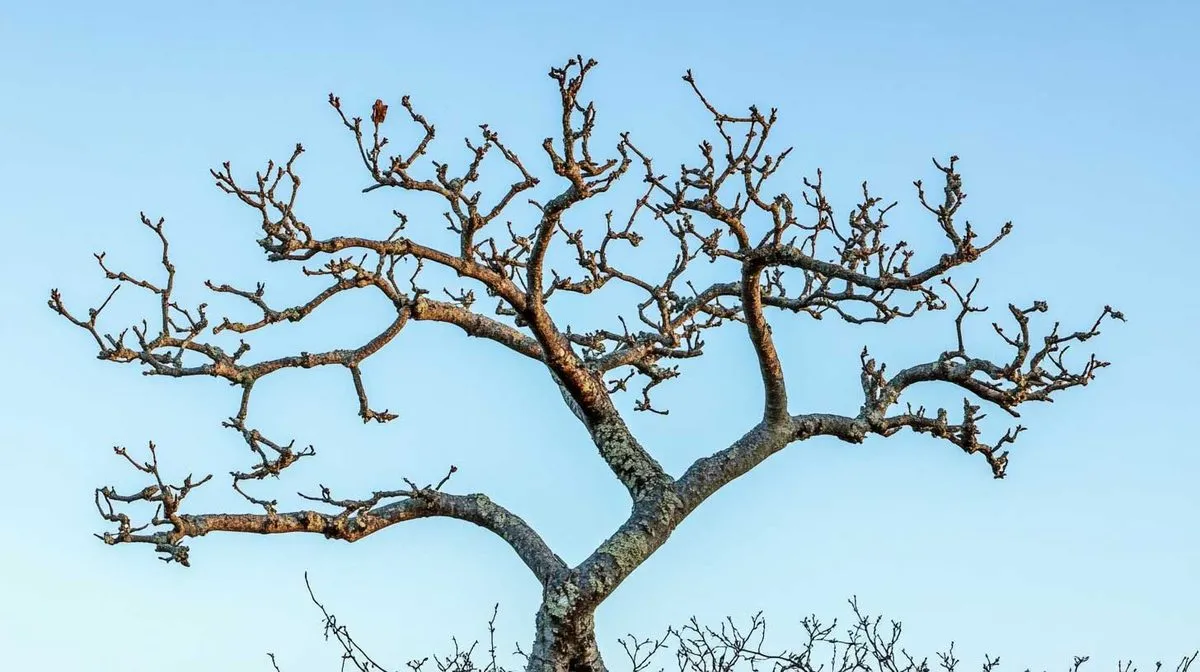
Decide early whether you want a bush or a single trunk tree. Hazelnuts send up suckers from the base every year. For a tree, pull or cut these off each season; for a bush, keep four to six strong stems and remove the rest. Each winter, take out dead and crossing wood and open up the centre so light gets in. Nuts form on growth made the previous season, so avoid heavy cutting that removes it all.
Pollination
Hazelnuts flower in the middle of winter. The catkins release pollen on the wind, and the female flowers are tiny red tufts at the tips of the buds. Every variety is self-incompatible, and some varieties cannot pollinate each other either, so you need two compatible varieties whose flowering overlaps. Buy from a nursery that sells them as matched pairs, and ask which pollinator suits your main variety.
Pests and Diseases
- Birds. Cockatoos and crows take nuts before they are ripe. Netting a bush is practical; netting a tree is harder.
- Rats and possums. Both take fallen nuts, which is another reason to gather them every few days.
- Aphids. Occasional on new growth in spring. They rarely need treatment on a healthy plant.
The plant library lists eastern filbert blight. It is a serious hazelnut disease in North America but is not known to be established in Australia, which is a good reason to buy plants from reputable local nurseries rather than bringing in material from elsewhere. In wet springs, look out for dead shoot tips and cut them out in dry weather.
Harvest and Storage
Hazelnuts ripen from late summer into autumn. The husks turn brown and loosen, and the nuts drop to the ground. Gather them every few days, before birds and rodents do.
Spread the nuts in a single layer somewhere dry, shaded and airy for about two weeks. They are ready when the kernel is crisp. In the shell they keep for months in a cool, dry, rodent-proof container.
Track Your Hazelnuts
Add hazelnuts to your garden in the Planting Season app and get reminders for planting, care and harvest, tuned to your region.
Open the App →Frequently Asked Questions
When should I plant hazelnuts in Australia?
It depends on your region. Plant from June to August in Melbourne & Victoria, Adelaide & SA, Tasmania and Canberra & ACT. It is not suited to South East Queensland, Northern Rivers NSW, Sydney & Coastal NSW, Perth & WA, North Queensland and Darwin & Top End. Choose your region in the calendar on this page for the local window.
Do I need two hazelnut plants?
Yes. Every hazelnut variety is self-incompatible, so a single plant will flower but set few or no nuts. Plant two compatible varieties whose flowering overlaps, ideally bought as a matched pair.
How long does a hazelnut take to produce nuts?
Hazelnuts usually begin bearing in about four years from planting, with crops building after that. They bear sooner than most other nut trees.
Can I grow hazelnuts in Sydney or Perth?
Not reliably on the coast. Both lack the long cold winter and mild summer hazelnuts need. Around Sydney the upper Blue Mountains suits them, and in Western Australia only the cooler south west does.
See also: Hazelnut in the Plant Library, and How to Grow Chestnut for a larger cool climate nut tree.