How to Grow Kangkong (Water Spinach) in Australia
Updated June 2026
A fast-growing tropical green that thrives in heat and wet conditions
Kangkong (Ipomoea aquatica) is a fast-growing tropical green used across Southeast Asian cuisines. You might also see it called water spinach, ong choy, morning glory spinach, or swamp cabbage. The hollow stems and arrow-shaped leaves are stir-fried, added to curries, and tossed through soups. One planting keeps producing shoots for months through cut-and-come-again harvesting.
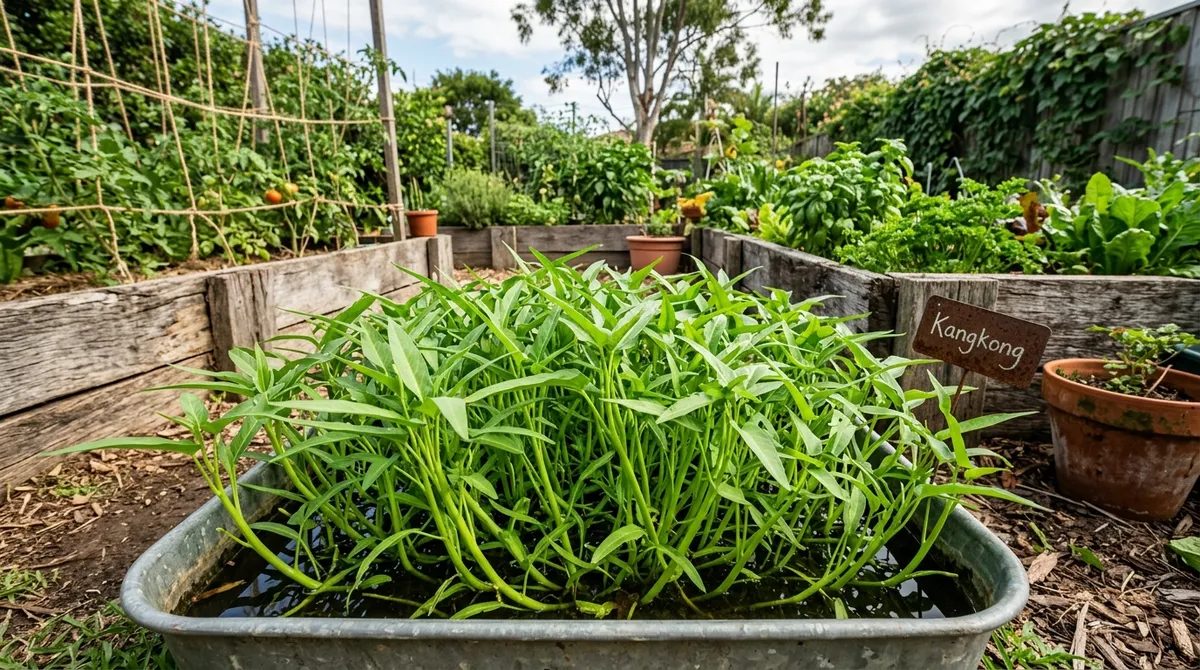
Kangkong grows in standing water, boggy ground, or ordinary moist garden soil. It loves heat and humidity. A pot sitting in a saucer of water on a sunny deck is all you need. The plant grows so fast in summer that you can be harvesting within 4 to 6 weeks of sowing.
What it looks like as it grows


🌱 Plant profile: Kang Kong (Water Spinach), with sowing times for your region, companion plants and common pests.
When to Plant in Your Region
Varieties
Green Stem
The standard variety sold at Asian grocery stores. Stems are green, tender, and snap easily. Leaves are softer and cook down quickly. This is the preferred type for stir-fries and soups. Grows slightly faster than white stem types.
White Stem
Thicker, crunchier stems with a paler green to white colour. Holds its texture better during cooking, making it suited to longer braises and hot pot dishes. Slightly slower growing but produces heavier harvests per cut.
How to Grow Kangkong
Starting from seed
Soak seeds in warm water for 24 hours before sowing. This softens the hard seed coat and speeds up germination. Sow seeds 1 cm deep in pots or trays filled with seed-raising mix. Keep the mix wet, not just moist. Seeds germinate in 7 to 14 days at temperatures above 20 degrees.
Transplant seedlings into their final position once they have 4 to 6 leaves. Space plants 15 to 20 cm apart.
Starting from cuttings
Kangkong roots easily from stem cuttings. Buy a fresh bunch from an Asian grocer and trim each stem to about 15 cm, removing the lower leaves. Place the cuttings in a jar of water on a sunny windowsill. Roots appear within a week. Plant the rooted cuttings into pots or garden beds once roots reach 3 to 5 cm long.
Soil and position
Kangkong grows in any soil type, provided it stays consistently wet. Rich, organic soil produces the best results. Mix plenty of compost through the soil before planting. Full sun is ideal. Kangkong needs at least 6 hours of direct sunlight. It tolerates light shade but grows much more slowly.
Watering
This is the one vegetable you cannot overwater. Kangkong evolved in swamps, riverbanks, and flooded paddies. Keep the soil saturated at all times. The easiest method in containers is to stand the pot in a deep saucer and keep the saucer topped up with water. In garden beds, water daily in summer and mulch heavily to retain moisture.
Feeding
Kangkong is a heavy feeder during its rapid growth phase. Apply a nitrogen-rich liquid fertiliser (fish emulsion or seaweed solution) every 2 weeks. Blood and bone worked into the soil at planting time provides a slow-release nitrogen base. Consistent feeding keeps the stems tender and the leaves large.
Growing Kangkong in Containers
Container growing is the recommended method in Australia. It prevents kangkong from spreading beyond your garden and makes it easy to manage water levels.
Use a pot at least 30 cm wide and 30 cm deep. A half wine barrel works well for a family-sized planting. Fill with quality potting mix enriched with compost. Stand the pot in a large saucer, tray, or even an old baking dish. Keep the saucer filled with 2 to 5 cm of water at all times.
Place the container in the sunniest spot available. A north-facing wall, deck, or balcony is ideal. The reflected heat from concrete or brick actually helps kangkong thrive, which is the opposite of most vegetables.
Harvesting
Kangkong is a cut-and-come-again crop. Harvest by cutting the stems about 10 cm above soil level using sharp scissors or a clean knife. The plant regrows from the cut point and produces new shoots within a week.
Pick the young, tender shoot tips and the top 15 to 20 cm of growth. The lower, older stems become woody and fibrous. Regular harvesting encourages the plant to branch, which means more shoots and heavier yields over time.
The first harvest is ready 4 to 6 weeks after planting. After that, you can cut every 1 to 2 weeks through summer and autumn. A single well-fed plant in a large pot can produce a supermarket-sized bunch every 10 days.
Problems
Frost
Kangkong dies at the first frost. It has zero cold tolerance. In subtropical and temperate areas, treat it as a warm-season annual. Sow fresh each spring. In tropical regions, it grows year-round.
Invasiveness
Kangkong spreads aggressively in warm, wet environments. It can root at every stem node and form dense mats over waterways. Growing in containers prevents any risk of escape into local waterways. Do not plant kangkong near creeks, rivers, dams, or drainage channels. Dispose of plant waste in your green bin, not in compost near waterways.
Caterpillars
Caterpillars occasionally feed on kangkong leaves, especially in late summer. Hand-pick them off or apply Bacillus thuringiensis (Bt) spray. Fine mesh netting draped over the pot prevents moths from laying eggs on the leaves.
Yellowing leaves
Yellow leaves usually signal a nitrogen deficiency. Kangkong is a hungry plant and depletes nutrients fast. Increase liquid feeding to weekly and top-dress with blood and bone.
Cooking with Kangkong
Kangkong cooks in seconds. The leaves wilt almost instantly in a hot wok and the hollow stems stay slightly crunchy. The classic preparation is kangkong stir-fried with garlic, chilli, and shrimp paste (belacan). It also works well in Thai curries, Vietnamese soups, and Filipino sinigang.
Separate the stems from the leaves before cooking. Cut stems into 5 cm pieces and add them to the wok first. Toss the leaves in at the end, just long enough for them to wilt. Overcooking turns kangkong slimy.
Frequently Asked Questions
When should I plant kangkong in Australia?
Plant kangkong in spring and summer once temperatures stay above 20 degrees consistently. In tropical regions like Darwin and Cairns, it grows year-round. In subtropical areas like Brisbane, plant from September to March. Kangkong needs warm soil and warm air, so there is no point sowing before the last frost date in cooler regions.
Is kangkong legal to grow in Australia?
Kangkong is legal to grow for personal use in Queensland, New South Wales, and the Northern Territory. It is restricted or prohibited in Victoria, South Australia, Western Australia, and Tasmania because it is classified as a declared weed. Check your local council or state agriculture department before planting.
How do I harvest kangkong?
Cut stems about 10 cm above soil level using sharp scissors or a knife. The plant regrows from the cut point and produces new shoots within a week. Harvest the young shoots and tender top leaves. Regular cutting encourages bushier growth and more harvests over the season.
Can I grow kangkong in pots?
Yes. Kangkong grows well in containers and this is the recommended method in Australia to prevent it spreading near waterways. Use a pot at least 30 cm wide and deep. Stand the pot in a saucer of water to keep the soil constantly moist. Kangkong thrives in waterlogged conditions that would kill most vegetables.
See also: Kangkong in the Plant Library
Plant profile
The kang kong (water spinach) profile has sowing times for your region, companion plants and common pests.