How to Grow Almond in Australia
Updated September 2026
A Mediterranean nut tree for dry springs and cool winters
Almonds are stone fruit trees, close cousins of the peach, grown for the kernel inside the stone rather than for the flesh. A grafted tree in the right climate gives its first nuts in about its third year and keeps cropping for decades.
The catch is climate. An almond flowers in late winter, earlier than almost any other fruit tree, so it needs a cold enough winter to set its buds and a dry spring so the blossom is not ruined by rain and frost. This guide covers where that works in Australia, which varieties need a partner, planting and pruning, the pests and diseases to expect, and how to harvest and dry the nuts so they keep.
When to Plant in Your Region
Almonds go in as dormant grafted trees in winter, while the soil is cool and the tree is leafless. Plant from June to August in Sydney & Coastal NSW, Melbourne & Victoria, Adelaide & SA, Perth & WA and Canberra & ACT. It is not suited to South East Queensland, Northern Rivers NSW, Tasmania, North Queensland and Darwin & Top End. Choose your region below for the local calendar and any regional note.
Climate and Where It Grows in Australia
Almonds are a Mediterranean tree. They do best where winters are cool and springs and summers are dry, which is why Adelaide, Perth and the drier inland suit them so well. Heat is not the problem. Humidity and wet springs are: wet blossom rots, bees stay home in cold rain, and late frost kills the open flowers.
That is reflected in the site's regional data. Almonds are suited to Sydney, Melbourne, Adelaide, Perth and Canberra, all planted in winter. In Sydney, give the tree the most open, sunny, airy spot you have, because humid springs bring more leaf disease. They are not suited to South East Queensland or the Northern Rivers, where spring storms spoil the blossom, to Tasmania, where the early flowers meet frost and rain, or to the tropics, which offer neither winter chill nor a dry spring.
- South East Queensland: not suited. Not reliable in SEQ. Too little winter chill, and spring storms spoil the blossom.
- Northern Rivers NSW: not suited. Not reliable. Too little winter chill, and wet springs spoil the blossom. Almonds want a cold winter and a dry spring.
- Sydney & Coastal NSW: plant from June to August.
- Melbourne & Victoria: plant from June to August.
- Adelaide & SA: plant from June to August.
- Perth & WA: plant from June to August.
- Tasmania: not suited. Not reliable. Blossom opens in late winter and is lost to frost and rain, so nuts rarely set.
- Canberra & ACT: plant from June to August.
- North Queensland: not suited. Not viable. Almonds need winter chill and a dry spring. The tropics offer neither.
- Darwin & Top End: not suited. Not viable. Almonds need winter chill and a dry spring. Darwin has neither.
Choosing a Variety
All-in-One
A self-fertile almond, so it sets nuts without a partner tree. It is also smaller growing than most, which makes it the usual pick for a backyard with room for one tree.
Nonpareil
The benchmark almond, with a thin shell and a fine, flat kernel. It cannot pollinate itself and needs a different variety that flowers at the same time planted nearby.
Carmel
Grown mainly as a pollination partner for Nonpareil because the two flower together. It crops well in its own right, with a slightly harder shell.
Planting
Plant bare-root or potted grafted trees in winter while they are dormant. Choose full sun and good air movement, away from frost hollows where cold air settles on spring nights.
Drainage matters more than anything else. Almonds will not tolerate wet feet, and root rot follows quickly in clay that holds water. A soil pH of about 6 to 7.5 suits them. On heavy soil, plant on a broad mound.
- Space trees about 6 m apart. A grown almond reaches 4 to 8 m, and pollination partners should be in the same part of the garden so bees work both.
- Dig a hole twice as wide as the roots and no deeper, and set the graft union well above the soil.
- Water in and mulch, keeping the mulch a hand width clear of the trunk.
- Cut a young unbranched tree back to roughly knee height after planting, so it branches low and can be trained into an open vase.
Care
Watering
Water young trees deeply once a week through their first two summers. Established almonds are drought tolerant, but the nuts fill much better with a deep soak every week or two from spring through summer. Water at the base, not over the leaves, and ease off in the last few weeks before harvest so the hulls split and dry cleanly.
Feeding
Feed in late winter as the buds swell, and again after harvest, with a balanced fertiliser or well rotted manure spread out to the drip line. Go easy on nitrogen: a tree pushed into lots of soft, leafy growth is more prone to disease and crops no better for it.
Pruning
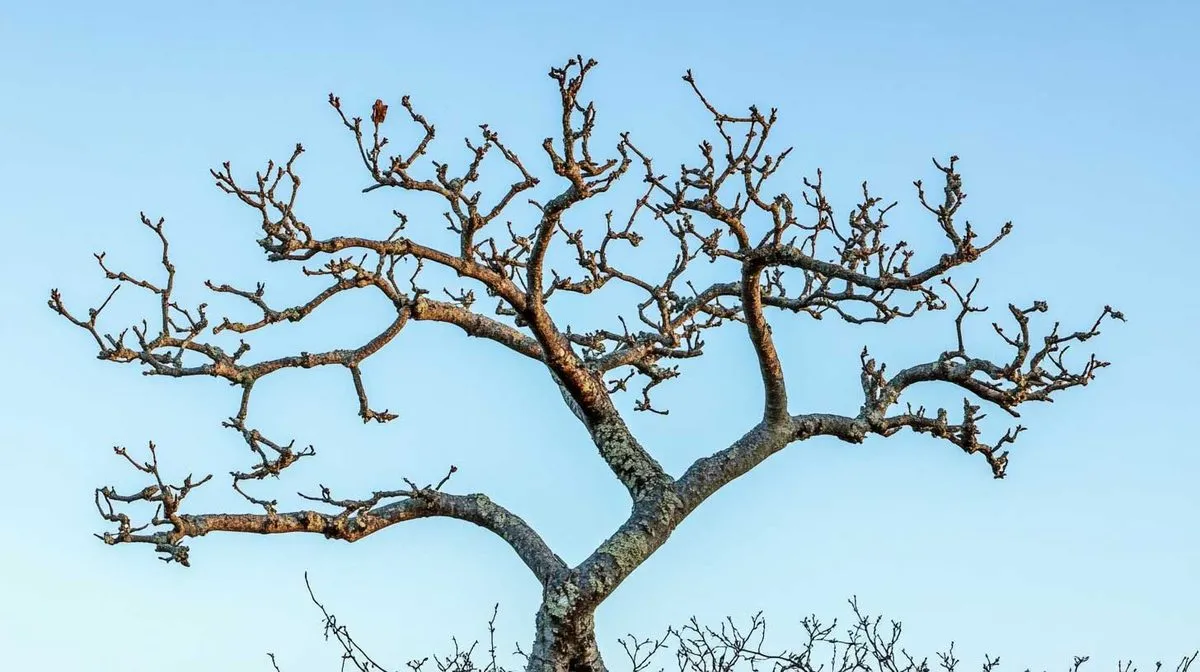
Train the tree to an open vase of three or four main branches. Almonds crop on short spurs that stay productive for several years, so once the shape is set pruning is light: take out dead, crossing and crowded wood and keep the centre open to light. Prune in late summer or early autumn after harvest, in dry weather. Stone fruit cut in cold, wet winter weather is more open to infection through the wounds. Our Pruning Guide covers the cuts.
Pollination
Most almonds are self-incompatible. A lone Nonpareil will flower beautifully and set almost nothing. Either plant a self-fertile variety such as All-in-One, or plant two varieties that flower at the same time. Bees do the work, so never spray insecticide while the tree is in blossom. Because almonds flower so early, a cold, wet week at flowering keeps bees in the hive and can cost the crop, which is one more reason they suit dry springs.
Pests and Diseases
- Birds. The biggest loss for most home growers. Cockatoos and parrots strip green nuts from the tree weeks before harvest, and netting is the only reliable answer.
- Aphids. Clusters on new shoots in spring. Hose them off, or leave them to ladybirds and hoverflies if the tree is otherwise healthy.
- Nut-boring moth larvae. Grubs that tunnel into nuts left hanging on the tree. Harvest promptly and remove old, shrivelled nuts from the tree and the ground in winter, which is where they shelter.
The common diseases are fungal and all favour wet weather:
- Shot hole. Small purple spots on leaves that drop out to leave round holes, and spots on young nuts.
- Rust. Orange brown pustules under the leaves from late summer, causing early leaf fall.
- Brown rot. Blossoms that brown and hang on, and nuts that rot and stay on the tree as shrivelled mummies. Pick off and bin the mummies.
A copper spray at leaf fall and again as buds swell in late winter is the standard preventive for shot hole on stone fruit. Good airflow, watering at the base and clearing fallen leaves do the rest.
Harvest and Storage
Almonds are ready in late summer to early autumn, when the green hulls split open and the shells inside turn dry and brown. Wait until most hulls on the tree have split, then lay a tarp underneath and knock or shake the nuts down.
- Strip off any hulls that are still attached.
- Spread the nuts one layer deep somewhere dry, airy and shaded for a week or two.
- Crack a few to test. They are dry when the kernel snaps cleanly rather than bending.
In the shell, almonds keep for months in a cool, dry, rodent-proof container. Shelled kernels keep best in the fridge or freezer.
Track Your Almond Tree
Add almonds to your garden in the Planting Season app and get reminders for planting, care and harvest, tuned to your region.
Open the App →Frequently Asked Questions
When should I plant almonds in Australia?
It depends on your region. Plant from June to August in Sydney & Coastal NSW, Melbourne & Victoria, Adelaide & SA, Perth & WA and Canberra & ACT. It is not suited to South East Queensland, Northern Rivers NSW, Tasmania, North Queensland and Darwin & Top End. Choose your region in the calendar on this page for the local window.
Do I need two almond trees?
Usually. Most almond varieties, including Nonpareil, cannot pollinate themselves and need a second variety that flowers at the same time. Self-fertile varieties such as All-in-One set nuts on their own, so choose one of those if you only have room for one tree.
How long does an almond tree take to produce nuts?
A grafted almond usually gives its first small crop in about its third year, and the crop builds over the following years. Seedling trees are slower and their kernels can be bitter.
Can I grow almonds in Brisbane?
Not reliably. Almonds need winter chill and a dry spring, and in South East Queensland spring storms spoil the blossom, so the site lists them as not suited there. They are a far better fit for Adelaide, Perth, Melbourne, Canberra and Sydney.
See also: Almond in the Plant Library, and How to Grow Walnut for another winter planted nut tree.