
Growing Food in Small Spaces
Updated July 2026
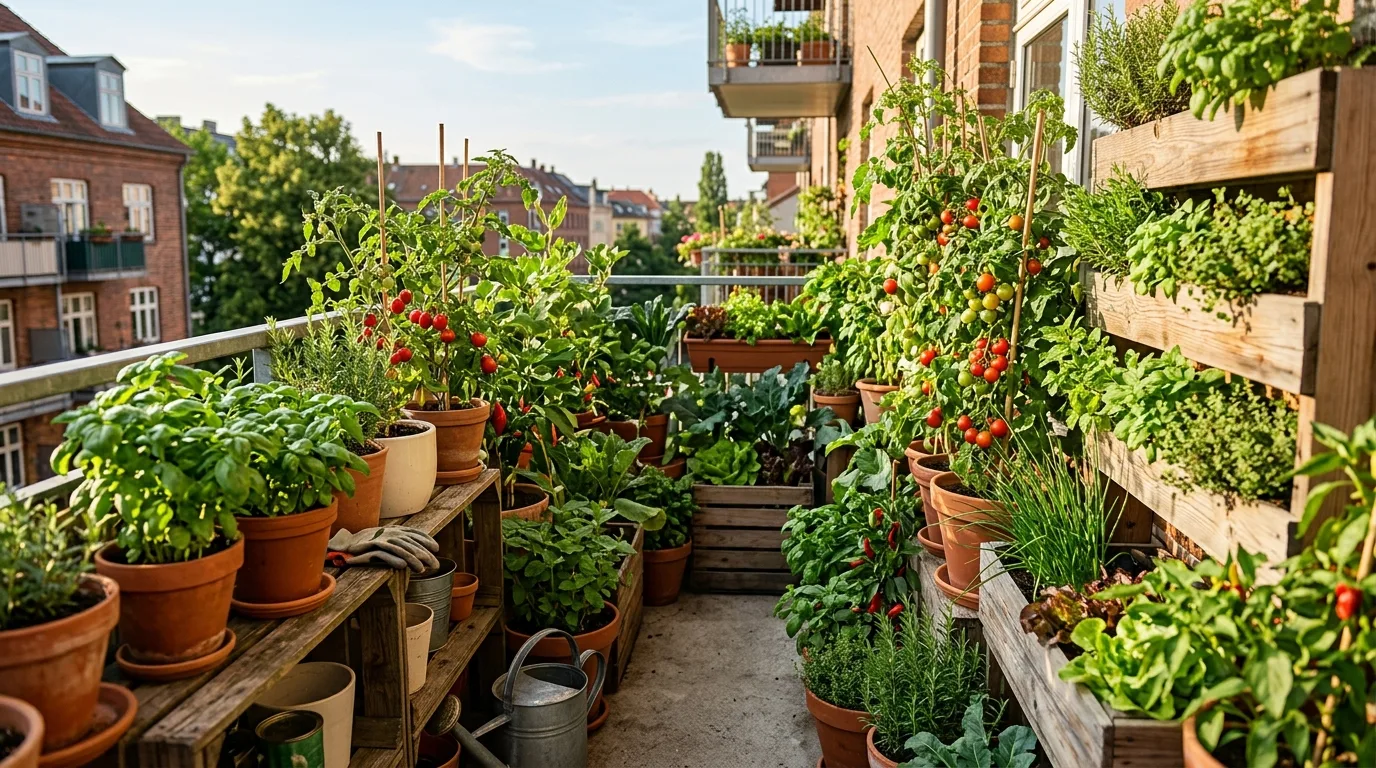
Your starting point for pots, balconies and tiny backyards, with a guide for every crop worth growing small.
Small-space growing is a different sport from backyard gardening, and gardeners who treat it that way eat well from surprisingly few square metres. The rules change: sun becomes your budget, containers become your soil, and crop choice matters more than anywhere else in gardening.
Start with a sun audit
Spend one day noting how many hours of direct sun each spot gets. Everything else follows from that number:
- 6+ hours: fruiting crops earn their keep here. Tomatoes, chillies, capsicums, eggplant, cucumbers, beans and dwarf fruit trees.
- 4 to 6 hours: root crops and tougher leafies. Carrots, potatoes, garlic, spring onions, beetroot, kale and peas.
- Under 4 hours: salad greens, most herbs, mint and microgreens still perform. This is more useful than most people expect.
Grow what pays
With limited space, grow the things that are expensive to buy, best eaten fresh, or endlessly harvestable. Herbs top the list; a $4 bunch of basil grows on a $4 plant that produces for months. Salad greens, cherry tomatoes, chillies and spring onions all repay their pot many times over. One zucchini in a half barrel will out-yield a supermarket, while a single cabbage occupies a big pot for months and gives you one cabbage.
Size the pot to the crop
Undersized containers are the number one small-space killer. The plant dries out daily, starves and stalls. Rough minimums:
- 20 cm pot: most herbs, spring onions, a mint plant (always alone; it takes any pot it shares).
- 25 to 30 cm pot: salad greens, carrots (30 cm deep), garlic, compact chillies.
- 40 to 45 cm pot: a tomato, capsicum, eggplant or cucumber, with a stake or trellis in from day one.
- 40+ litre bag or bin: potatoes, and ginger or turmeric in warm spots.
- Half wine barrel: a dwarf fruit tree, or a zucchini with room to sprawl.
Always use a quality potting mix, never garden soil, which sets like concrete in a pot and drains poorly.
Water and feed like a pot gardener
Pots hold a day or two of water in summer, sometimes less on a windy balcony. Check daily by finger, water until it runs from the drainage holes, and accept that an Australian summer may mean morning and evening drinks for thirsty crops. Nutrients wash out with all that watering, so feed fortnightly with a liquid feed once plants are established. A saucer under each pot buys you a buffer on hot days; empty it in wet weeks.
Go vertical before you go without
Walls, railings and string turn one square metre of floor into three of growing space. Climbing beans, cucumbers and peas go up a trellis or twine, strawberries and salad greens stack in towers and hanging baskets, and a railing planter grows herbs without costing floor at all.
Crop-by-crop guides
Every guide below is written for containers and small spaces.
Fruiting crops for pots
Root crops and alliums
Leaves and herbs
Fruit and whole-space setups
Catch problems before they cost you a crop
Track every bed in the Planting Season app, log what is going wrong, and get region-specific reminders so the same problem does not bite twice.
Open the App →Frequently Asked Questions
How much sun does a balcony vegetable garden need?
Six or more hours of direct sun grows the full range including tomatoes and chillies. Four to six hours suits roots, peas and hardy leafies, and even under four hours you can grow salad greens, mint, most herbs and microgreens well.
What vegetables grow best in pots?
Herbs, salad greens, cherry tomatoes, chillies, spring onions and strawberries give the best return for the space. Potatoes in bags, dwarf beans, cucumbers on a trellis and garlic all perform well in the right sized container.
How often should I water vegetables in containers?
Check daily by pushing a finger into the mix, and expect to water most days in summer, sometimes twice on hot windy days. Water until it runs from the drainage holes so the whole root zone wets through.
Can I use garden soil in pots?
No. Garden soil compacts in containers, drains badly and starves roots of air. Use a quality potting mix, and refresh or replace it between crops. It is the single most worthwhile spend in container growing.
Do container vegetables need feeding?
Yes, more than in-ground crops, because frequent watering washes nutrients out of the mix. A liquid feed every fortnight once plants are established keeps pots productive, with fruiting crops fed at the flowering stage especially.
See also: Balcony Vegetable Garden and Vertical Gardening in Small Spaces
Get next month's planting calendar, free
One email a month with exactly what to plant in your region, plus seasonal tips and harvest reminders. No spam, and you can unsubscribe any time.