
How to Start a Balcony Vegetable Garden
Updated June 2026
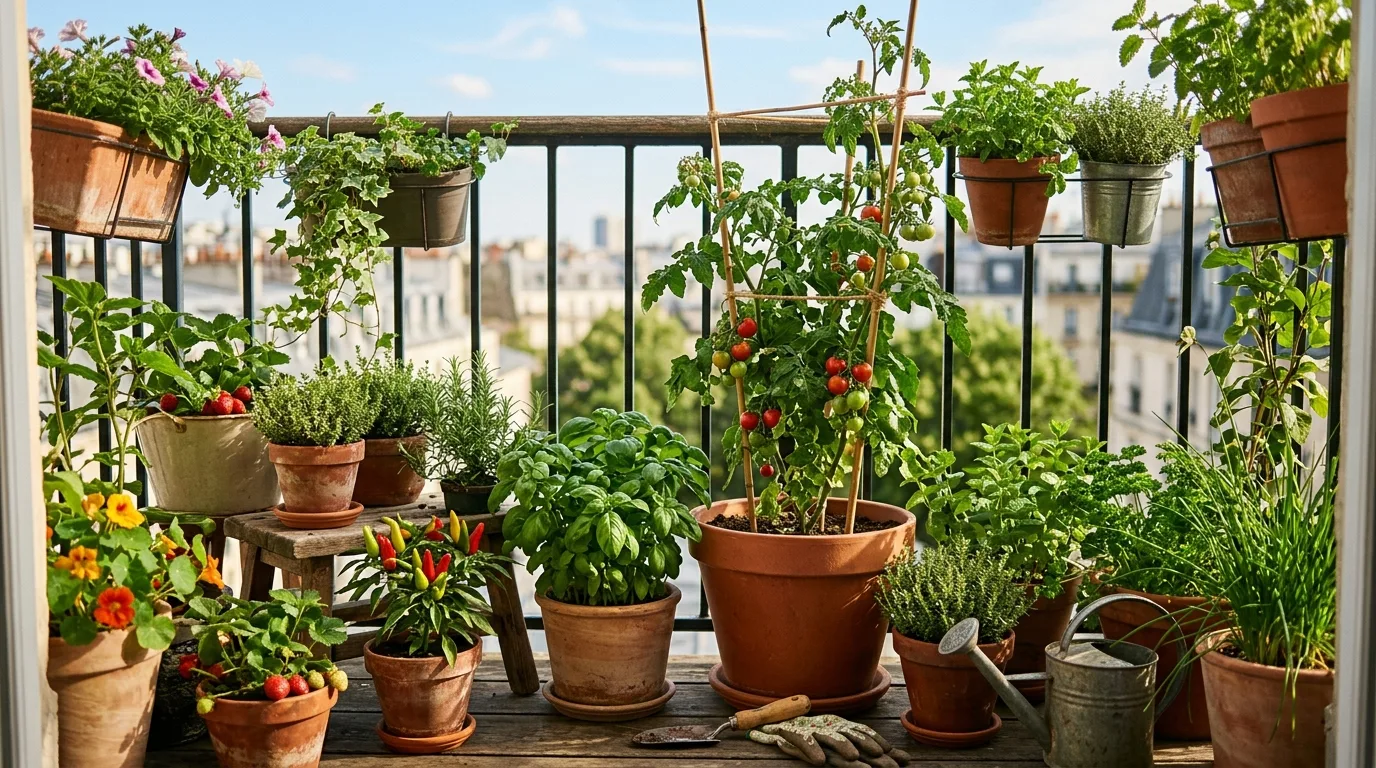
You need far less space than you think. Here is how to turn a balcony into a productive food garden.
You do not need a backyard to grow your own food. A balcony, courtyard or even a sunny windowsill can produce a steady supply of herbs, salads and vegetables if you set it up well. This guide covers the few things that actually matter, so you start with crops that will thrive rather than struggle.
First, work out your light
Light is the single biggest factor in what you can grow, so spend a day noticing how the sun moves across your space. As a rough guide: six or more hours of direct sun lets you grow fruiting crops like tomatoes, chillies, capsicum and beans. Three to five hours suits leafy greens, herbs and root crops. Less than three hours, and you are best with shade-tolerant leafy herbs like mint and parsley, and salad leaves. Match crops to your light and everything gets easier.
Choose the right crops to start
The best balcony crops give a lot for little space and fuss. Start with herbs (the highest value of all), salad leaves, spring onions, cherry tomatoes, chillies and strawberries. Leave space-hungry, low-yield crops like full-size pumpkins and corn for a garden bed. Each of these has its own container guide linked below.
Pots, mix and a watering plan
Use the biggest pots you can fit, as bigger pots hold moisture and grow bigger crops, and make sure every pot drains. Fill with a quality potting mix, not garden soil, which compacts in pots. The number one killer of balcony gardens is drying out, so have a realistic watering plan: most pots need water daily in summer. Self-watering pots, saucers and mulch all buy you time.
Feed little and often
Frequent watering washes nutrients out of pots, so container plants need feeding more than garden plants. A regular light liquid feed through the growing season keeps everything productive. Refresh or top up the mix with compost between crops.
Make the most of vertical space
On a small balcony, go up as well as out. Trellises, hanging baskets, rail planters and wall pockets multiply your growing area. See the vertical gardening guide for ideas. With sun, big pots, steady water and the right crops, a balcony can keep your kitchen in fresh produce most of the year.
Catch problems before they cost you a crop
Track every bed in the Planting Season app, log what is going wrong, and get region-specific reminders so the same problem does not bite twice.
Open the App →Frequently Asked Questions
What vegetables can I grow on a balcony?
Herbs, salad leaves, spring onions, cherry tomatoes, chillies, capsicum, beans, strawberries and many root crops all grow well in pots. Match your choices to how much sun the balcony gets, fruiting crops need the most.
How much sun does a balcony garden need?
It depends on the crop. Fruiting vegetables like tomatoes and chillies want six or more hours of direct sun, leafy greens and herbs manage on three to five, and shade-tolerant herbs like mint and parsley cope with less.
How do I start a balcony vegetable garden?
Work out how much sun your space gets, choose crops to match, plant in the biggest well-draining pots you can fit with quality potting mix, and set up a realistic daily watering plan. Start with a few easy crops and expand.
Why do my balcony plants keep dying?
The most common causes are pots that are too small, not enough sun, and drying out. Use large pots, match crops to your light, water consistently (often daily in summer), mulch the pots, and feed regularly.
Can you grow enough food on a balcony to matter?
You will not be self-sufficient, but a well-run balcony can keep you in fresh herbs, salads and a steady picking of crops like cherry tomatoes, chillies and beans for much of the year, which is both useful and rewarding.
See also: Container Vegetable Gardening and Vertical Gardening
Get next month's planting calendar, free
One email a month with exactly what to plant in your region, plus seasonal tips and harvest reminders. No spam, and you can unsubscribe any time.