
Vertical Gardening for Small Spaces
Updated June 2026
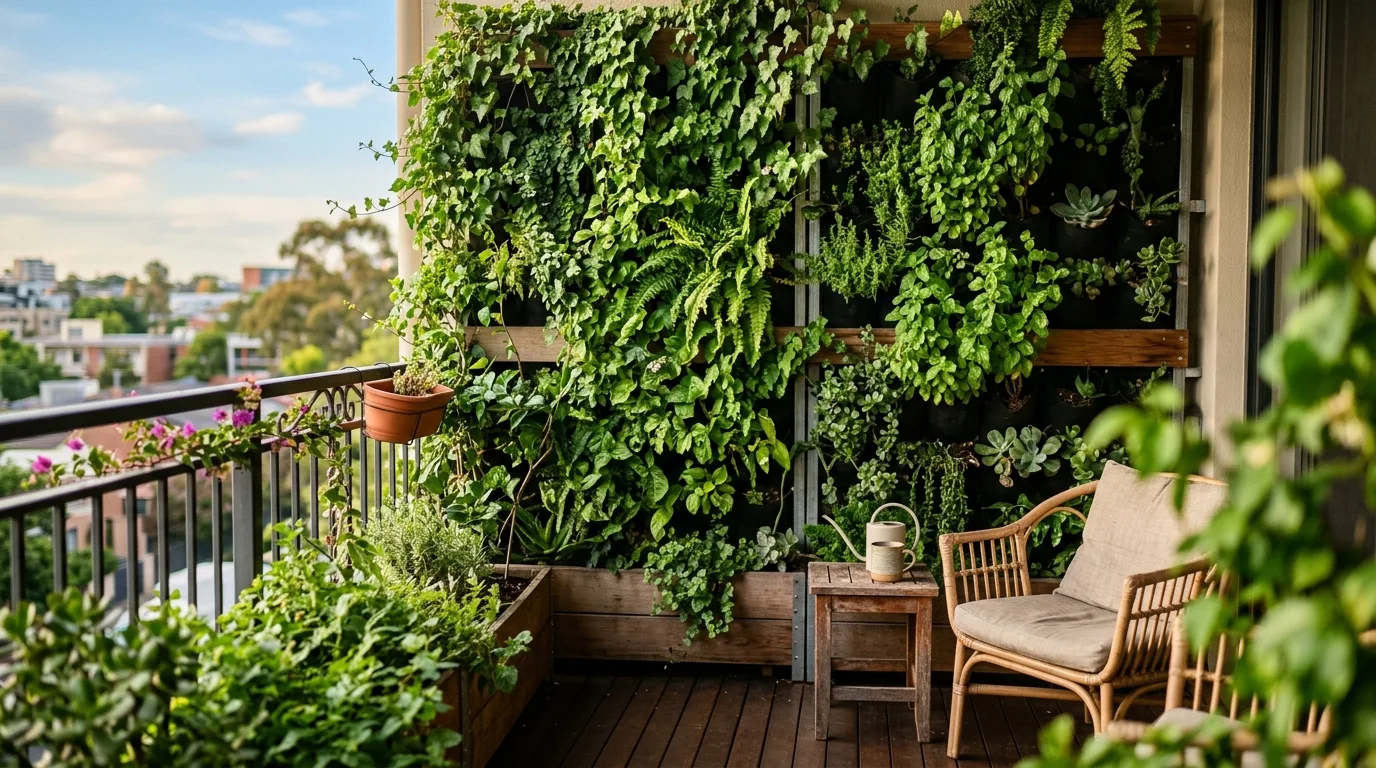
When you run out of floor, grow up the walls. Vertical gardening multiplies a tiny footprint.
The secret to growing a lot in a small space is to stop thinking in floor area and start thinking in walls, rails and air. Vertical gardening uses the height you already have to multiply your growing space, and it suits balconies, courtyards and tiny yards perfectly.
Ways to grow vertically
- Trellises and frames. The simplest method. A trellis behind a pot lets climbers grow up instead of sprawling, ideal for beans, cucumbers, peas, tomatoes and small pumpkins.
- Hanging baskets. Use the airspace overhead for strawberries, trailing herbs, cherry tomatoes and salad leaves.
- Rail and wall planters. Troughs that hook over a balcony rail, and pockets or pots fixed to a wall, turn bare verticals into growing space.
- Tiered and stacked pots. Stands, ladders and stacking planters fit many pots into one small footprint.
- Living wall systems. Purpose-made vertical panels for herbs and leafy greens, the most space-efficient of all.
Best crops to grow up
Natural climbers give the most reward: climbing beans, cucumbers, peas, and indeterminate tomatoes tied to supports. Trailing crops suit hanging baskets: strawberries, cherry tomatoes and trailing herbs. Compact leafy crops and herbs are perfect for wall pockets and living walls. Heavy crops like full-size pumpkins can climb too, but need slings to support the fruit.
Light and access
A vertical setup can shade itself, so put taller climbers where they will not block the sun from shorter plants, generally climbers on the south side (in the southern hemisphere) so they do not overshadow the rest. Keep everything within reach for watering and picking, a beautiful wall you cannot reach to harvest is no use.
Start simple
You do not need a fancy living wall to start. A single trellis behind a pot of climbing beans, or a rail of trough planters and a couple of hanging baskets, can double what a small balcony produces. Add from there as you learn what thrives in your space.
Catch problems before they cost you a crop
Track every bed in the Planting Season app, log what is going wrong, and get region-specific reminders so the same problem does not bite twice.
Open the App →Frequently Asked Questions
What is vertical gardening?
Growing upward using walls, rails, trellises, hanging baskets and stacked planters instead of spreading across the ground. It multiplies the growing area of a small space like a balcony or courtyard by using the height you already have.
What vegetables grow well vertically?
Natural climbers are best: climbing beans, cucumbers, peas and indeterminate tomatoes tied to supports. Strawberries and cherry tomatoes suit hanging baskets, and compact herbs and leafy greens work in wall pockets and living walls.
How do I grow vertically on a balcony?
Start simple with a trellis behind a pot for climbers, add rail troughs and a couple of hanging baskets, and use a tiered stand for more pots. Fix everything securely and keep it within reach for watering and picking.
Do vertical gardens need more water?
Yes. Wall-mounted and hanging planters are exposed on all sides and hold less soil, so they dry out faster than pots on the ground. Plan for more frequent watering, or set up a simple drip system, and mulch where you can.
Will a vertical garden block the sun from other plants?
It can if tall climbers are placed badly. Position taller climbing plants where they will not overshadow shorter ones, generally toward the sun-facing side, so every plant gets the light it needs.
See also: Balcony Vegetable Garden and Trellis and Support
Get next month's planting calendar, free
One email a month with exactly what to plant in your region, plus seasonal tips and harvest reminders. No spam, and you can unsubscribe any time.