
Cucumber Trellis Ideas: Three Builds With Measurements
Updated November 2026
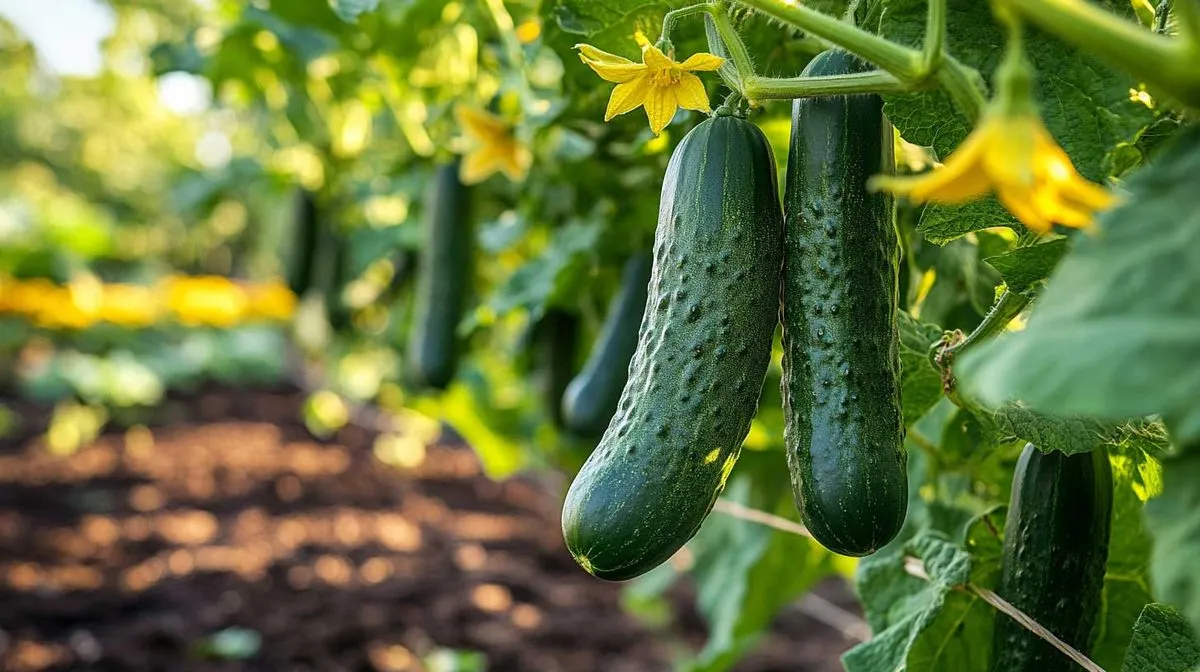
A flat net, an A-frame and a cane tepee, with the sizes that work
The best cucumber trellis is one the vines can grab, tall enough to carry the fruit and strong enough to hold a vine in full summer growth. This page gives three builds with measurements: a flat net between two posts, an A-frame that shades a salad bed, and a cane tepee for pots and tight corners. All three suit climbing varieties such as Lebanese, Telegraph or Japanese Climbing, and none needs more than a hardware store trip.
Trellising is worth the effort. The University of Minnesota Extension notes that a trellis lets you space rows more closely and grows straight fruit, and the University of Maryland Extension lists a higher yield per square foot and fruit lifted clear of the soil. Trellised plants dry out faster, so water them a little more often. For sowing months and care, see how to grow cucumbers in Australia.
Which cucumber trellis should you build?
| Build | Size | Plants it holds | Best for |
|---|---|---|---|
| Flat net or mesh panel | 1.8 m high, 2.4 m between posts | About 6 plants | Long rows in a vegetable bed |
| A-frame | Two panels 1.2 m by 1.8 m, feet 90 cm apart | About 8 to 10 plants | Shaded salad crops underneath, small gardens |
| Cane tepee | Five canes 2.1 m long in a 90 cm ring | 3 or 4 plants | Large pots, corners, a first trellis |
Build 1: flat net between two posts
- Cut two posts 2.4 m long and sink each 60 cm into the ground, which leaves 1.8 m above the soil. Set them 2.4 m apart and check they are upright.
- Fix a panel of welded mesh or plastic netting between them with a mesh opening of 10 to 15 cm, so the tendrils can wrap and a hand can reach through to pick.
- Plant a seedling every 30 to 45 cm along the foot of the net. A 2.4 m panel holds about six plants.
- Tie the first shoots to the net with soft twine, then let the tendrils take over.
- Run a second row at least 1.2 m away so you can walk between them and air can move through the leaves.
Use treated posts or steel star pickets that will not rot, and a net strong enough for a heavy vine. Thin garden string sags and snaps with the first heavy crop.
Build 2: A-frame
- Make two panels, each 1.2 m wide and 1.8 m long, from welded mesh on a timber frame or from two pieces of reinforcing mesh.
- Stand them as an A with the feet 90 cm apart and hinge them at the top with cable ties or bolts. The top sits about 1.7 m above the ground.
- Brace the frame with a cross rail near the top and peg the feet down so wind cannot tip it.
- Plant on both outer sides, one seedling every 30 to 45 cm, which gives about 8 to 10 plants in all.
- Grow lettuce, rocket or spinach in the shade underneath during the hot months.
An A-frame can be folded flat and stored in winter. In a hot region such as South East Queensland, the shade it casts under the vines is a bonus for leafy crops.
Build 3: cane tepee
- Push five canes or stakes, each 2.1 m long, 20 cm into the soil in a ring about 90 cm across.
- Lean them together and tie the tops tightly with twine, so the tepee stands about 1.8 m high.
- Wind twine around the canes at 30 cm steps to give the tendrils something to grip.
- Plant one seedling at the foot of every second cane, three or four plants in all.
- In a pot, use a container of at least 30 litres, push the canes in near the rim and anchor the pot so wind cannot tip it.
Training the vines
Tie the leading shoot to the support every 20 to 30 cm as it grows and let the tendrils wrap. Keep the lower stem free of leaves so air can reach the base. Mulch the soil, water in the morning at soil level and pick fruit often so the vine keeps climbing. Climbing varieties such as Lebanese, Telegraph and Japanese Climbing are better suited than bush types such as Spacemaster, which stay small.
Common trellis mistakes
- A trellis that is too short. Vines grow 1.8 m or more, and a short frame leaves them flopping back down.
- Mesh that is too fine. Fruit grows through small holes and is hard to free, so keep the opening at 10 to 15 cm.
- Crowding. Plants closer than 30 cm trap damp air and invite powdery mildew.
- Facing the wrong way. In Australia the sun is to the north, so put a flat trellis on the southern side of the bed and the vines will not shade the rest.
Trellising other crops and what to plant alongside
The trellis and support guide covers other crops by type. Cucumbers share a trellis happily with beans, and cucumber companion plants lists what grows well nearby. The cucumbers in a pot guide covers container growing, and vertical gardening has more ideas for small spaces.
Questions
How tall should a cucumber trellis be?
At least 1.8 m above the ground. Climbing cucumbers often reach that height and more, and the University of Minnesota Extension notes that even a 3 to 4 foot trellis (about 1 to 1.2 m) gives straight fruit.
What is the best mesh size for a cucumber trellis?
A mesh opening of 10 to 15 cm lets tendrils wrap and lets you reach through to pick without fruit growing through and jamming.
How far apart should cucumbers be on a trellis?
About 30 to 45 cm. Maryland Extension says plants grown vertically can be spaced 18 inches (about 45 cm) apart.
Can I grow cucumbers up a fence?
Yes, if the fence has gaps or mesh that tendrils can wrap. A solid panel fence needs mesh or twine fixed to it.
Do all cucumbers climb?
No. Bush types such as Spacemaster stay compact and grow well in pots, while Lebanese, Telegraph and Japanese Climbing are vigorous climbers.
Which trellis is best for a small garden?
An A-frame, because it holds about 8 to 10 plants in a 90 cm wide footprint and shades a salad crop underneath.
Sources
- University of Minnesota Extension, Growing cucumbers in home gardens
- University of Maryland Extension, Growing Cucumbers in a Home Garden
- Oregon State University Extension, Grow your own cucumbers
Plant profile
The cucumber profile has sowing times for your region, companion plants and common pests.
See also: Cucumber varieties.