
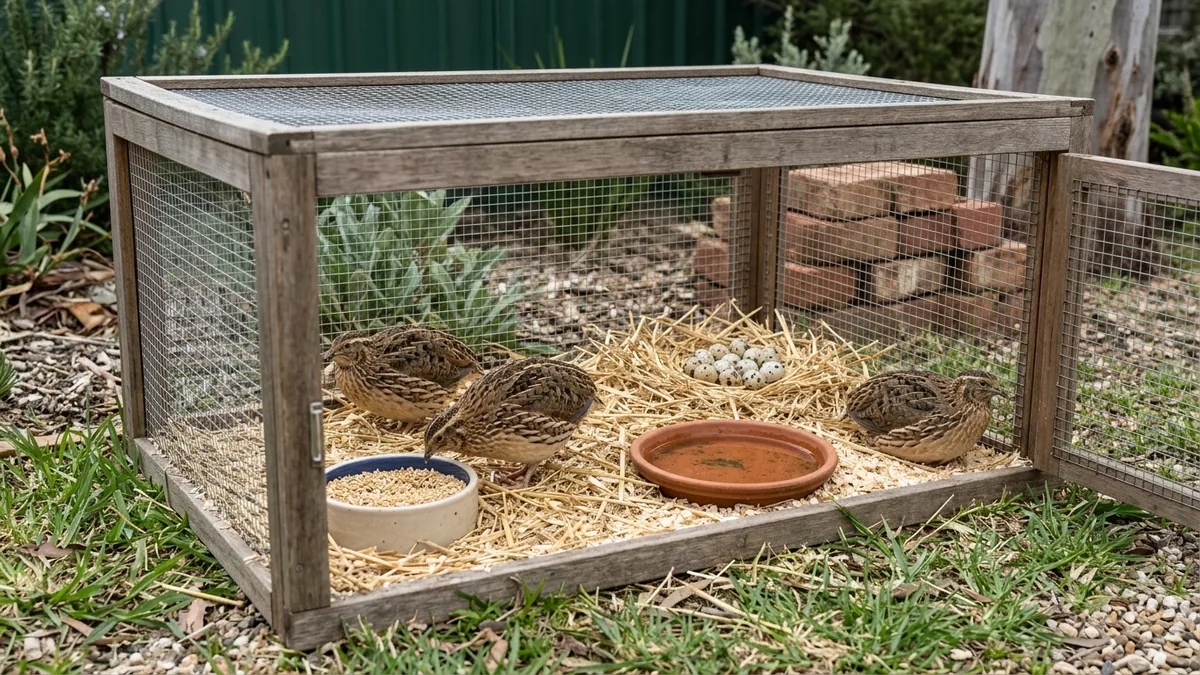
Quail lay in six weeks, stay quiet, take almost no room and suit a balcony or small yard. Coturnix quail are the easiest poultry to start. Here is everything you need, plus a calculator to size your setup.
Coturnix quail, also called Japanese quail, are the small-space gateway to keeping poultry. They lay their first egg at around six to eight weeks, take up a fraction of the room a hen needs, and the hens are quiet enough for a courtyard or balcony. You get a steady supply of pretty, speckled eggs and, if you choose, tender meat, all from a corner of the yard.
They are not a hardy backyard scratcher like a chicken, though. Quail are ground-dwelling, easily startled and kept more like an aviary or cage bird, with attention to clean conditions and a high-protein diet. This guide covers housing, space, feed, eggs and meat, sexing, noise and biosecurity, with a calculator to plan your cage.
First eggs at six to eight weeks, against five to six months for hens. You go from chick to breakfast in under two months.
Hens chirp and trill softly. No dawn rooster racket. Run hens only and most neighbours never notice them.
Several hens fit where one chicken would. A compact cage or converted hutch is plenty.
Their size and quiet suit balconies, courtyards and small yards where chickens are not practical.
Enter how many quail you plan to keep. This gives a recommended minimum cage floor area, the feeders and waterers to provide, and a rough weekly egg estimate for laying hens. Nothing is saved, and it works offline.
Quail are ground birds. They do not roost on perches and they do not use raised nest boxes, so housing is about clean floor space and shelter, not chicken furniture.
A wire cage or a converted rabbit hutch works well and is easy to keep clean. Keep the height low, around 25 to 30 cm, or pad the roof with soft material. Startled quail fly straight up, and in a tall cage they can hurt their heads on the roof. A solid or trayed floor under wire makes cleaning simple.
A planted aviary or floor pen gives a more natural life with room to dust-bathe and forage. Provide low hides, clumps of cover and soft, dry substrate. Predator-proof the base and sides, as quail are small enough for rats, cats, snakes and birds of prey to take.
Whichever you choose, keep the bedding dry, give a shallow dust bath, and offer a quiet, sheltered corner where nervous birds can hide.
This is where new keepers most often go wrong. Quail need far more protein than chickens.
Quail eggs are small and beautifully speckled, about a fifth the size of a hen egg, so roughly four to five quail eggs equal one chicken egg. They are prized for their rich yolk and look lovely boiled, pickled or fried. A productive coturnix hen lays close to an egg a day, often five to six a week, given long daylight and good feed.
Coturnix are also raised for meat, reaching table size at around seven to nine weeks. Many keepers run a dual flock, keeping the best layers and processing surplus males. If you only want eggs, a hen-only group is the simplest and quietest option.
By about five to six weeks you can usually tell males from females. In most standard coturnix colours, males have a plain rusty-brown chest while females have a paler, speckled chest. The clearest signs are behaviour and sound: males crow with a loud, sweet whistle, and when gently handled a mature male may produce a little white foam from the vent gland.
Hens are quiet, making soft chirps and trills. A crowing male carries further than people expect, so in apartments or close quarters most keepers run hens only, or keep just a single male for fertile eggs. There is no early-morning racket like a rooster.
Quail are kept at higher density than chickens and are sensitive to stress, so a few simple habits keep them healthy:
The free Planting Season app and its Poultry and Flock tracker handle quail too. Log your birds, record eggs as they ramp up from week six, and set reminders for cleaning and feed so your small flock stays healthy and productive.
Coturnix quail need about 0.06 to 0.09 square metres of floor each, roughly 600 to 900 square centimetres per bird. As a simple rule, allow around six to ten birds per square metre. More space means fewer squabbles, cleaner birds and better laying, so err on the generous side.
Coturnix quail are the fastest poultry to lay. Hens usually start at about six to eight weeks of age, far quicker than chickens at five to six months. A laying hen produces close to an egg a day, often five to six eggs a week, when she has long daylight hours and good feed.
Quail need a high-protein game-bird or turkey starter and grower, around 24 to 28 percent protein, which is much higher than chicken feed. Standard layer pellets do not provide enough protein. Provide constant fresh water in shallow or nipple drinkers so chicks cannot drown, and offer fine grit and a calcium source for laying hens.
Quail are much quieter than chickens. Hens make soft chirps and trills. Males crow, a loud sweet whistle that can carry, so in close quarters or apartments many keepers run hens only or keep just one male. There is no early-morning rooster racket like a cockerel.
Yes. Their small size, quiet hens and fast laying make quail one of the few poultry suited to balconies, courtyards and small yards. A compact cage or a section of a converted hutch can house several hens. Always check your local council rules first, as some areas restrict poultry or have permit requirements.
In most coturnix colour types, males have a plain rusty-brown chest while females have a paler, speckled chest. The surest sign is behaviour and sound: males crow and, when gently handled, can produce a small amount of white foam from the vent gland. Sexing is usually clear by five to six weeks.
No. Quail are ground birds. They do not roost on perches and they do not use raised nest boxes. They lay wherever they happen to be on the floor, so give them clean, soft bedding and a quiet, sheltered corner. A low hide or a clump of artificial cover helps nervous birds feel secure.
Quail are kept densely and are sensitive to stress and disease, so simple biosecurity matters. Quarantine new birds for a couple of weeks, keep the cage clean and dry, give each bird enough space, control rodents, and keep wild birds away from feed and water. A clean, low-stress setup prevents most problems.
Log birds, record eggs from week six and set cleaning reminders in the free Poultry module.