How to Grow Snake Beans in Australia
Updated June 2026
Varieties, trellis tips, planting times, and harvesting for the best texture
Snake beans are a heat-loving climber that thrives where regular beans struggle. Also called yard-long beans or asparagus beans, they produce slender pods that grow 30 to 60 cm long and keep producing through the hottest months of the Australian summer.
These beans belong to a different species (Vigna unguiculata) than common green beans, and they handle heat, humidity, and tropical conditions far better. This guide covers the best varieties, how to grow them on a trellis, planting times for your region, and how to harvest for the best eating quality.
🌱 Plant profile: Snake Beans, with sowing times for your region, companion plants and common pests.
When to Plant in Your Region
Varieties
Green Pod
The standard snake bean found in most seed catalogues. Dark green pods, reliable producer, good all-round flavour. The most widely available variety in Australia.
Red Noodle
Striking purple-red pods that turn green when cooked. Slightly sweeter flavour than green types. A favourite in stir-fries and salads where the colour adds visual interest before cooking.
White Seed
Vigorous grower with strong heat tolerance. Produces pale green pods prolifically through peak summer. The most forgiving variety for beginners and the best choice for very hot climates.
Kaohsiung
A Taiwanese selection with thick, tender pods that stay crisp longer on the vine. Slower to go stringy than other varieties, giving a wider harvest window. Excellent texture in stir-fries.
Planting
Snake beans are direct sown, not transplanted. Sow seeds 2 to 3 cm deep after the last frost once soil temperatures are above 20 degrees Celsius. Cool soil causes slow, patchy germination and weak seedlings.
Space seeds 15 to 20 cm apart along the base of a trellis. Rows should be 60 to 80 cm apart. Seeds germinate in 7 to 14 days depending on soil warmth.
Soaking seeds overnight before sowing speeds up germination, especially in borderline conditions. Drop the seeds into a glass of water the evening before planting and sow the following morning.
Trellis and Support
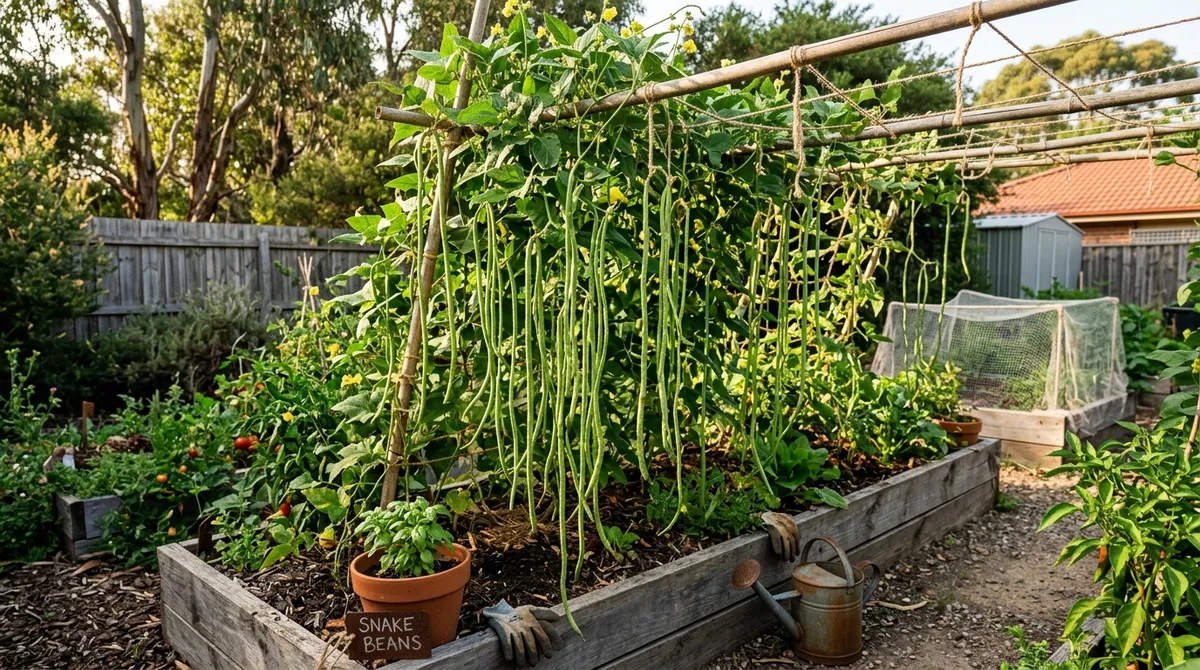
Snake beans are vigorous climbers that need a strong trellis at least 2 metres tall. The vines twine aggressively and will overwhelm flimsy supports within weeks.
A simple structure of star pickets and heavy-gauge wire works well. Bamboo tepees, cattle panels, or a wire mesh fence are all suitable. The key is height and strength. Pods hang straight down from the top of the trellis, so taller structures produce cleaner, straighter beans that are easier to pick.
Avoid placing the trellis where it will shade other sun-loving crops. Run it north to south so both sides receive direct light through the day.
Growing
Snake beans need full sun and consistent warmth to produce well. Growth is slow in the early weeks, especially in cooler weather, but the vines accelerate rapidly once summer heat arrives.
Water regularly but avoid wetting the foliage. Drip irrigation or soaker hoses along the base of the trellis reduce leaf disease. Snake beans tolerate short dry spells better than common beans, but consistent moisture produces the best pods.
These beans fix their own nitrogen, so heavy feeding is unnecessary. A side-dressing of compost at flowering time is enough. Too much nitrogen pushes leaf growth at the expense of pods.
Harvesting
Pick snake beans young, at 30 to 40 cm long, for the best texture. The pods should snap cleanly and feel firm. Older pods go stringy and tough as the seeds inside swell.
Hold the vine with one hand and snap the pod off with the other. Pulling pods carelessly can tear the vine or dislodge the roots. A sharp snip with scissors or secateurs is even better.
Fresh pods keep in the fridge for 3 to 5 days. Bundle them loosely in a damp cloth or paper towel inside a bag. Snake beans also freeze well. Blanch for 2 minutes, plunge into ice water, dry, and freeze flat on a tray before bagging.
Common Problems
Slow start in cool soil
Snake beans stall in soil below 20 degrees Celsius. Seeds may rot before germinating, and seedlings sit without growing. Wait for genuinely warm soil before sowing. Black plastic mulch over the bed for a week before planting warms the soil faster.
Pod fly
Bean pod fly larvae tunnel into developing pods, leaving brown streaks and damaged seeds inside. Pick and destroy affected pods promptly. Fine mesh netting over the trellis during flowering can exclude the adult flies. Regular harvesting removes affected pods before the larvae complete their cycle.
Powdery mildew
A white, powdery coating on the leaves that typically appears late in the season as night temperatures drop. Good airflow through the trellis reduces risk. Remove badly affected leaves. Spray with a milk solution (1 part milk to 9 parts water) at the first sign of white patches.
Frequently Asked Questions
When should I plant snake beans in Australia?
Direct sow snake beans after the last frost once soil temperatures are above 20 degrees Celsius. In tropical regions, plant from September to March. Subtropical areas suit October to January. In southern regions, sow from November to January in the warmest spot in the garden.
How long do snake beans take to grow?
Snake beans produce their first harvest about 60 to 75 days after sowing. Plants continue producing pods for 8 to 12 weeks once they start, as long as you pick regularly. The total season runs 3 to 4 months from sowing to final harvest.
What is the difference between snake beans and regular beans?
Snake beans (Vigna unguiculata subsp. sesquipedalis) are a different species from common beans (Phaseolus vulgaris). Snake beans handle heat and humidity far better, producing long 30 to 60 cm pods. They use a different rhizobia strain for nitrogen fixation and have a slightly chewier texture with a more savoury, nutty flavour compared to regular green beans.
Can I grow snake beans in pots?
Yes. Use a pot of at least 30 litres and provide a tall trellis or bamboo tepee of at least 2 metres. Snake beans are vigorous climbers and need strong vertical support. Place the pot in the sunniest spot available and water daily in hot weather. Expect slightly lower yields than garden-grown plants.
See also: Snake Beans in the Plant Library
Plant profile
The snake beans profile has sowing times for your region, companion plants and common pests.