How to Grow Olives in Australia
Updated June 2026
More fruit growing help: Backyard Fruit Trees in Australia, with the best fruit for each region and when to plant it.
A drought-tolerant tree that thrives in Australian heat and produces fruit for generations
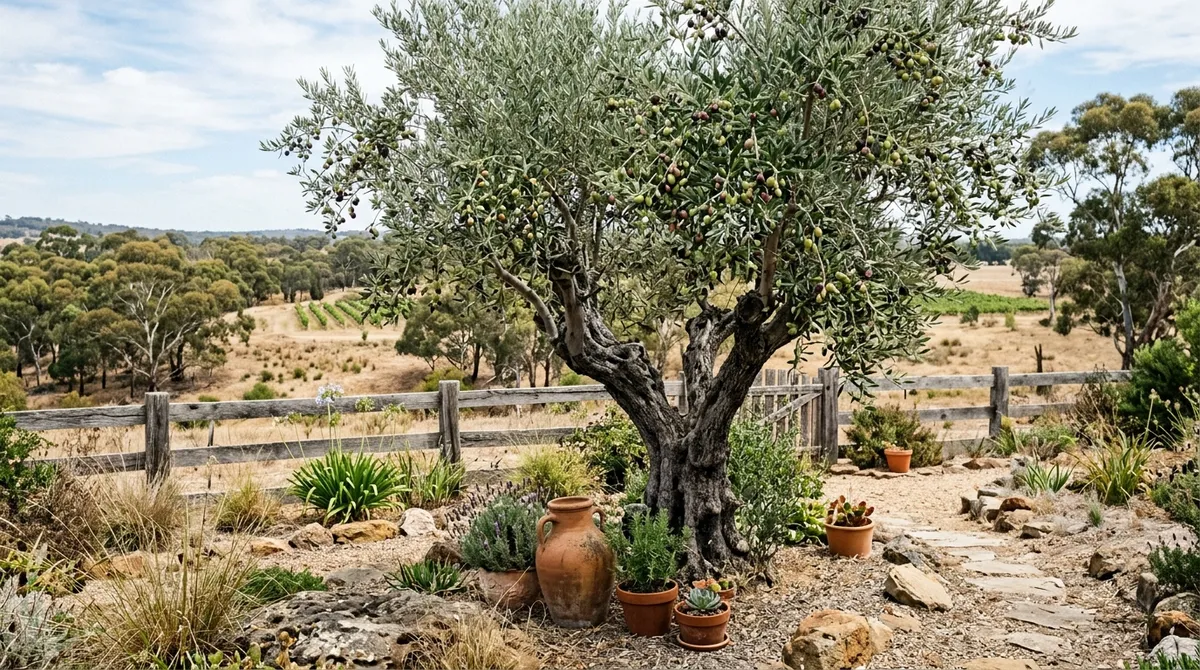
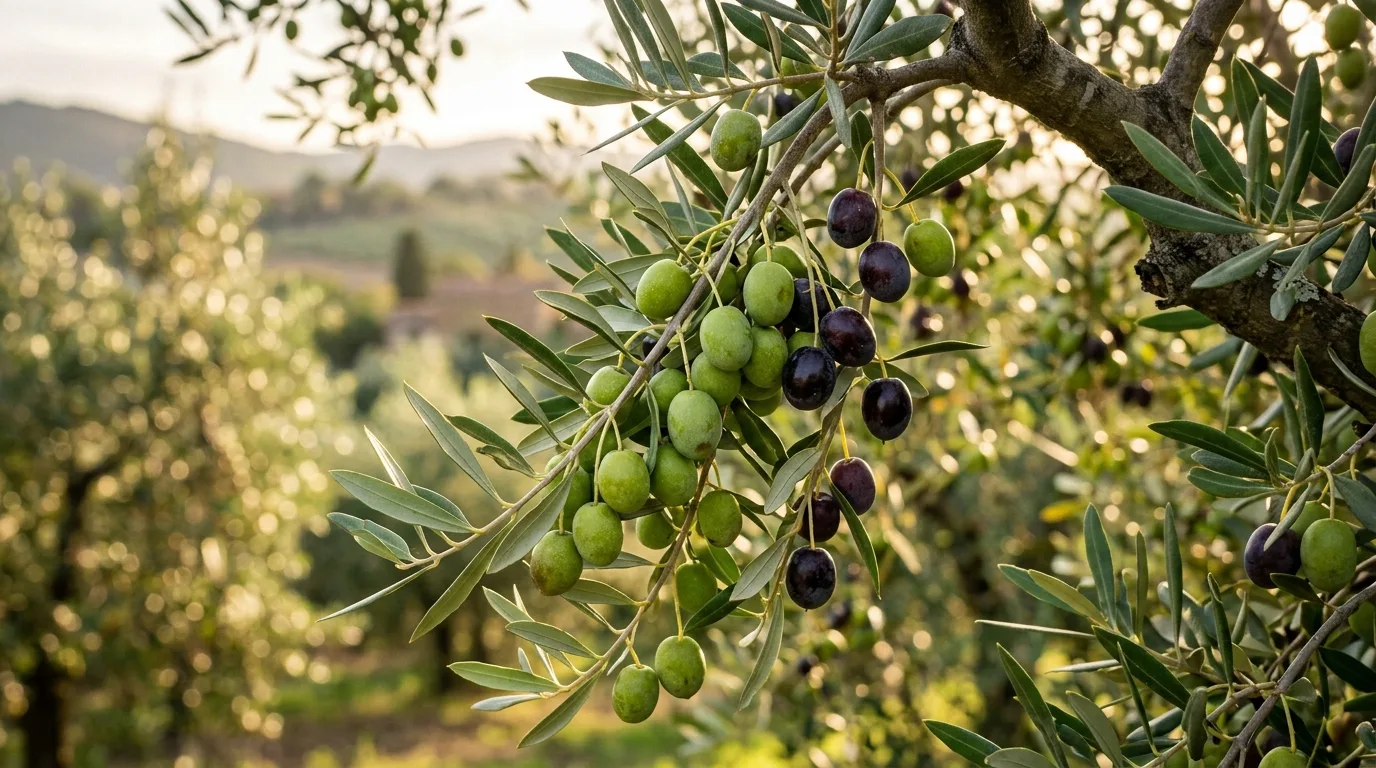
Olive trees are one of the best fruit trees for Australian gardens. They handle drought, poor soil, extreme heat, and neglect. They look beautiful year-round with their silvery green leaves. And they produce fruit that you can cure at home into table olives or press into oil.
Australia's climate is well suited to olive growing. Large parts of the country share the same Mediterranean-style weather pattern that olives have thrived in for thousands of years: dry, hot summers and cool, wet winters. The Australian olive industry has grown significantly since the 1990s, and backyard olive trees are now a common sight in gardens from Adelaide to Sydney to Perth.
An olive tree planted today will still be producing fruit when your grandchildren are old enough to pick it. These trees live for centuries. That kind of permanence is rare in a garden.
🌱 Plant profile: Olive, with sowing times for your region, companion plants and common pests.
Best Climate Zones for Olives in Australia
Olives need a Mediterranean climate pattern to produce well: warm to hot, dry summers and cool (but not freezing) winters. The winter cold is important because olive trees need a period of low temperatures (below 10 degrees Celsius for several weeks) to trigger flowering in spring.
Ideal zones
- Adelaide and the Riverland (SA): The heartland of Australian olive production. Hot, dry summers and cool winters. Perfect conditions.
- North-east Victoria: Milawa, Beechworth, and the King Valley region produce excellent olives. Cold winters provide good dormancy.
- Hunter Valley and Central West (NSW): Warm summers with enough winter chill. A growing olive region.
- Perth and the South West (WA): Mediterranean climate with reliable results. Many established olive groves.
- Melbourne and surrounding areas: Olives grow well but the wetter climate can increase disease risk. Choose a well-drained site.
Marginal zones
- Brisbane and subtropical Queensland: Olives can grow but winters may not be cold enough for good fruit set. Some low-chill varieties produce in these areas.
- Tropical Australia: Not suited to olives. The lack of winter chill means poor flowering and fruiting.
- Alpine areas: Hard frosts below minus 8 degrees can damage olive trees, especially young ones. Established trees handle brief frosts better.
Best Olive Varieties for Australia
Table Olives (for eating)
Kalamata
The most popular table olive variety worldwide. Large, almond-shaped, purple-black fruit with firm flesh and rich flavour. Named after the Greek city. Needs a cross-pollinator (Frantoio or Manzanilla work well). Harvested when fully ripe (black) in April to May. Grows to 8 to 10 metres unpruned but easily kept smaller with annual pruning.
Manzanilla
A Spanish variety with large, round, green fruit. The classic cocktail olive. Can be picked green (March) or left to ripen to black (May). Partially self-fertile but crops better with a pollinator. A vigorous grower with a spreading habit. Hardy and reliable in most Australian olive-growing regions.
Jumbo Kalamata (Halkidiki)
Extra-large green olives with mild, buttery flesh. Often stuffed with garlic, almonds, or cheese. Grows well in Australian conditions. Needs a cross-pollinator. A less common variety but available from specialist nurseries.
Oil Varieties (for pressing)
Frantoio
The premium oil variety from Tuscany. Produces a peppery, full-flavoured oil with high polyphenol content. Medium-sized fruit. A vigorous, upright grower. Self-fertile but produces more with a cross-pollinator. One of the most widely planted oil varieties in Australia. Also works as a pollinator for Kalamata.
Leccino
Another Tuscan variety with a milder, more buttery oil than Frantoio. Cold-tolerant and disease-resistant. A good choice for cooler regions like Victoria and Tasmania. Partially self-fertile. Often planted alongside Frantoio for cross-pollination.
Picual
The world's most widely planted olive variety. Spanish origin. Produces a robust, slightly bitter oil that is high in antioxidants. Very productive and drought-tolerant. Handles hot, dry conditions better than most varieties. Good for inland and arid regions.
Dual-Purpose Varieties
Barnea
An Israeli variety bred for both oil and table use. Elongated fruit with mild flavour. Extremely vigorous and fast-growing. Produces heavy crops from a young age. Self-fertile. One of the easiest olives to grow in Australia. Good for beginners.
Planting
When to plant
Plant olive trees in autumn (March to May) or early spring (August to September). Autumn planting allows roots to establish during the mild, wet months before summer heat arrives. Potted trees from nurseries can be planted year-round but avoid midsummer unless you can water daily.
Site selection
- Full sun. At least 8 hours of direct sunlight daily. Olives do not produce well in shade.
- Good drainage. This is critical. Olive roots rot in waterlogged soil. Avoid low-lying areas where water pools after rain. If you have clay soil, plant on a mound or in a raised bed.
- Space. Allow 5 to 8 metres between trees. A single backyard tree can be kept to 3 to 4 metres tall and wide with regular pruning.
- Wind protection. Olive trees handle wind but strong winds during flowering (September to November) can reduce pollination and fruit set.
Planting steps
- Dig a hole twice as wide and the same depth as the root ball.
- Do not add compost or manure to the planting hole. Olives prefer lean soil. Rich soil encourages leaf growth at the expense of fruit.
- Place the tree at the same depth it was in the pot. Planting too deep causes collar rot.
- Backfill with the original soil and firm down.
- Water deeply and apply a 10 cm layer of mulch (not touching the trunk).
- Stake the tree if it is tall or in a windy position. Remove the stake after 12 months once the trunk is strong enough to stand on its own.
Watering and Drought Tolerance
Olive trees are famously drought-tolerant. An established tree (5+ years old) can survive on rainfall alone in most Australian climates. But "survive" and "produce well" are different things. Trees that receive some supplementary water during dry periods produce more and better fruit.
- Young trees (years 1 to 3): Water deeply once a week during the first two summers. Reduce to fortnightly once established.
- Established trees: Water deeply every 2 to 4 weeks during dry summer months if you want a good crop. No watering needed in winter.
- Critical periods: Flowering (September to November) and fruit development (December to February). Water stress during these periods causes fruit drop and small, shrivelled olives.
- Overwatering: More olive trees die from overwatering than underwatering. The soil should dry out between waterings. Never let water pool around the trunk.
Feeding
Olives are light feeders. They have evolved in poor, rocky soils and do not need heavy fertilising.
- Annual feed: Apply a complete slow-release fertiliser in early spring (August). A handful of blood and bone or a balanced NPK fertiliser scattered under the canopy is enough.
- Potassium boost: In February, apply potassium sulphate to improve fruit quality and oil content. Potassium helps the fruit size up and develop flavour.
- Avoid excess nitrogen. Too much nitrogen produces lush leaf growth and poor fruiting. Do not pile chicken manure or fresh compost under olive trees.
Pruning
Olive trees are evergreen and grow steadily year-round. Without pruning, a backyard olive tree will grow 8 to 10 metres tall and become impossible to harvest. Annual pruning keeps the tree at a manageable size and improves fruit production.
When to prune
Prune in late winter or early spring (July to August), before flowering begins. A light tidy-up can also be done after harvest in May or June.
How to prune
- Keep the tree to 3 to 4 metres tall by cutting back the central leader and any tall vertical shoots. This makes harvesting from the ground possible.
- Open the centre of the tree. Remove inward-growing branches to create a vase shape. Good air circulation reduces fungal disease.
- Remove suckers. Cut off any shoots growing from the base of the trunk or below the graft union.
- Thin out dense growth. Olives fruit on the previous season's growth. Remove old, unproductive wood to encourage fresh shoots that will carry next year's crop.
- Do not hard prune. Olives recover from hard pruning but it takes 2 to 3 years to rebuild the canopy and resume fruiting. Light, annual pruning is better than occasional heavy cuts.
Curing Olives at Home
Raw olives straight off the tree are incredibly bitter. You cannot eat them without curing first. Curing removes the oleuropein (the bitter compound) and develops the familiar olive flavour. There are several curing methods, and all of them are simple enough to do at home.
Brine curing (the easiest method)
- Pick olives when they are green (March to April) or fully black (April to May). Green olives are firmer with a sharper flavour. Black olives are softer and milder.
- Slit each olive with a sharp knife (one or two cuts lengthways). This lets the brine penetrate the flesh faster.
- Make a brine solution: Dissolve 100 grams of salt in 1 litre of water. Use non-iodised salt (sea salt or rock salt).
- Submerge the olives in the brine in a glass or food-grade plastic container. Weight them down with a plate or ziplock bag filled with brine to keep them under the surface.
- Change the brine every week for the first 4 weeks, then every 2 weeks after that.
- Taste after 6 weeks. Green olives take 8 to 12 weeks to cure. Black olives take 6 to 8 weeks. The olives are ready when the bitterness has gone and they taste like, well, olives.
- Store in fresh brine in the fridge. They keep for 6 to 12 months.
Dry salt curing
This method works best with ripe, black olives. Layer olives and coarse salt in a wooden crate or bucket (1 part salt to 2 parts olives). Stir or shake every few days. The salt draws out moisture and bitterness. After 4 to 6 weeks, the olives are wrinkled, slightly chewy, and intensely flavoured. Rinse off the excess salt before eating. Toss with olive oil and herbs.
Water curing
The simplest but slowest method. Slit the olives and soak in plain water, changing the water daily for 4 to 6 weeks. The water gradually leaches out the bitterness. Finish by transferring to brine for storage and flavour. This method produces milder olives than brine or salt curing.
Pests and Problems
Olive lace bug
Tiny insects that feed on the underside of leaves, causing yellowing and bronze discolouration. Heavy infestations weaken the tree and reduce fruit production. Spray with horticultural oil or neem oil in spring when new growth appears. A healthy, well-watered tree is less susceptible.
Black scale
Dome-shaped brown or black insects attached to stems and branches. They excrete honeydew, which attracts sooty mould (a black, powdery coating on leaves). Spray with white oil in winter. Prune to improve air circulation, which discourages both scale and sooty mould.
Peacock spot (leaf spot)
A fungal disease that causes dark circular spots on the upper leaf surface. More common in wet, humid climates. Affected leaves drop prematurely, weakening the tree. Improve drainage and airflow. Copper-based fungicide applied in autumn and spring provides control.
Fruit fly
Queensland fruit fly is the biggest pest problem for olive growers in eastern Australia. The fly lays eggs in ripening fruit, and the larvae ruin the olives. Use fruit fly traps, exclusion netting, or organic bait sprays. Monitor traps from February onward and treat as soon as flies are detected.
Harvesting
- Green olives: Harvest from late March to April when the fruit is full-sized but still green. Green olives are firmer and better for table curing.
- Black (ripe) olives: Harvest from April to June when the fruit has turned purple-black. Ripe olives have more oil and a milder flavour.
- For oil: Harvest when about half the fruit on the tree has changed from green to purple. This is the point of maximum oil content with good flavour balance.
- Method: Hand-pick for table olives. For oil, you can spread a tarp under the tree and use a rake or beater to knock the fruit down.
Frequently Asked Questions
How long does an olive tree take to produce fruit?
An olive tree produces its first small crop 3 to 5 years after planting. Full production begins at about 7 to 10 years of age. A mature tree produces 20 to 40 kg of olives per year. Olive trees are extremely long-lived and can remain productive for hundreds of years.
Can you eat olives straight off the tree?
No. Raw olives are extremely bitter due to a compound called oleuropein. They must be cured before eating. Curing methods include brine curing (soaking in salt water for weeks), dry salt curing, lye curing, or water curing. Each method removes the bitterness and develops the familiar olive flavour.
Do olive trees grow well in Australia?
Yes. Australia's Mediterranean-style climate in many regions is ideal for olive trees. They grow best in areas with dry summers and mild, wet winters. Adelaide, the Riverland, north-east Victoria, Hunter Valley, Perth, and parts of Queensland all produce olives commercially. Olives handle drought, poor soil, and heat, making them well suited to Australian conditions.
Do you need two olive trees to get fruit?
Most olive varieties are partially self-fertile, meaning a single tree can produce some fruit on its own. Planting a second variety nearby for cross-pollination significantly increases fruit set and yield. Varieties like Frantoio and Manzanilla are good pollinators for Kalamata.
See also: Olive in the Plant Library
Plant profile
The olive profile has sowing times for your region, companion plants and common pests.