How to Grow Curry Leaf Tree in Australia
Updated June 2026
Varieties, frost protection, and pruning tips for fresh leaves year-round
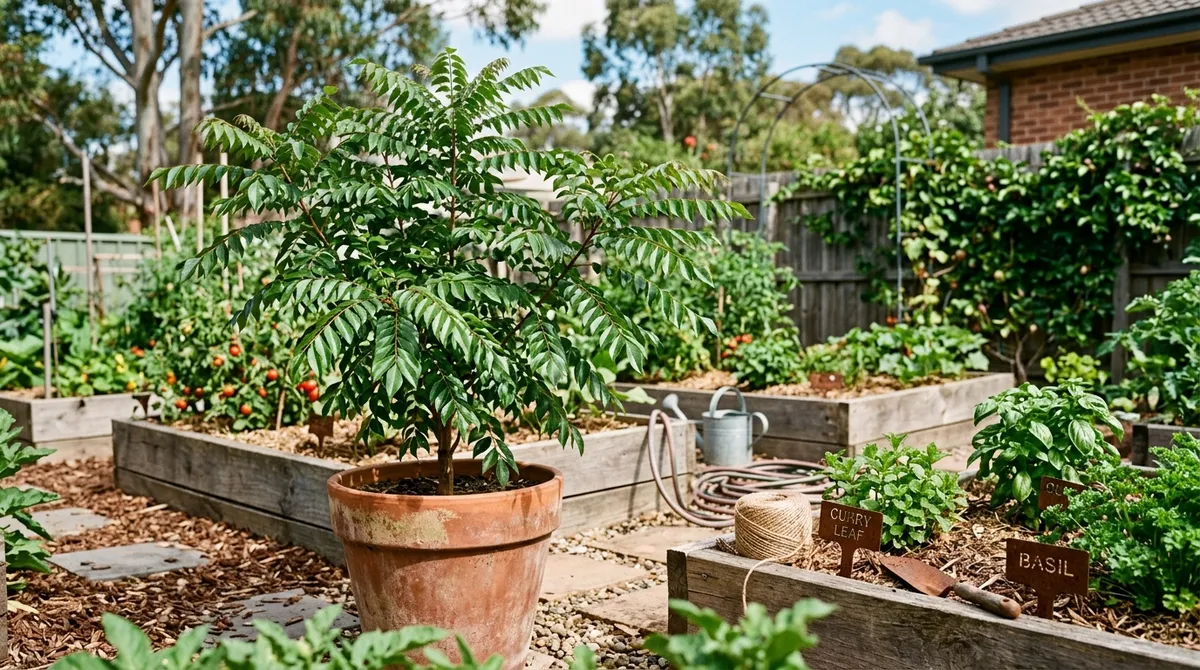
Curry leaf tree (Murraya koenigii) is a must-have for anyone who cooks South Indian, Sri Lankan, or Southeast Asian food. Fresh curry leaves carry a warm, complex aroma that dried leaves simply cannot match. A single tree in a pot or garden bed will supply your kitchen for decades.
The tree grows 2 to 4 metres tall and thrives in warm, frost-free areas across Australia. Gardeners in cooler regions can grow it in a pot and bring it under cover during winter. This guide covers the best varieties, growing tips, and planting times by region.
🌱 Plant profile: Curry Leaf, with sowing times for your region, companion plants and common pests.
When to Plant in Your Region
Varieties
Regular Curry Leaf
The standard variety found in most nurseries. Strong, classic curry leaf flavour. Grows 2 to 4 metres tall and produces abundant leaves once established. Vigorous grower in warm climates.
Dwarf / Gamthi
A compact variety that stays smaller and grows more slowly. Thicker leaves with a more intense flavour than the regular type. Excellent choice for pots and small gardens. Harder to find in nurseries but worth seeking out.
Growing from Seed
Curry leaf trees can be grown from seed, though it takes patience. Fresh seeds germinate best. Remove the outer flesh from the berry before planting, as the pulp contains germination inhibitors. Sow seeds 1 cm deep in warm, moist potting mix and keep them in a bright spot. Germination takes 2 to 4 weeks with fresh seed, longer with older seed.
Planting and Position
Curry leaf trees love full sun and well-drained soil. Choose the warmest spot in your garden, ideally against a north-facing wall that radiates heat. The tree handles a range of soil types but performs best in soil enriched with compost.
- Full sun gives the best leaf production and strongest flavour
- Well-drained soil is essential, as the roots dislike sitting in water
- Shelter from cold winds helps in borderline frost areas
- Space trees 2 to 3 metres apart for in-ground planting
Growing in Pots
Container growing is the best option for gardeners in cooler regions. Use a pot at least 40 cm across with good drainage holes. A quality potting mix with added perlite works well. Repot every 2 to 3 years as the tree grows.
The main advantage of pot culture is frost protection. You can move the pot indoors, into a garage, or under a verandah during the cold months. Place it back in full sun once frost risk has passed in spring.
Pruning and Harvesting
Regular pruning encourages bushy growth and more leaf production. Remove the growing tips of branches to promote side shoots. A well-pruned tree stays compact and produces far more harvestable foliage than an unpruned one.
Pick leaves fresh as you need them. The leaflets are best used whole, added to hot oil at the start of cooking to release their fragrance. Leaves can be frozen for later use, though fresh leaves have the strongest aroma.
Common Problems
Slow to establish
Curry leaf trees test your patience. The first 2 years are slow, with limited leaf production. Growth accelerates once the root system is well developed. Avoid overfertilising young trees, as this can burn the roots. A light application of seaweed solution every few weeks is enough in the early stages.
Frost damage
Frost will burn the leaves and can kill young trees. Established trees may recover from light frost, but repeated cold exposure weakens them. Move potted trees under cover before the first frost. In-ground trees benefit from a frost cloth draped over them on cold nights.
Scale insects
Scale is the most common pest on curry leaf trees. Look for small, flat, brown or white bumps on stems and the undersides of leaves. Spray with horticultural oil or white oil, making sure to coat all surfaces. Repeat every 2 weeks until the scale is gone.
Root suckers
Curry leaf trees produce root suckers freely. These shoots emerge from the base of the trunk or from the roots some distance from the main tree. Remove suckers as soon as you spot them, or they will compete with the main tree for nutrients and water. Suckers pulled out early are easier to manage than established ones.
Frequently Asked Questions
When should I plant curry leaf tree in Australia?
Plant curry leaf trees in spring or early summer once frost risk has passed. September to November is ideal in most regions. The tree needs warm soil and consistent warmth to establish new roots.
How long does curry leaf tree take to establish?
Curry leaf trees are slow to establish and can take 2 years before they start producing leaves in useful quantities. Growth speeds up once the root system is developed. Patience in the first couple of years pays off with decades of harvests.
Can I grow curry leaf tree in a pot?
Yes. Curry leaf grows well in pots, and container growing is the best option in cooler regions. Use a large pot (at least 40 cm across) with good drainage. You can bring the pot indoors or under cover during winter to protect it from frost.
Are fresh curry leaves better than dried?
Fresh curry leaves have a complex, fragrant aroma that dried leaves cannot match. Dried leaves lose most of their volatile oils and flavour. Growing your own tree gives you access to fresh leaves year-round in warm climates.
See also: Curry Leaf in the Plant Library
Plant profile
The curry leaf profile has sowing times for your region, companion plants and common pests.