How to Grow Carob in Australia
Updated September 2026
A drought tough Mediterranean shade tree with sweet pods
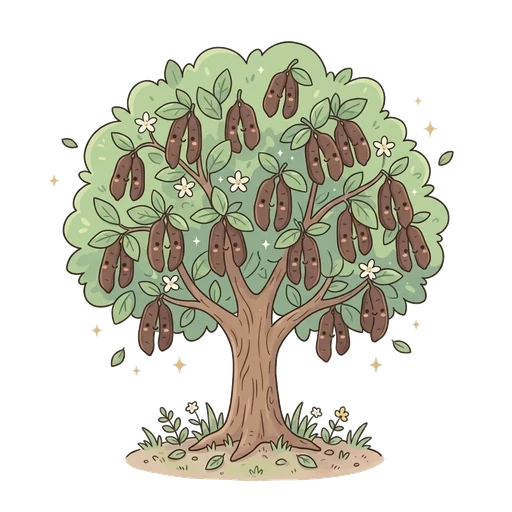
Carob, Ceratonia siliqua, is an evergreen Mediterranean tree of 5 to 10 m with glossy leaves and long, leathery pods. The pods hold a sweet pulp that is dried and ground into carob powder, the caffeine free alternative to cocoa, and they can be chewed straight from the tree.
It is a slow, long-lived tree and one of the toughest fruiting trees for hot, dry gardens. The one thing to understand before buying is that carob trees come as male, female or hermaphrodite, and only some of them bear pods.
When to Plant in Your Region
Carob is planted as a young potted tree once the weather warms. Plant from September to November in South East Queensland, Northern Rivers NSW and Sydney & Coastal NSW. Plant from October to November in Melbourne & Victoria. Plant from March to April or September to October in Adelaide & SA and Perth & WA. It is not suited to Tasmania, Canberra & ACT, North Queensland and Darwin & Top End. Choose your region below for the local calendar and any regional note.
Climate and Where It Grows in Australia
Carob loves heat and dry summers and is very drought tough once established. Frost kills young trees and wet, humid summers rot its roots.
Adelaide and Perth are ideal carob country, with autumn and spring planting windows, and established trees there need no summer watering. South East Queensland, the Northern Rivers and Sydney can grow it, planted in spring, in the hottest, best drained spot. Melbourne is marginal: plant in spring in the hottest, driest, most sheltered position, and expect pods only after a long warm summer. Tasmania and Canberra are not suited because frost kills young trees and the season is too short. North Queensland and the Top End are not reliable, as wet season humidity rots roots and spoils pod set.
- South East Queensland: plant from September to November.
- Northern Rivers NSW: plant from September to November.
- Sydney & Coastal NSW: plant from September to November.
- Melbourne & Victoria: plant from October to November. Marginal. Plant Oct to Nov in the hottest, driest sheltered spot. Pods only ripen after a long warm summer.
- Adelaide & SA: plant from March to April or September to October. Plant Mar to Apr or Sep to Oct. Adelaide is ideal carob country; established trees need no summer watering.
- Perth & WA: plant from March to April or September to October. Plant Mar to Apr ahead of the winter rains, or Sep to Oct. Very drought tough once established.
- Tasmania: not suited. Unsuitable. Needs long hot dry summers, and frost kills young trees.
- Canberra & ACT: not suited. Not reliable. Hard Canberra frosts kill young trees and the season is too short to ripen pods.
- North Queensland: not suited. Not reliable. Wet season humidity rots roots and spoils pod set. Carob wants a dry Mediterranean summer.
- Darwin & Top End: not suited. Not reliable. Wet season humidity and heavy rain rot roots and spoil pod set.
Choosing a Variety
Female trees
Carry the pods, but need a male or hermaphrodite tree nearby for pollination. Buy grafted so you know the tree is female.
Hermaphrodite trees
Carry both male and female flowers, so they can set pods on their own and also pollinate female trees. The simplest choice for a single tree.
Male trees and seedlings
Male trees never bear pods. Seedlings can turn out male, female or hermaphrodite, and you will not know which for years, so avoid them for a pod crop.
Planting
Plant in full sun in free-draining soil. Carob is happy in poor, stony or limy soil with a pH of about 6 to 8, but it will not tolerate waterlogging.
- Plant small. Carob grows a deep taproot and resents root disturbance, so a young tree in a small pot establishes better than a large advanced one.
- Space. Allow about 6 m between trees. A carob makes a broad, dense shade tree.
- Frost. In marginal districts, cover young trees on frosty nights for their first few winters.
- Planting. Plant at the depth it sat in the pot, water in and mulch lightly, keeping mulch off the trunk.
Care
Watering
Water young trees deeply every week or two through their first two summers. After that, established trees in dry climates need little or no summer water. Overwatering is a bigger risk than drought.
Feeding
Carob is a legume and needs little feeding. A light application of compost in spring is plenty.
Pruning
Shape young trees to a single trunk and gradually remove the lowest branches so you can walk and gather pods underneath. Otherwise, prune only dead or damaged wood.
Pollination
Female trees need a male or hermaphrodite tree nearby, as the plant library notes that some trees need a partner to set pods. A hermaphrodite tree can set pods on its own. Flowers appear in autumn, and pods take the best part of a year to ripen.
Pests and Diseases
Carob is very disease resistant, and the plant library lists few pests.
- Root rot. The main way carob trees die, almost always in soil that stays wet. Prevention is good drainage and restrained watering.
- Carob moth. Its larvae feed inside ripening and stored pods. Gather pods promptly and store them dry and sealed.
- Rats. They are attracted to fallen pods. Keep the ground under the tree clear.
Harvest and Storage
Pods ripen from green to dark brown in late summer and autumn and dry on the tree. When they are brown and leathery, shake or knock them down onto a tarp.
- Dry the pods further in the sun for a week or so until brittle.
- Break them open and remove the very hard seeds, which are too hard for a kitchen grinder.
- Roast the broken pod pieces lightly for a darker flavour if you like, then grind them to powder.
Dried pods keep for months in a dry, sealed container.
Track Your Carob Tree
Add carob to your garden in the Planting Season app and get reminders for planting, care and harvest, tuned to your region.
Open the App →Frequently Asked Questions
When should I plant carob in Australia?
It depends on your region. Plant from September to November in South East Queensland, Northern Rivers NSW and Sydney & Coastal NSW. Plant from October to November in Melbourne & Victoria. Plant from March to April or September to October in Adelaide & SA and Perth & WA. It is not suited to Tasmania, Canberra & ACT, North Queensland and Darwin & Top End. Choose your region in the calendar on this page for the local window.
Why does my carob tree have no pods?
The usual reasons are that the tree is male, that it is a female with no male or hermaphrodite tree nearby, or that it is simply too young. Seedling carobs can take many years to show which they are.
How long does carob take to produce pods?
A grafted carob usually starts bearing in about five years, and crops keep building for many years. Seedling trees take longer.
Can I grow carob in Melbourne?
It is marginal. Plant in October or November in the hottest, driest, most sheltered spot you have, protect young trees from frost, and expect pods only after a long warm summer.
See also: Carob in the Plant Library