How to Grow Bitter Melon in Australia
Updated June 2026
A tropical climber with distinctive flavour, grown on a backyard trellis
Bitter melon goes by many names. Bitter gourd, karela, ampalaya, ku gua. The fruit looks like a warty cucumber and has a strong, distinctive bitter flavour that divides opinion. You either grew up eating it or you are about to discover something new.
Indian, Chinese, Filipino, and Japanese cuisines all use bitter melon differently. Stuffed and braised in Indian cooking, stir-fried with black bean sauce in Chinese kitchens, sauteed with egg and tomato in Filipino dishes, and sliced into salads in Japanese cuisine. The fruit also has a long history in traditional medicine across Asia.
Bitter melon is a vigorous tropical vine. It loves heat, needs a strong trellis, and produces fruit over a long season once it gets going. Australian gardeners in Brisbane, Darwin, and other warm regions grow it with ease. Southern gardeners can succeed too, with the right timing and a warm, sheltered spot.
🌱 Plant profile: Bitter Melon, with sowing times for your region, companion plants and common pests.
When to Plant Bitter Melon in Your Region
Bitter melon needs warm soil to germinate. Soil temperatures below 20 degrees Celsius result in poor germination or seedling failure. Plant after all frost risk has passed and the soil has warmed. In subtropical regions, September to January is the main sowing window. Tropical gardeners can sow almost year-round. Temperate gardeners should aim for October to December.
Bitter Melon Varieties
Indian Type (Karela)
Dark green skin covered in pointed spines. The most bitter of all types. Fruit grows 10 to 20 cm long and tapers at both ends. The variety used in Indian curries, stuffed karela, and karela chips. Widely available from Indian grocery stores and online seed suppliers.
Chinese Type
Lighter green with rounded bumps rather than sharp spines. Grows longer (20 to 30 cm) and is milder in flavour than the Indian type. The variety most commonly found at Asian supermarkets. Excellent stir-fried with egg, fermented black beans, or pork.
Thai Type
Small, round to oval, white or pale green. Grows 5 to 8 cm across. Very bitter. Used in Thai curries and soups. Compact plants that suit smaller gardens and containers. Prolific producers once fruiting begins.
Seed Preparation and Sowing
Bitter melon seeds have a hard outer coat. Germination is slow (10 to 14 days or longer) without preparation. Two techniques speed things up significantly.
- Soak seeds for 24 hours in warm water before planting. This softens the seed coat and triggers germination.
- Nick the seed coat with a small file or nail clippers before soaking. Score a small notch through the outer shell (avoid damaging the inner seed). This lets water penetrate faster and can cut germination time in half.
- Sow 2 cm deep in warm, moist soil or seed-raising mix. Soil temperature should be at least 20 degrees. A heat mat helps in cooler regions.
- Transplant seedlings once they have 3 to 4 true leaves. Handle the root ball gently. Space plants 50 to 60 cm apart along the base of a trellis.
Trellis and Support
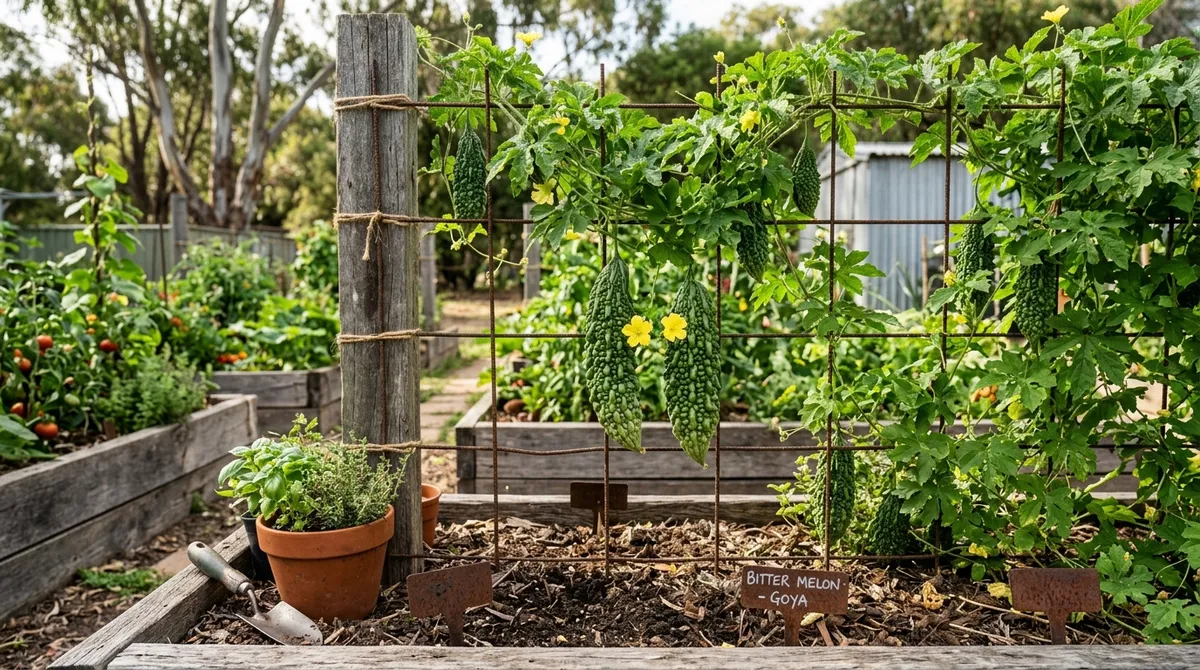
Bitter melon is a vigorous climber. The vines reach 3 to 5 metres long and grab onto anything with their tendrils. A strong trellis is essential. The fruit hangs down from the vine, so vertical growing keeps the fruit clean, straight, and easy to spot at harvest time.
Use a sturdy trellis at least 2 metres tall. A-frame structures, fence panels, arched tunnels, and heavy-duty netting all work well. The trellis needs to handle significant weight once the vine is loaded with fruit and foliage. Avoid flimsy stakes or thin twine.
Growing and Care
Bitter melon grows fast in warm conditions. Plant in full sun (at least 6 to 8 hours daily) in rich, well-drained soil. Work in plenty of aged compost before planting.
- Water regularly. Bitter melon needs consistent moisture, especially during flowering and fruiting. Water deeply 2 to 3 times per week. Mulch around the base to retain soil moisture.
- Feed every 2 to 3 weeks with a balanced liquid fertiliser once flowering starts. A seaweed and fish emulsion combination works well. Reduce nitrogen once fruit has set, as excess nitrogen encourages leaf growth over fruit production.
- Pollination matters. Bitter melon produces separate male and female flowers on the same vine. Male flowers appear first. Female flowers (identifiable by the small, bumpy fruit behind the petals) appear 5 to 6 weeks later. Bees and other insects handle pollination. Hand pollination helps in cool or windy weather. Pick a male flower, remove the petals, and brush the pollen directly onto the centre of a female flower.
Harvesting
Harvest bitter melon while the fruit is green and firm. This is the key to good flavour and texture. Fruit left on the vine too long turns orange, splits open, and reveals bright red seeds inside. Overripe fruit is too bitter for most recipes and has a mushy texture.
Pick fruit when it is full-sized for its variety but still deep green. Indian types are best at 10 to 15 cm. Chinese types at 20 to 25 cm. Twist or cut the fruit from the vine with a short piece of stem attached.
Regular harvesting encourages the vine to produce more fruit. Check the vine every 2 to 3 days during peak production. Store fresh bitter melon in the fridge for up to one week. Slice and blanch for freezing if you have a large harvest.
Common Problems
Slow or failed germination
The hard seed coat is usually the cause. Soak seeds for 24 hours and nick the seed coat before planting. Cold soil also prevents germination. Use a heat mat or wait until the soil reaches 20 degrees.
Fruit fly
Queensland fruit fly and Mediterranean fruit fly target bitter melon fruit. Use exclusion bags (fine mesh or organza bags) placed over individual fruit as soon as they form. This is the most reliable organic control method. Protein bait traps around the garden also reduce fruit fly pressure.
Splitting fruit
Fruit that turns orange and splits open has been left on the vine too long. Harvest while the skin is green and firm. Check the vine frequently once fruiting begins.
Poor fruit set
Cool or wet weather reduces pollinator activity. Hand-pollinate female flowers in the morning for the best success rate. Male flowers open first, so patience is needed in the early weeks of flowering.
Frequently Asked Questions
When should I plant bitter melon in Australia?
In subtropical regions like Brisbane, sow from September to January. In tropical regions, sow year-round during the wet season. In temperate regions like Melbourne and Sydney, sow from October to December. Bitter melon needs warm soil above 20 degrees to germinate.
How long does bitter melon take to grow?
Bitter melon takes 12 to 16 weeks from sowing to first harvest. Female flowers appear 5 to 6 weeks after male flowers, and fruit is ready to pick about 2 weeks after pollination.
How do you reduce the bitterness of bitter melon?
Harvest fruit young and green for the mildest flavour. Slice and salt the flesh for 15 to 30 minutes, then rinse before cooking. Chinese varieties are milder than Indian types. Cooking with strong flavours like black bean sauce, curry spices, or egg also balances the bitterness.
Can you grow bitter melon in pots?
Yes. Use a pot at least 40 cm wide and deep, filled with quality potting mix. Place the pot in full sun against a wall or fence and provide a trellis for the vine to climb. Water daily in summer. Pot-grown plants produce less fruit than in-ground plants but still yield well.
See also: Bitter Melon in the Plant Library
Plant profile
The bitter melon profile has sowing times for your region, companion plants and common pests.