How to Grow Herbs from Seed in Australia
Updated June 2026
10 easiest herbs, sowing methods, timing by region, and mistakes to avoid
Growing herbs from seed costs a fraction of buying seedlings and gives you access to dozens of varieties that nurseries never stock. A single packet of basil seed costs $3 to $4 and contains enough seeds to grow basil for years. Herb seeds are small but not difficult. The right mix, consistent moisture, and patience are all you need.
This guide covers the 10 easiest herbs to grow from seed in Australian conditions, how to sow indoors and outdoors, seed raising mix, regional timing, transplanting, and the mistakes that trip up most beginners.
🌱 Plants in this guide: Basil, Coriander, Dill, Parsley and Mint. Each plant profile has sowing times for your region, companion plants and common pests.
Seed Raising Mix for Herbs
Herb seeds are small and need a fine, free-draining mix to germinate well. Do not sow them in garden soil or heavy potting mix.
Buy a commercial seed raising mix or make your own:
- 2 parts coir (coconut fibre)
- 1 part perlite
- 1 part fine-sieved compost
Moisten the mix before filling trays or pots. It should be damp like a wrung-out sponge. Fill containers to 1 cm below the rim and press the surface flat with a piece of board or the base of another pot. This gives seeds a smooth, even surface to sit on.
Indoor vs Outdoor Sowing
Sowing indoors
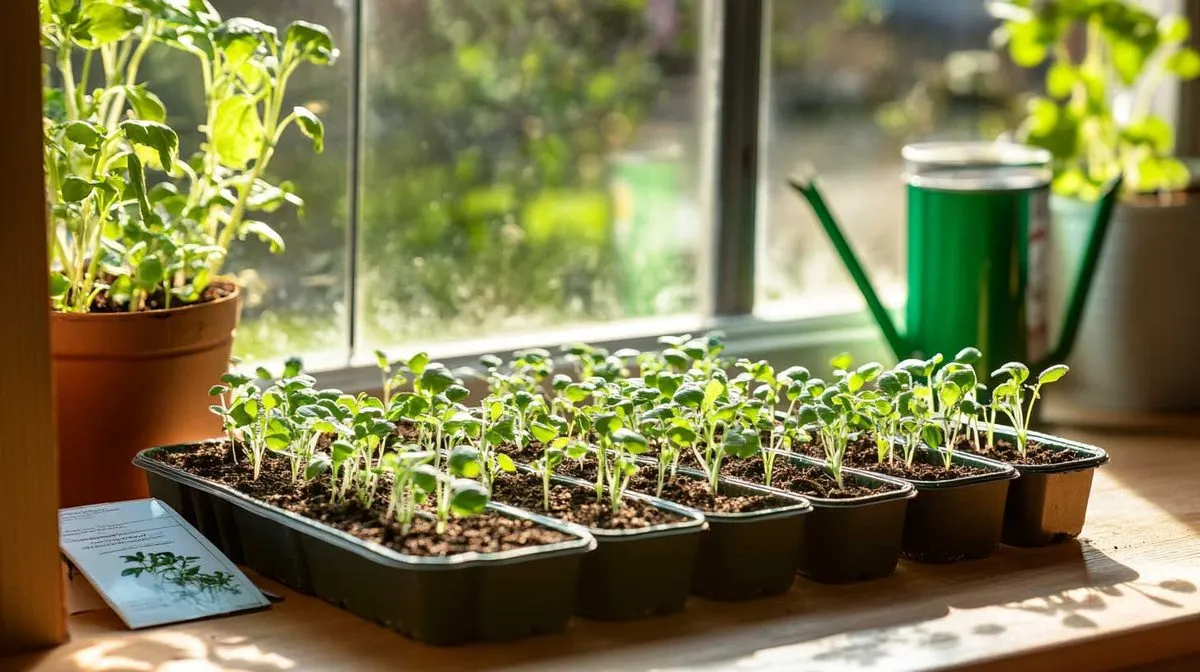
Starting herbs indoors gives you control over temperature and moisture. This is the best method for slow germinators like parsley and chives, and for getting an early start on warm-season herbs like basil before the last frost has passed.
- Fill small pots or cell trays with seed raising mix.
- Sow seeds on the surface or at the depth indicated on the packet.
- Mist gently with a spray bottle. Do not pour water, which displaces tiny seeds.
- Cover trays with a clear lid or plastic wrap to retain humidity until seeds germinate.
- Place on a bright windowsill (north-facing in Australia) or under a grow light.
- Remove the cover as soon as seedlings appear to prevent damping off.
Sowing outdoors (direct sowing)
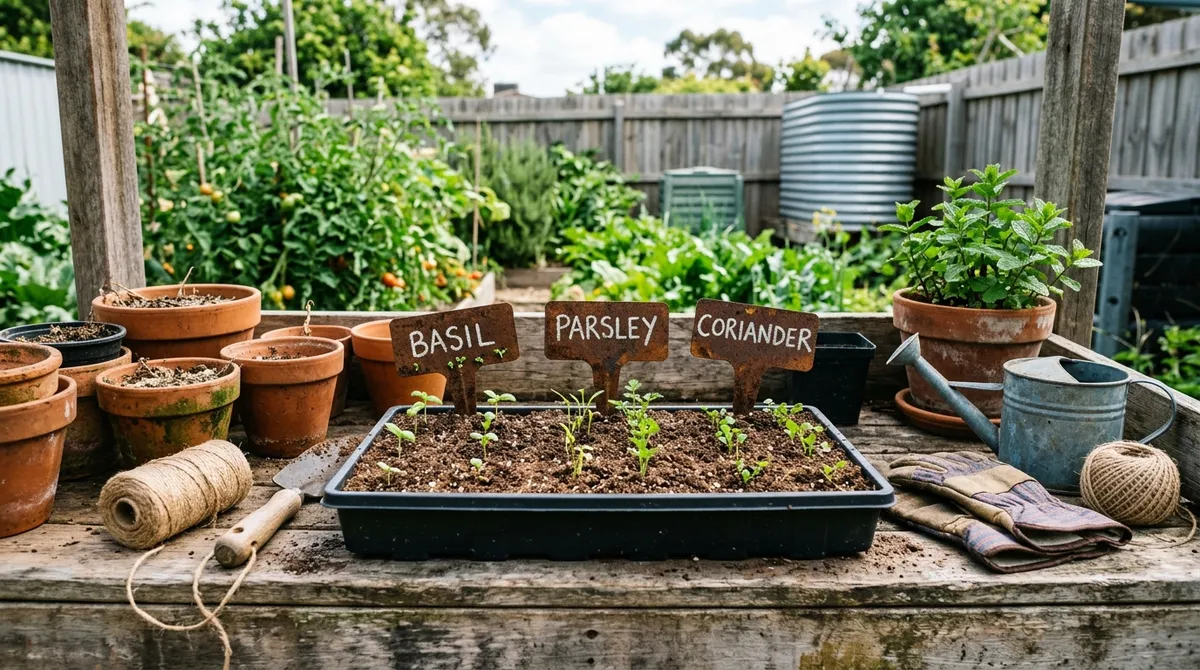
Some herbs do best when sown directly where they will grow. Coriander, dill, and chervil dislike root disturbance and bolt quickly after transplanting. Sow these directly into garden beds or pots filled with quality potting mix.
- Prepare the soil with compost and rake to a fine tilth.
- Scatter seeds thinly along a shallow furrow or across the surface.
- Cover lightly (most herb seeds need only 3 to 5 mm of covering).
- Water with a fine spray and keep moist until germination.
- Thin seedlings to the recommended spacing once they have 2 true leaves.
10 Easiest Herbs to Grow from Seed
1. Basil
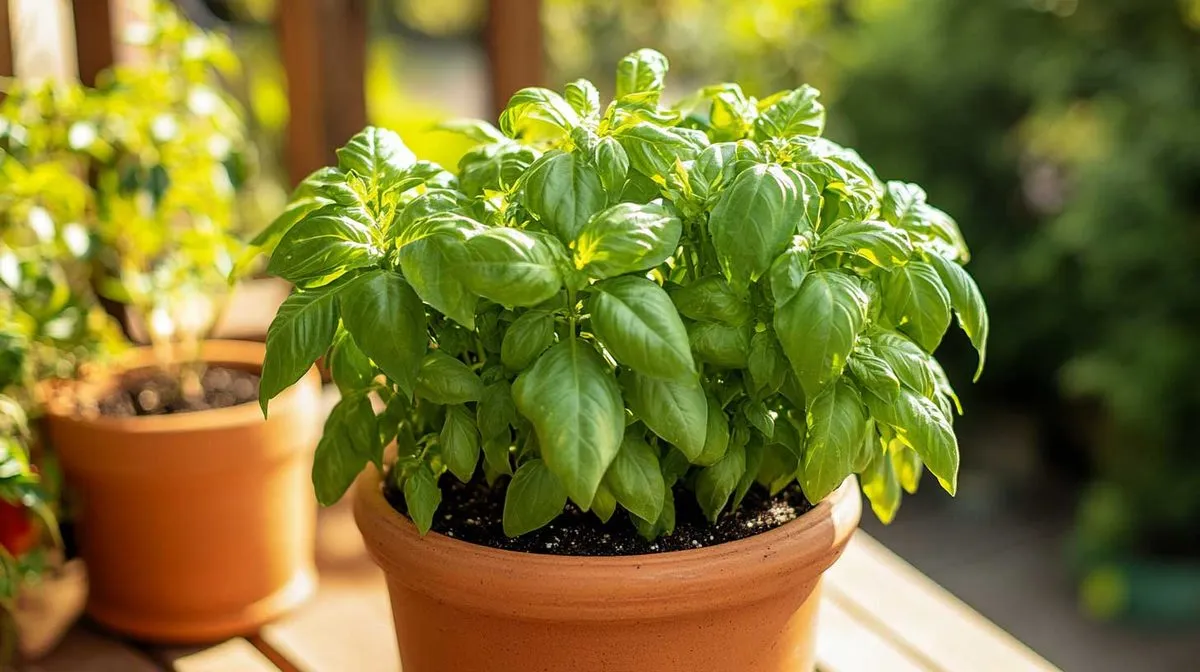
Germination: 5 to 10 days. Sow indoors in early spring or direct sow after frost risk has passed. Needs warm soil (above 18 degrees) to germinate. Press seeds onto the surface as they need light to germinate. Pinch out growing tips regularly to encourage bushy growth and delay flowering. Annual. Full sun. The single most popular herb to grow from seed.
2. Coriander
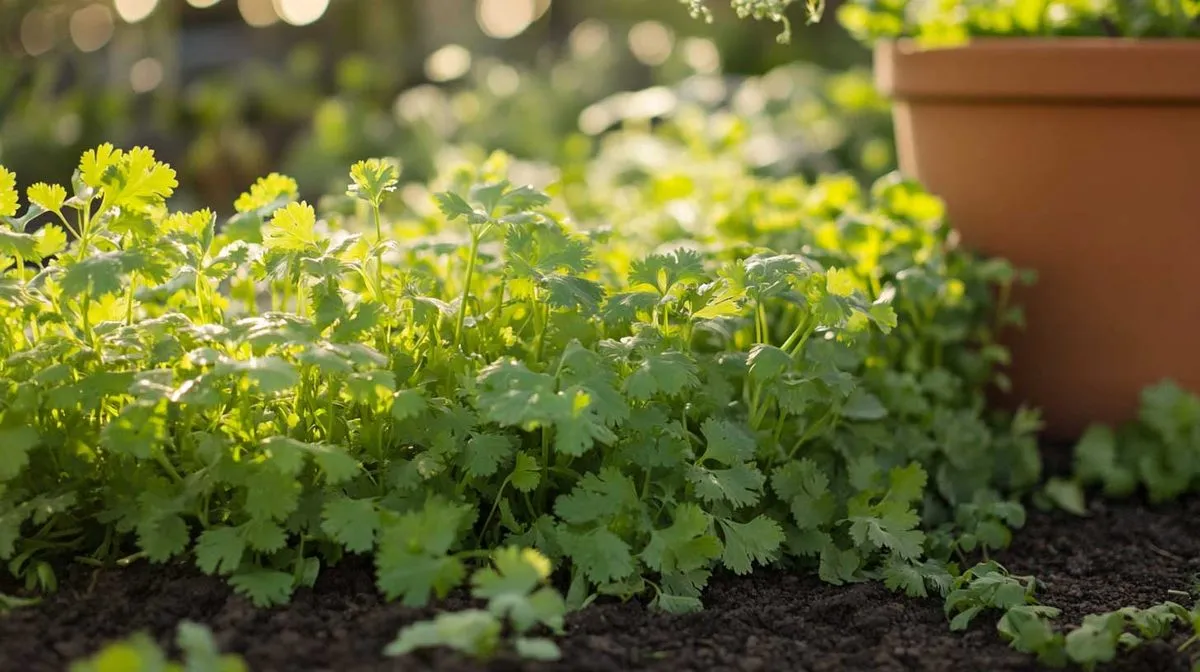
Germination: 7 to 14 days. Sow directly where it will grow. Coriander hates transplanting and bolts in response to root disturbance. Sow every 3 weeks for continuous supply. Prefers cooler weather (15 to 25 degrees). In hot climates, grow in autumn, winter, and early spring. Use slow-bolt varieties like Slowbolt or Calypso. Crush the seed coat lightly before sowing to speed germination. Annual.
3. Parsley
Germination: 14 to 28 days. Parsley is slow to germinate, so be patient. Soak seeds in warm water for 12 to 24 hours before sowing to speed things up. Start indoors or direct sow. Flat-leaf (Italian) parsley has stronger flavour. Curly parsley is better as a garnish. Biennial (produces leaves the first year, flowers the second). Sun to part shade.
4. Dill
Germination: 10 to 14 days. Sow directly in the garden as dill does not transplant well. Grows tall (60 to 90 cm) so give it space or plant at the back of a bed. Self-seeds readily. Let some plants go to flower and you will have dill coming up on its own next year. Use both the fronds and the seeds in cooking. Annual. Full sun.
5. Chives
Germination: 14 to 21 days. Start indoors in trays and transplant once seedlings are 10 cm tall. Chives grow in clumps that thicken each year. Divide established clumps every 2 to 3 years. The purple flowers are edible and attract pollinators. Cut to 2 cm above soil level to harvest. Perennial. Sun to part shade.
6. Rocket (Arugula)
Germination: 4 to 7 days. One of the fastest-germinating herbs. Sow directly into beds or pots. Ready to harvest baby leaves in 3 to 4 weeks. Bolts in hot weather, so grow in autumn, winter, and spring. Wild rocket is slower to bolt than salad rocket and has a stronger, peppery flavour. Annual or short-lived perennial. Sun to part shade.
7. Oregano
Germination: 7 to 14 days. Seeds are tiny, so surface sow and press gently into the mix. Do not cover. Start indoors and transplant. Oregano is a tough, drought-tolerant perennial once established. It spreads readily, so give it room or contain it in a pot. Cut back hard after flowering. Full sun, well-drained soil.
8. Thyme
Germination: 14 to 21 days. Seeds are very small. Surface sow and mist gently. Start indoors for best results. Thyme is slow to establish but long-lived once growing. Needs well-drained soil and full sun. Let the soil dry between waterings. Trim after flowering to keep plants compact. Perennial. Good in pots and garden borders.
9. Sage
Germination: 10 to 21 days. Sow indoors in spring. Transplant to a sunny, well-drained position. Sage grows into a woody shrub over time. Prune in spring to keep it productive. Common sage (Salvia officinalis) is the culinary variety. Purple sage is ornamental with similar flavour. Perennial. Drought-tolerant once established.
10. Chamomile
Germination: 7 to 14 days. Surface sow (seeds need light). German chamomile is an annual grown for tea. Roman chamomile is a perennial ground cover. Both self-seed freely. Grow in full sun to part shade. Harvest flowers when fully open and dry them for tea. Easy, undemanding, and pretty in the garden.
Timing by Region
Australia's climate zones affect when you can sow herb seeds outdoors. The table below gives general guidance. Use the Planting Season app for month-by-month timing specific to your region.
Tropical and subtropical (Darwin, Cairns, Brisbane)
Sow warm-season herbs (basil, coriander, dill) year-round. Coriander grows best in the dry season (April to September) when temperatures are cooler. Avoid planting Mediterranean herbs (rosemary, thyme, sage) in the wet season as humidity causes fungal problems.
Temperate (Sydney, Melbourne, Adelaide, Perth)
Sow basil and warm-season herbs from September to January. Sow coriander, parsley, and dill in autumn (March to May) and again in early spring (August to September). Perennial herbs like chives, oregano, and thyme can be started any time from spring to autumn.
Cool climate (Hobart, Canberra, high country)
Start warm-season herbs indoors in August or September and transplant after the last frost (usually October or November). Direct sow coriander and dill from September to March. Perennial herbs establish best when planted in spring to give them a full growing season before winter.
Transplanting Herb Seedlings
Seedlings started indoors need to be hardened off before transplanting to their permanent position.
- Begin hardening off when seedlings have at least 4 true leaves (not the initial seed leaves).
- Place trays outdoors in a sheltered, shady spot for 2 to 3 hours on the first day. Bring inside overnight.
- Increase outdoor time by 1 to 2 hours each day over the course of a week.
- By day 7, leave seedlings outdoors all day and night (if no frost risk).
- Transplant into prepared garden beds or pots the following day.
- Water seedlings in well after transplanting and provide shade for the first 2 to 3 days if conditions are hot.
Common Mistakes When Growing Herbs from Seed
- Overwatering basil seedlings. Basil is susceptible to damping off. Keep the mix moist, not wet. Water from below (sit the tray in a shallow dish of water for 10 minutes) rather than overhead spraying once seedlings have emerged.
- Using old coriander seed. Coriander seed loses viability quickly. Seed more than 2 years old germinates poorly. Buy fresh seed each year or save your own from plants that bolt in your garden. Crushing the round seed coat before sowing exposes the two seeds inside and speeds germination.
- Sowing too deep. Most herb seeds are tiny and need light to germinate. Basil, thyme, oregano, and chamomile should be pressed onto the surface of the mix, not buried. A very light sprinkle of vermiculite is enough covering.
- Not thinning seedlings. Herb seeds often germinate in thick clusters. Overcrowded seedlings compete for light and grow leggy. Thin to one strong seedling per cell or space seedlings 5 to 10 cm apart in garden beds.
- Transplanting coriander and dill. Both herbs bolt rapidly when their roots are disturbed. Sow these two directly where they will grow. If you must start them in trays, use deep cells and transplant very young seedlings before roots hit the bottom.
- Giving up on parsley. Parsley takes 2 to 4 weeks to germinate. Many beginners assume the seed is dead and either overwater the tray or throw it out. Be patient. Soaking seeds before sowing helps, but germination is always slow.
- Harvesting too late. Herbs produce the most flavourful leaves before flowering. Once a herb flowers, leaf production slows and flavour declines. Pinch out flower buds on basil and coriander to extend the leaf harvest.
Growing Herbs in Pots
Herbs are excellent container plants. They take up little space, grow well in pots as small as 15 to 20 cm, and can be placed right outside your kitchen door for easy picking.
- Use quality potting mix with good drainage. Add perlite if the mix feels heavy.
- Drainage is essential. Every pot must have holes in the bottom. Herbs hate wet feet.
- Mediterranean herbs (rosemary, thyme, sage, oregano) prefer drier conditions. Let the top 2 cm of soil dry out between waterings. Use a gritty, well-drained mix.
- Leafy herbs (basil, parsley, coriander, chives) prefer consistent moisture. Water when the top 1 cm of soil feels dry.
- Feed container herbs every 2 weeks with a diluted liquid fertiliser (seaweed or fish emulsion). Potting mix nutrients wash out with watering.
- Keep mint in its own pot. Mint spreads by underground runners and will take over any container it shares with other herbs.
Frequently Asked Questions
What are the easiest herbs to grow from seed?
Basil, coriander, dill, parsley, and chives are the easiest herbs to grow from seed. They germinate reliably and grow quickly. Basil and coriander can be sown directly outdoors in warm weather and produce harvestable leaves within 4 to 6 weeks.
Can you grow herbs from seed indoors?
Yes. Sow herbs in small pots or trays filled with seed raising mix and place on a bright windowsill (north-facing is best in Australia). Most herbs germinate within 7 to 21 days indoors. Transplant outdoors after hardening off once seedlings have 4 or more true leaves.
Why does my coriander bolt so quickly?
Coriander bolts (goes to seed) in response to heat, long days, and root disturbance. Sow in autumn or early spring when temperatures are between 15 and 25 degrees. Use slow-bolt varieties like Slowbolt or Calypso. Sow directly where it will grow rather than transplanting, as root disturbance triggers bolting.
How long do herb seeds take to germinate?
Germination time varies by herb. Basil takes 5 to 10 days, coriander 7 to 14 days, dill 10 to 14 days, parsley 14 to 28 days, and chives 14 to 21 days. Warm soil (20 to 25 degrees) and consistent moisture speed up germination.
Should I sow herbs directly or start them in trays?
It depends on the herb. Coriander, dill, and chervil should be sown directly where they will grow because they dislike root disturbance. Basil, parsley, chives, and oregano can be started in trays and transplanted successfully.
Plant profiles
Each profile has sowing times for your region, companion plants and common pests.