
Beekeeping for Beginners: An Honest Australian Guide
Updated June 2026
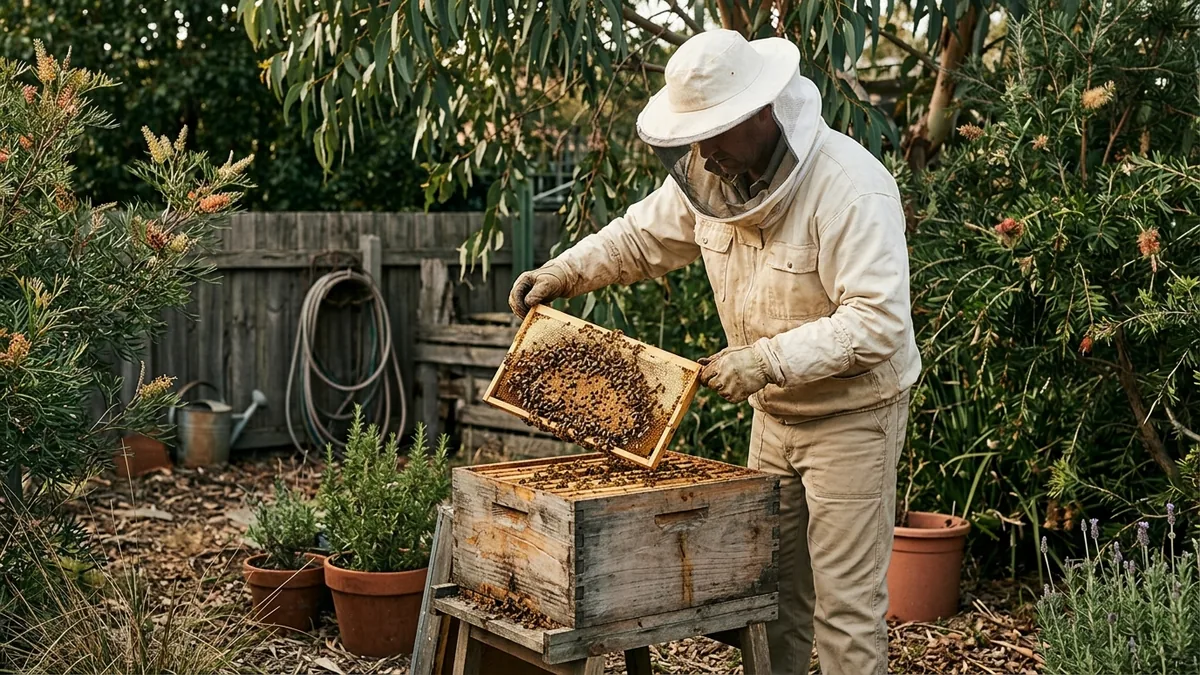
What it really takes to keep bees in your backyard, costs, hive choices, the bee year, and the rules you must follow
Keeping bees is one of the most rewarding things you can add to a backyard. You get a front-row seat to one of nature's most fascinating societies, your garden and your neighbourhood get better pollination, and in time you get honey that tastes of your own street. It is also more work, more cost, and more responsibility than most beginners expect, and in Australia it now comes with real legal and biosecurity obligations.
This guide gives you the honest version. We will cover whether beekeeping suits your life, which hive to start with, how to get bees, the year-round rhythm of a colony, and the registration and varroa requirements you cannot skip. If you are mainly interested in helping bees rather than keeping them, see our guides on bee-friendly planting and the bee-friendly veggie patch instead.
Your First-Year Beekeeping Checklist
This is the shape of a beginner's first year, grouped by Australian season. Tick items off as you go and watch your progress count update. This is a planning guide, your exact timing will shift with your region and your bees.
Is Beekeeping Right for You?
Before you buy a hive, be honest about the commitment. In the active warmer months you will want to open the hive roughly every one to two weeks, with each inspection taking 20 to 40 minutes, plus mite monitoring and the occasional bigger job. It is not a heavy time load, but it is regular, and bees do not wait for a convenient weekend.
There is also cost. Between a hive, bees, protective gear, a smoker, a hive tool, registration, feed, mite treatments, and eventually honey extraction equipment, the first year carries a meaningful outlay and there are ongoing costs every year after. Think of beekeeping as a hobby that slowly pays you back in honey and pollination, not as a way to make money.
Then there are stings. Even with a good suit you will be stung occasionally. If you have a known severe allergy to bee venom, speak to your doctor before you start. Finally, consider your neighbours. Bees fly far and most neighbours never notice a well-placed hive, but it is courteous and sensible to talk to them, position the hive so the flight path lifts up over a fence, and provide water so your bees are not drinking from the pool next door.
Choosing a Hive
The hive is your biggest first decision. The three you will hear about most are the Langstroth, the Flow Hive, and the top-bar hive. Each has real trade-offs.
The Langstroth is the workhorse of Australian beekeeping. It is a stack of boxes holding removable frames, and almost every course, club, supplier, and mentor is set up around it. That ecosystem of support is the single biggest reason it is the standard beginner recommendation. The downside is that boxes full of honey are heavy to lift, and harvesting means pulling frames and extracting.
The Flow Hive is an Australian invention built on a Langstroth-style body with special frames that let honey flow out through a tap without opening the hive. It makes harvesting far gentler and is genuinely clever. The catch for beginners is that easy harvesting does not remove the need to learn full hive management. You still inspect, monitor for mites, manage swarming and disease, and the kit costs more upfront.
The top-bar hive is a long, single-level hive where bees build comb down from wooden bars. It is lower cost, easy to build, and gentle on your back because there is no heavy lifting of boxes. The trade-offs are smaller honey yields, comb that is more fragile to handle, and far less local support, since fewer Australian beekeepers use them.
| Type | Upfront cost | Ease for beginners | Honey access | Best for |
|---|---|---|---|---|
| Langstroth | Moderate | High, most support available | Frames removed and extracted | Most beginners who want mentors and easy parts |
| Flow Hive | Higher | Moderate, still full management | Tap, no opening to harvest | Those happy to pay more for gentle harvesting |
| Top-bar | Lower | Moderate, less support | Cut comb, lower yields | Hands-on, back-friendly, low-cost hobbyists |
Getting Your Bees
You have three common ways to get your first colony. A nucleus colony, or nuc, is a small working hive of a few frames with a laying queen, brood, and bees. It is the easiest and most reliable start for a beginner because the colony is already established and just needs room to grow. A package is a box of loose bees with a separate queen that you install into your hive. Packages are cheaper but you are starting a colony from scratch, which is harder. A caught swarm is free if you can collect one, but the genetics, temperament, and health are unknown, so it is not the ideal first colony. For most beginners, buy a nuc from a reputable local supplier.
The Basic Gear
You do not need much to begin, but a few items are essential. A full bee suit with a veil protects you and gives you the confidence to work calmly. Gloves reduce stings while you learn. A smoker calms the bees and is one of the most important tools you own. A hive tool is a simple metal lever for prising apart frames and boxes glued together with propolis. An extractor for spinning honey out of frames is useful later, but many beginners borrow one or use a club's shared equipment rather than buying their own in year one.
The Legal and Biosecurity Side
Treat registration and biosecurity as the very first things you sort out, before the bees arrive. Your state department, your local beekeeping club, and the national biosecurity resources will give you the current, specific rules for where you live. A good beginner course will walk you through all of this, which is another reason to do one before you start.
The Bee Year, Season by Season
A colony lives by the calendar. Understanding the rhythm tells you what your bees need and when.
Spring
The colony wakes up and grows fast as flowers return. This is when you get set up, install a nuc, and start regular inspections. Spring is also peak swarming season, so watch for crowding and give the bees room.
Summer
The busy build-up and main nectar flow. The colony is at its largest and storing honey. Keep inspecting, add boxes as needed, and keep up your mite monitoring.
Autumn
Activity winds down. This is a key time to assess and manage varroa, take only surplus honey, and make sure the colony has enough stores to get through winter. Feed sugar syrup if they are light.
Winter
The bees cluster to stay warm and largely look after themselves. Keep inspections to a minimum so you do not chill the brood, make sure the hive is dry and sheltered, and feed only if stores run low. Use the quiet months to read, plan, and clean equipment.
Honey in Year One: Manage Your Expectations
This is where many beginners are disappointed, so hear it now: you will often get little or no surplus honey in your first year, and that is completely normal. A new colony spends its first season building comb, raising brood, and storing just enough honey to survive its first winter. If you take that honey too early, you put the colony at risk and may have to feed them back through winter anyway. Let them establish. Year two is usually when a real surplus appears, and it will taste all the sweeter for the wait. If you do harvest, our produce label maker can make tidy honey jar labels.
Track Your Hive Alongside Your Garden
The Planting Season app lets you log your hives next to your flock and your garden beds, so your whole homestead lives in one place.
Open the App →Seasonal Note for Australian Beekeepers
Remember that Australia's seasons run opposite to the northern hemisphere, so almost every beekeeping book and video from overseas is six months out of step with your hive. When an American author talks about spring build-up in April, your equivalent is September to November. Timing also shifts hugely across our climates. In tropical and subtropical regions like far north Queensland the bees can be active nearly year-round, while in cool areas like Tasmania and the highlands the colony shuts down hard over a real winter. Lean on local knowledge, a nearby club or experienced mentor is worth more than any single guide for getting your timing right.
To go deeper on bees and pollinators, visit the bees section, and if you are building a wider homestead, our poultry section covers keeping chickens, ducks, and quail alongside your hives.
Frequently Asked Questions
Do I need to register to keep bees in Australia?
Yes. Registering as a beekeeper with your state or territory department of agriculture or primary industries is a legal requirement everywhere in Australia, even if you keep just one hive. Rules, fees, and renewal periods differ between states, so check your own state's current requirements before you get bees.
How much does it cost to start beekeeping?
A realistic starting budget covers a hive, bees, a suit, a smoker, and a hive tool, plus registration and ongoing costs for feed, mite treatments, and eventually extraction. Expect a meaningful upfront outlay and ongoing yearly costs. Treat it as a hobby that pays you back slowly in honey and garden pollination rather than a money-maker.
Will I get honey in my first year?
Often very little, or none. A new colony spends its first season building comb, raising brood, and storing enough honey to survive winter. Taking honey too early can leave the bees short. Manage your expectations and let the colony establish. Year two is usually when a surplus appears.
What is varroa and do I need to worry about it?
Varroa is a parasitic mite that weakens and kills honey bee colonies. It is now established and being managed in parts of Australia. Monitoring for mites and managing them is a core beekeeping task. Requirements are changing, so check the latest varroa management advice from your state department and local beekeeping groups.
Is beekeeping dangerous if I am allergic to stings?
If you have a known severe allergy to bee stings, talk to your doctor before keeping bees. Most beekeepers are stung occasionally despite protective gear. A good suit, gloves, and a calm technique greatly reduce stings, but you cannot guarantee never being stung.
Which hive should a beginner choose?
The Langstroth hive is the standard recommendation for beginners. It is the most widely used in Australia, parts and advice are easy to find, and most beekeeping courses teach it. Flow Hives make harvesting easier but you still need to learn full hive management. Top-bar hives are lower cost but less common, so support is harder to find.
How much time does beekeeping take?
In the active season, plan on a hive inspection roughly every one to two weeks, each taking 20 to 40 minutes, plus mite monitoring and occasional jobs like feeding or adding boxes. In winter the bees mostly look after themselves. It is a manageable hobby but not a set-and-forget one, especially now that varroa management is required.
Do I need to tell my neighbours before getting bees?
It is wise to talk to your neighbours and good practice generally. Position the hive so the bees' flight path goes up and over fences rather than across a walkway, provide a water source so they do not visit the neighbour's pool, and check any local council rules on hive numbers and placement in residential areas.
Free Monthly Planting Calendar
Get a personalised email each month with what to plant, seasonal tips, and harvest reminders for your region.
We send one email per month. Unsubscribe any time.