
Composting Chicken Manure Safely
Updated June 2026
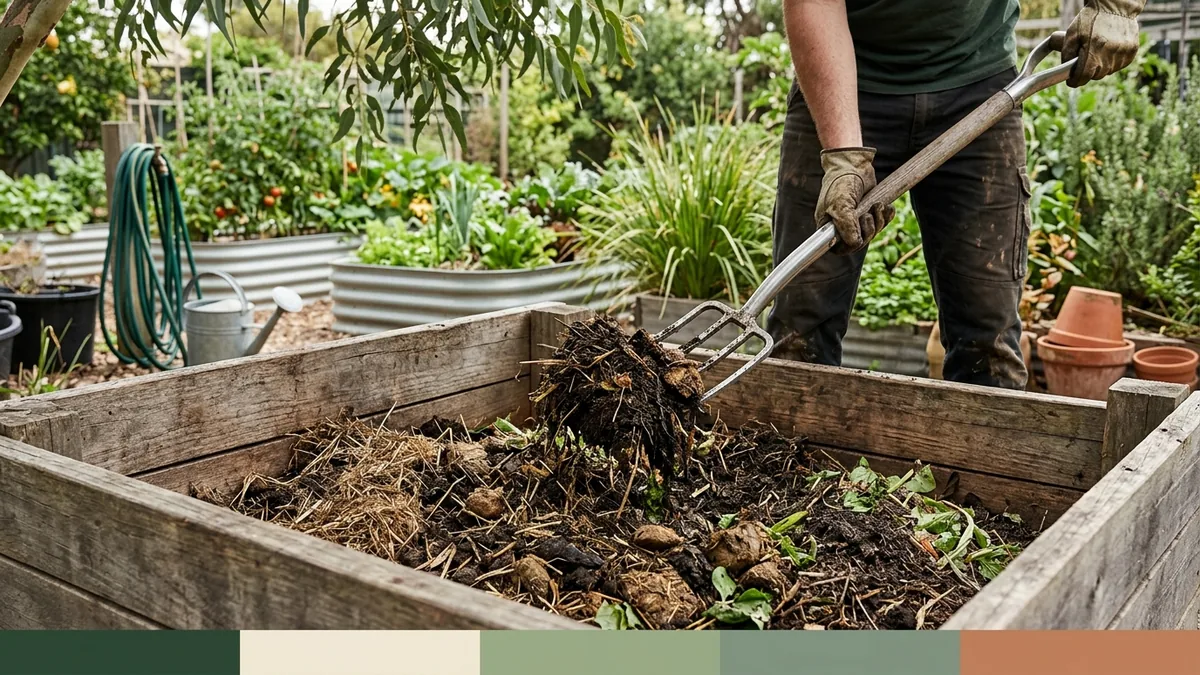
Turn coop cleanings into the best free fertiliser your vegetable garden will ever get
A backyard flock gives you eggs, pest control, and a steady supply of one of the richest natural fertilisers there is. The catch is that you cannot use chicken manure straight from the coop. Fresh, it is far too strong for plants and carries a real food-safety risk. Composted properly, it becomes dark, crumbly, nutrient-dense gold that feeds your beds for a full season.
This guide is specifically about composting chicken manure. If you want the broader picture of building any compost heap, see our general composting guide. Here we focus on the one input that needs the most care to get right, and the most rewarding once you do.
Calculate Your Flock's Compost
Enter how many laying hens you keep and this tool estimates the fresh manure they produce in a year, the carbon bedding to add for a healthy balance, and roughly how much finished compost you can expect. All figures are approximate and intended as a planning guide, not a lab measurement.
Based on roughly 0.1 kg of fresh manure per hen per day (about 36 kg per year). Carbon bedding is suggested at roughly twice the manure by volume for a good carbon to nitrogen balance. Finished compost is estimated at about 30 percent of the combined manure plus bedding mass. Real results vary with bedding type, moisture, and how hot your pile runs.
Why You Can Never Use Raw Chicken Manure
Chicken manure is the strongest of the common farmyard manures. It is loaded with nitrogen, and a lot of that nitrogen is in the form of uric acid that breaks down into ammonia. That ammonia is what gives a dirty coop its sharp, eye-watering smell, and it is the same thing that scorches your plants. Spread fresh manure around your vegetables and you will often see leaves yellow, edges burn, and roots damaged within days. Gardeners call manure in this state too "hot", and the heat is chemical rather than literal.
The second reason is food safety. Raw poultry manure can carry human pathogens including Salmonella and E. coli. If you put it straight onto leafy greens, herbs, or anything you eat close to the soil, you risk contaminating your food. Composting solves both problems at once. A properly managed hot compost reduces the ammonia to plant-friendly forms and the sustained heat, combined with time, dramatically reduces pathogens. This is why finished, aged compost is safe and raw manure is not.
How to Compost Chicken Manure Safely
Composting chicken manure is mostly about balancing all that nitrogen with plenty of carbon, then giving the pile air, moisture, and time.
1. Mix it with carbon
On its own, manure is a slimy, smelly, nitrogen-heavy mess. The fix is carbon-rich brown material: straw, dry autumn leaves, shredded paper and cardboard, and the wood shavings or sawdust you use as coop bedding. As a rough rule, add about twice the volume of brown carbon material to your manure. The bedding you rake out of the coop already does a lot of this work for you, which is why deep-bedded coops make composting so easy.
2. Build and moisten the pile
Layer manure and carbon like a lasagne, or simply mix them as you barrow them to the heap. Aim for the dampness of a wrung-out sponge. Too dry and the microbes stall; too wet and the pile goes anaerobic and starts to stink. A pile around one cubic metre holds heat best.
3. Get it hot, then turn it
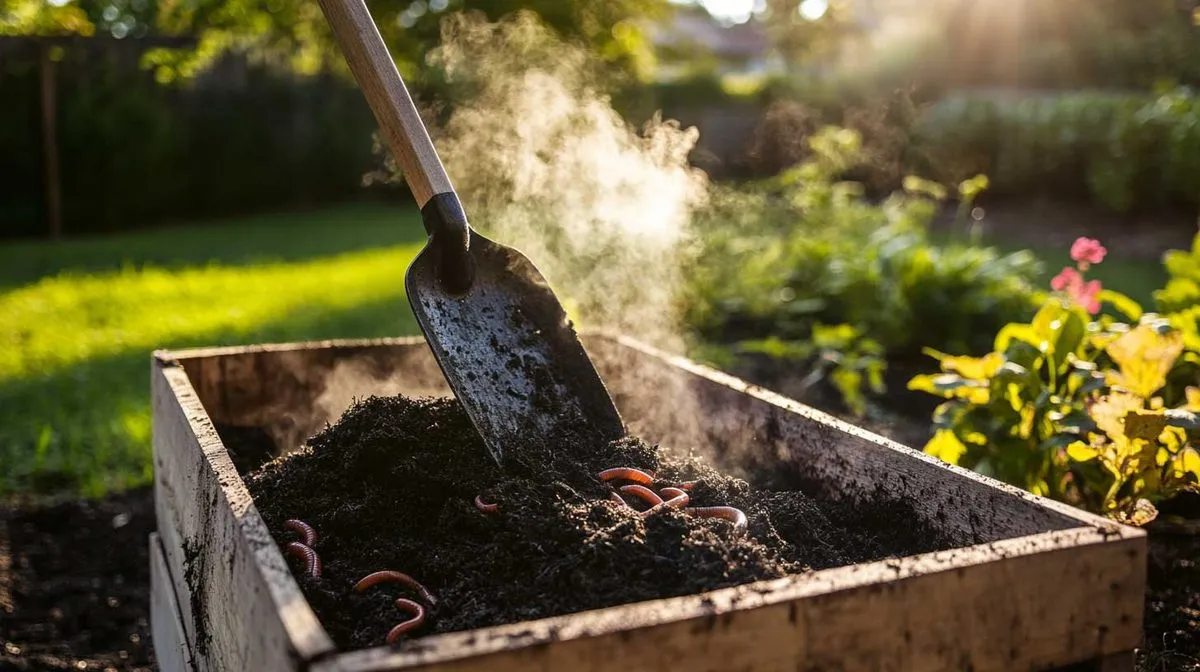
A well-balanced, moist pile will heat up on its own as microbes get to work. If you can, aim for the pile to reach 55 to 65 degrees Celsius in the centre. That heat is what knocks back weed seeds and pathogens. Turn the pile every week or two to bring the outside material into the hot core and to add oxygen. Each turn usually triggers another burst of heat.
4. Cure it
Once the pile stops reheating after turning, it moves into the curing phase. This is where the harsh edges mellow and the compost stabilises. Leave it for several weeks to months. From a fresh start to a finished product, plan on about 6 to 12 months, or until it passes a hot-compost process and smells earthy.
The Deep Litter Method
Deep litter is a clever system that turns the coop floor itself into a slow compost heap, cutting your cleaning work and giving you a head start on finished compost.
Instead of scraping the coop bare every week, you start with a thick layer of carbon bedding such as wood shavings, straw, or dry leaves, usually 10 to 15 cm deep. As the birds add droppings, you top up with fresh bedding and let the chickens do the turning for you. Their constant scratching mixes droppings into the carbon and keeps air moving through the layer. Beneficial microbes establish in the litter and begin breaking everything down in place. A well-run deep litter bed stays surprisingly dry and odour-free, and in cooler months the gentle composting action even adds a little warmth to the coop.
Harvest the deep litter once or twice a year, typically in spring and autumn. What you pull out is already partly composted, so it finishes quickly in the garden heap. Leave a few centimetres of the old litter behind to seed the next batch with microbes. Deep litter is not a shortcut around curing, the harvested material still needs to finish composting before it touches edibles, but it does a lot of the heavy lifting for you.
Getting the Carbon to Nitrogen Balance Right
Compost microbes need a diet of roughly 25 to 30 parts carbon to one part nitrogen, written as a C:N ratio. Chicken manure sits down around 7 to 1, which is far too rich on its own. Carbon materials bring the ratio back up. You do not need to measure anything precisely, the recipe of roughly two parts brown to one part manure gets you close, and your nose will tell you the rest. A sharp ammonia smell means add more carbon. A pile that just sits there and never heats up usually needs more nitrogen or more moisture.
| Material | Rough C:N ratio | Role in the pile |
|---|---|---|
| Fresh chicken manure | ~7:1 | Nitrogen (the "green", the fuel) |
| Fresh grass clippings | ~20:1 | Nitrogen |
| Wood shavings / sawdust | ~400:1 | Carbon (very high, use as bedding) |
| Straw | ~75:1 | Carbon (structure and air) |
| Dry autumn leaves | ~50:1 | Carbon |
| Shredded paper / cardboard | ~150:1 | Carbon (soaks up excess moisture) |
How to Tell When It Is Ready
Finished chicken-manure compost looks and behaves nothing like the raw material you started with. Use these signs to judge it.
| Not ready yet | Ready to use |
|---|---|
| Sharp ammonia or sour smell | Pleasant, earthy, forest-floor smell |
| Original straw, shavings or droppings still recognisable | Dark and crumbly, original materials broken down |
| Pile still heats up after turning | Stays at or near air temperature, no reheating |
| Slimy, matted, or soggy | Loose, friable, holds together loosely when squeezed |
| Less than a few months old | Aged about 6 to 12 months |
How to Use Finished Chicken-Manure Compost
Once it has passed the readiness test, chicken-manure compost is one of the most valuable things you can add to a vegetable garden. Dig it through the top 10 to 15 cm of a bed a couple of weeks before planting, so it has time to settle in with the soil. Through the season, use it as a side dressing, a handful or two worked gently into the soil around established, hungry plants like tomatoes, brassicas, and corn. It is also a good top-up for fruit trees in late winter.
Even when fully finished, go easy around seedlings and very tender new growth, and keep it from sitting directly against plant stems. A little restraint pays off; chicken-manure compost is rich, and most beds need far less of it than you would use of a gentler compost.
Close the Loop Between Flock and Garden
The Planting Season app connects your chickens, your compost, and your beds, so nothing goes to waste and every bed gets fed at the right time.
Open the App →Seasonal Note for Australian Gardeners
Compost is a living process, so it moves with the seasons. Through an Australian summer (December to February) a well-built pile heats up fast and can finish noticeably quicker, just watch that it does not dry out in the heat, and water it as you turn. Over a cool winter (June to August), the same pile slows right down and may barely steam on frosty mornings. Manure still accumulates in the coop, so build your winter heaps a little larger to hold heat, keep them covered against soaking rain, and be patient; they will catch up come spring. In the warm, humid north, piles can run hot year-round but need more frequent turning to stop them going soggy.
For more on building heat and balancing your heap through the year, see our composting guide, and for other ways to feed your soil naturally, our guide to homemade feeds and sprays. To get more from your birds, visit the poultry section, and for worm farming and bins, the worms and composting section.
Frequently Asked Questions
Can I put fresh chicken manure straight onto my vegetables?
No. Fresh chicken manure is too high in nitrogen and ammonia and will burn plant roots and foliage. It can also carry pathogens like Salmonella and E. coli. Always compost it first for about 6 to 12 months, ideally through a hot composting process, before it touches anything you eat.
How long does chicken manure need to compost?
Allow about 6 to 12 months from a fresh pile to finished compost. A well managed hot pile that reaches 55 to 65 degrees Celsius and is turned regularly can be ready toward the shorter end. A cold, unturned pile takes longer. It is ready when it is dark, crumbly, smells earthy, and the original materials are no longer recognisable.
What do I mix with chicken manure to compost it?
Mix it with carbon-rich brown materials such as straw, dry leaves, shredded paper or cardboard, and wood shavings or sawdust from the coop bedding. As a rough rule, add about twice the volume of carbon material to the manure to get a balanced carbon to nitrogen ratio.
What is the deep litter method?
Deep litter is a system where you build up carbon bedding (straw, wood shavings, dry leaves) on the coop floor and let it compost in place. You add fresh bedding regularly and let the birds turn and aerate it as they scratch. Over several months it breaks down into a partially composted base that you harvest and finish in the garden compost.
Is chicken manure compost safe for a vegetable garden?
Yes, once it is fully composted. Properly hot-composted and aged chicken manure is one of the best organic fertilisers you can use on vegetables. Dig it into the bed before planting or use it as a side dressing. Avoid putting even finished compost directly against seedlings or tender new growth.
How much manure does a hen produce?
A laying hen produces roughly 0.1 kg of fresh manure per day, which is about 36 kg per year. After mixing with carbon bedding and composting, the finished compost is roughly a third of the combined pile by volume, so a small backyard flock makes a useful amount of fertiliser each year. Use the calculator above to estimate your own flock.
Does chicken manure smell when composting?
A strong ammonia smell means there is too much nitrogen and not enough carbon, or the pile is too wet and short of air. Add more brown carbon material, turn it to introduce air, and the smell will settle. Finished compost should smell pleasantly earthy, not sharp.

Free Monthly Planting Calendar
Get a personalised email each month with what to plant, seasonal tips, and harvest reminders for your region.
We send one email per month. Unsubscribe any time.