
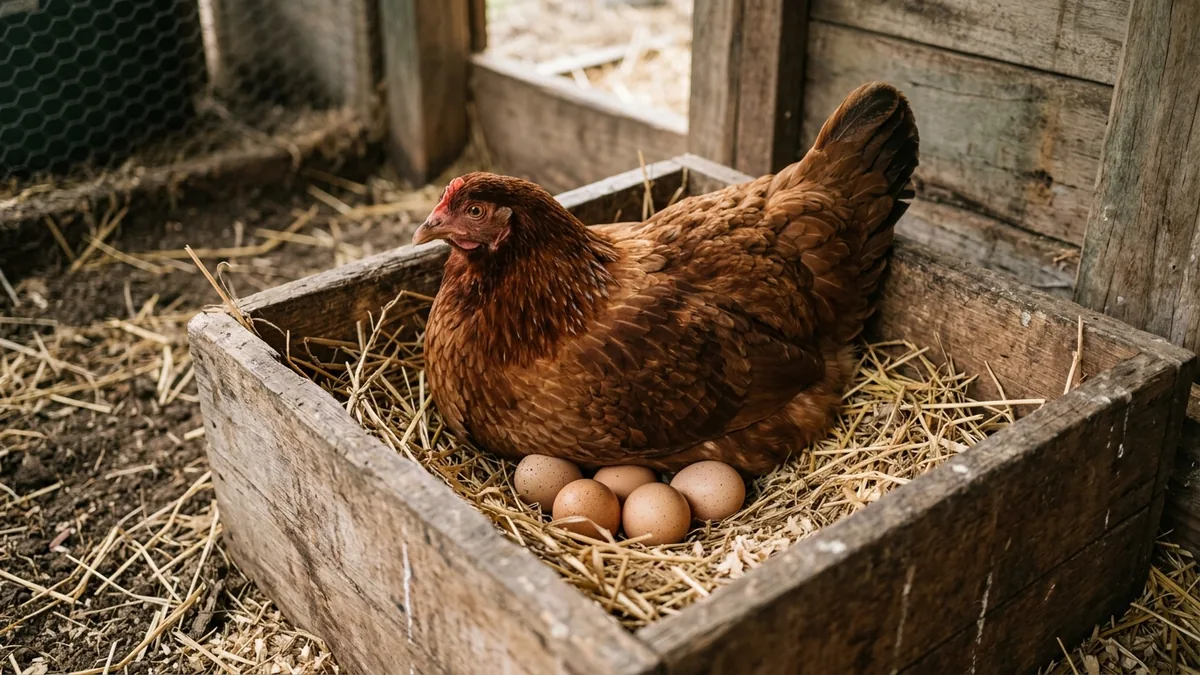
A drop in eggs is usually normal and seasonal, not a sign that something is wrong. This guide works through the common causes in order, from shorter days and moulting to age, broodiness, stress and the rarer case of illness.
When the basket suddenly looks empty, it is easy to assume the worst. In reality, most causes of a laying drop are natural and seasonal. Day length, the annual moult, age, and a hen going broody account for the large majority of cases, and none of them mean your birds are sick.
Work through the likely causes in order, starting with the season and the calendar. Only a small share of laying drops are caused by illness, and those usually come with other clear signs. The troubleshooter below points you to the most likely cause for your situation and what to do about it.
Daylight is the single strongest driver of laying. Hens lay best with about 14 hours of light a day, which their bodies use as the cue to keep producing eggs. As days shorten through autumn and into winter, laying naturally slows and often stops, then picks back up as daylight lengthens in spring.
You have two reasonable choices. You can accept the natural rest, which most keepers do, or you can add a few hours of gentle artificial light to bring the total back to about 14 hours. If you do add light, add it in the early morning rather than cutting off light abruptly at night, so birds are not caught off the roost in the dark.
There is a genuine welfare argument for letting hens rest over winter. A break from laying lets their bodies recover, and many keepers find their hens lay better and longer over their lifetime as a result. Either choice is valid; just go in knowing the trade off.
Once a hen is past her first year, she will moult, usually in autumn. The moult is the annual replacement of old feathers with new ones, and it is hard work. Because feathers are about 85 percent protein, the bird's energy goes into regrowing them rather than into eggs, so laying slows or stops for the duration.
A moult typically lasts about 6 to 12 weeks. There is nothing to fix here. You can support the bird by lifting the protein in the diet during the moult, and laying resumes once the new feathers are in. Birds in heavy moult can look rough and patchy, which is normal.
Hens lay best in their first two years. After that, output declines by roughly 10 to 20 percent each year. An older hen often lays fewer but larger eggs, and may keep laying occasionally for several more years rather than stopping outright.
This is simply the natural arc of a laying hen and there is nothing to correct. If your flock is a few years old and slowing down, age is the likely explanation, especially when combined with the seasonal factors above.
A broody hen has a hormonal urge to sit on eggs and hatch them. She will stay in the nest for most of the day, fluff up if disturbed, and stop laying while broody. This can happen with or without a rooster, and without fertile eggs it goes nowhere.
If you do not want chicks, it is kinder to break the broodiness than to let her sit for weeks and lose condition. Gently lift her off the nest regularly and move her to a cool, airy, well lit spot away from the nesting boxes, such as a wire bottomed pen with food and water. Persist for a few days. Most hens give up the broody urge and start laying again within a week or two.
Hens are sensitive to stress, and stress quickly shows up as fewer eggs. Common triggers include heat above about 30 C, a fright from a predator, rehoming or moving the coop, introducing new birds, and parasite infestations.
For free ranging birds, also consider hidden nests. A hen may be laying perfectly well, just somewhere other than the coop, under a shrub or in a quiet corner of the yard. Before assuming she has stopped, have a good hunt around for a secret clutch.
Diet problems can quietly suppress laying. The usual culprits are too little protein, too little calcium, too many treats diluting the balanced feed, or a sudden change of feed that puts birds off.
For a deeper look at feed types and protein and calcium needs, see feed and nutrition.
Illness is a less common cause of a laying drop, but it is the one to take seriously. The warning sign is a sudden drop alongside other symptoms rather than a gradual, seasonal slowdown in an otherwise bright, active bird.
Pick the situation that best matches your flock to see the likely cause and what to do.
| Cause | Typical sign | What to do |
|---|---|---|
| Shorter days | Laying slows in autumn and winter | Accept the natural rest, or add gentle morning light to reach about 14 hours. |
| Moult | Feathers dropping, patchy looking bird, autumn | Lift protein, do not worry. Laying resumes once feathers regrow, about 6 to 12 weeks. |
| Age | Older bird, fewer but larger eggs | Nothing to fix. Natural decline of roughly 10 to 20% a year after year two. |
| Broody | Hen stays on the nest all day, fluffs up | If no chicks wanted, gently move her to a cool, airy spot for a few days. |
| Stress / heat | Recent fright, move, new birds, or heat over 30 C | Reduce the stressor, provide shade and water, check for red mite at night. |
| Nutrition | Too many treats, low calcium, feed change | Return to complete layer feed, offer shell grit, keep treats under 10%. |
| Hidden nest | Free ranging hen, no eggs in the coop | Search the yard for a secret clutch before assuming she has stopped. |
| Illness | Sudden drop plus lethargy, pale comb, weight loss | Isolate, check for parasites, and see an avian or livestock vet. |
The free Planting Season app includes a Poultry module with a Flock tracker, so you can log eggs day by day and watch lay drops line up against the season, the moult and each bird's age. Seeing the pattern over time makes it far easier to tell a normal winter rest from something that needs attention.
It works offline, with no App Store needed. Open the app, add your flock, and start logging eggs.
The most common reasons are shorter days, the annual moult, a hen going broody, or stress from heat, predators or a recent change. Less often it is a nutrition gap, hidden nests, or illness. Run through these in order, starting with the season.
Yes. Hens lay best with about 14 hours of daylight, so as days shorten through autumn and winter laying naturally slows or stops. Most hens pick up again as daylight increases in spring.
It is optional. Adding gentle morning light to reach about 14 hours total can keep hens laying through winter. Many keepers prefer to let hens take a natural winter rest, which is widely considered better for their long term health.
A moult usually lasts about 6 to 12 weeks. During the moult, energy goes into regrowing feathers rather than eggs, so laying slows or stops. Support birds with extra protein and they will resume once feathers are back.
Hens lay best in their first two years, then output declines by roughly 10 to 20 percent a year. Older hens lay fewer but often larger eggs and may keep laying occasionally for several years. There is nothing to fix, it is natural.
If you do not want chicks, gently lift her off the nest regularly and move her to a cool, airy, well lit spot away from the nesting boxes. Persist for a few days and most hens give up the broody urge and resume laying within a week or two.
Yes. Heat above about 30 C, a predator scare, rehoming, introducing new birds, or a mite infestation can all suppress laying. Reduce the stressor, provide shade and water in heat, and check for red mite at night when they feed.
Be concerned if laying drops suddenly alongside other signs such as lethargy, a pale comb, a dirty vent, or weight loss. Isolate the bird, check for parasites, and see an avian or livestock vet for any serious or spreading illness.
Log eggs day by day and watch lay drops line up against season, moult and age with the free Flock tracker in the Planting Season app.