White rust: identify, prevent, control
Updated October 2026
Worst in humid, wet weather with heavy dew, in the wet season in the tropics and in cool, damp autumn and spring weather in the south.
White rust, also called white blister, is caused by water moulds (oomycetes) rather than true rust fungi. Each species attacks its own group of plants: Albugo ipomoeae-aquaticae infects kang kong (water spinach), while Pustula tragopogonis infects salsify, scorzonera and some related daisies, and Albugo candida infects brassicas and rocket. It rarely kills plants, but blistered and distorted leaves are unpleasant to eat and harvests shrink.
Albugo ipomoeae-aquaticae (kang kong), Pustula tragopogonis (salsify and scorzonera)

How to identify it
- Pale yellow or light green patches appear on the upper side of the leaves.
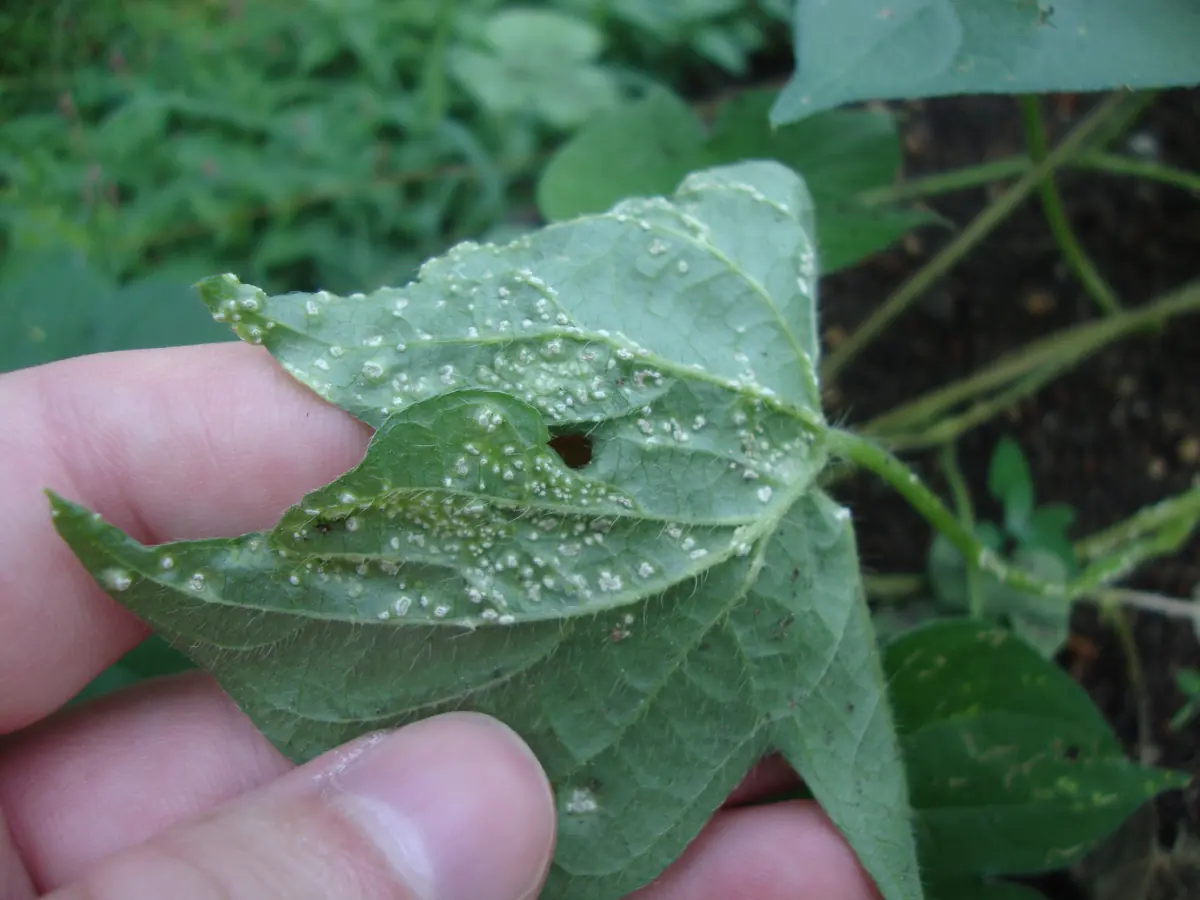
- Underneath those patches you find raised, shiny, chalky white blisters that look like drops of white paint.
- The blisters burst to release a white powder of spores, and neighbouring blisters merge into larger white patches.
- On kang kong the tissue under the blisters turns brown and dies, and stems and leaf stalks can swell and twist.
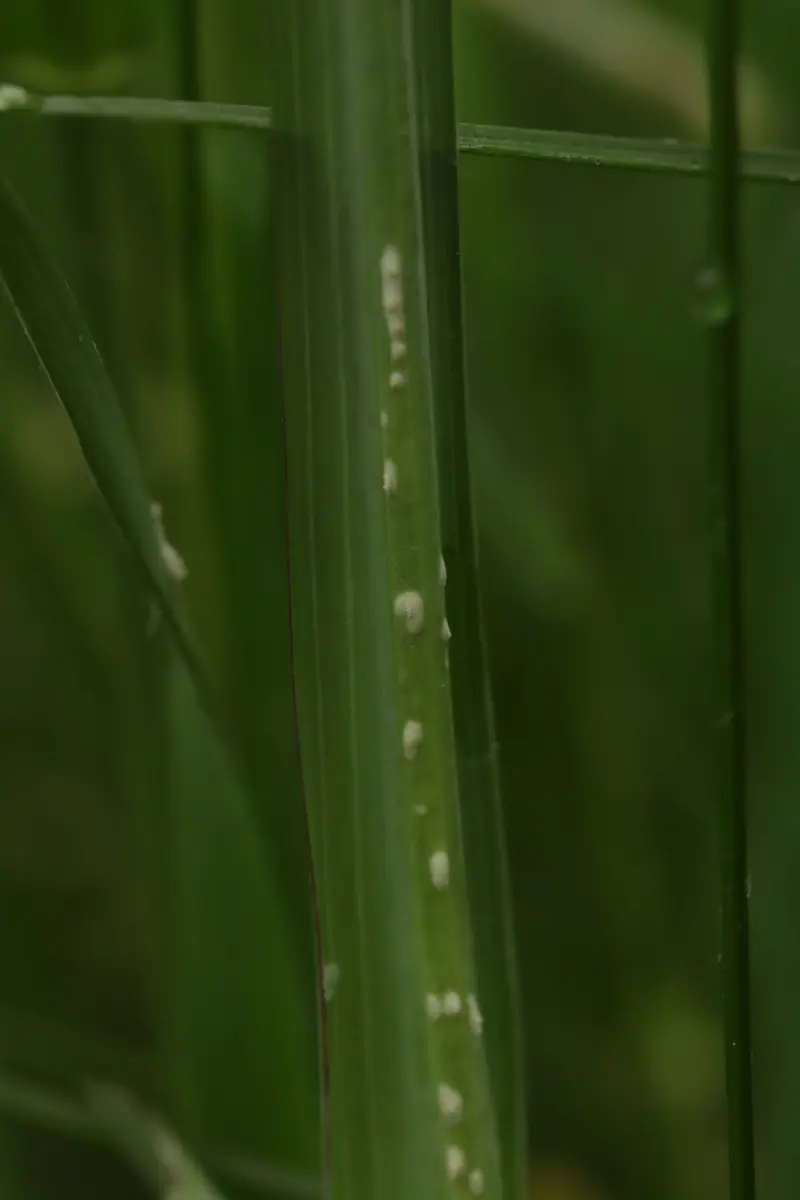
- On salsify and scorzonera, leaves become distorted and swollen, with white pustules on both sides and on the stems.
What it is often confused with
Rust
True rusts make orange, brown or black powdery pustules. White rust pustules are white and chalky.
Downy mildew
Downy mildew makes a soft, fluffy grey or white growth under the leaf that wipes off. White rust blisters are firm, raised and break open like little craters.
Powdery mildew
Powdery mildew is a flat white dusty coating mainly on the upper leaf surface that rubs off easily.
When and where it is worst
White rust spores need a film of water on the leaf for two to three hours to germinate, so the disease builds up wherever leaves stay wet. Kang kong is grown mainly in the tropics and subtropics, and white rust on it is worst in the Darwin and Cairns wet season and in humid Brisbane summers, especially where plants grow in crowded, waterlogged beds or are watered from overhead.
Salsify and scorzonera are cool-season root crops grown mainly in Victoria, Tasmania, southern NSW and South Australia. White rust on them shows up in wet autumns and springs, from about April to October.
Plants it affects
These plants in our library list it as a problem to watch for.
How to prevent it
- Start kang kong from healthy cuttings or fresh seed, and do not take cuttings from blistered plants.
- Space plants so leaves dry quickly, and thin out crowded kang kong regularly by harvesting.
- Water at the base in the morning rather than wetting the leaves in the evening.
- Remove weeds such as wild morning glory near kang kong, and goat's beard or other wild salsify near salsify beds, because they can carry related white rusts.
- Rotate salsify and scorzonera to a new bed each year and clear away old plants after harvest.
Organic control, step by step
- Pick off and bin the first blistered leaves as soon as you see them, before the blisters burst and release spores.
- Harvest kang kong hard to remove infected growth, then let the plants regrow fresh, healthy shoots.
- Improve air movement by thinning and keeping surrounding weeds down.
- Do not compost badly infected plants, because the thick-walled resting spores can survive in plant debris.
Conventional control
- We could not find a home garden fungicide in Australia registered for white rust on kang kong, salsify or scorzonera, so manage it with hygiene, spacing and removing infected leaves.
- Do not use a product on these crops unless the crop is listed on the label, and always keep to the withholding period.
Frequently asked questions
Is kang kong with white rust safe to eat?
The disease is not harmful to people, but blistered leaves are tough and unpleasant. Trim off affected leaves and eat the clean new growth.
Can white rust from kang kong spread to my cabbages?
No. The white rust of kang kong only infects Ipomoea species such as kang kong and morning glory. Brassicas get their own white rust, Albugo candida.
Why is it called rust when it is white?
The name comes from the blister-like pustules, which look similar to true rust pustules. The organisms are water moulds, closer to downy mildew than to true rust fungi.
Related problems
Sources: SARE, Albugo white rust fact sheet (2022); EPPO Global Database, Pustula tragopogonis; RHS, White blister. Identification and control follow these sources. Always read the product label before use.