Chocolate spot: identify, prevent, control
Updated October 2026
Worst in mild, humid weather from late winter to spring, from about July to October, in southern Australian gardens.
Chocolate spot is a fungal disease of broad beans caused by Botrytis fabae, a close relative of grey mould. Agriculture Victoria lists it as the most important disease of faba beans in Victoria and South Australia. It usually starts as harmless looking spots, but after a few days of warm, humid weather it can switch to an aggressive phase that blackens and kills leaves and flowers within a couple of days.
Botrytis fabae

How to identify it
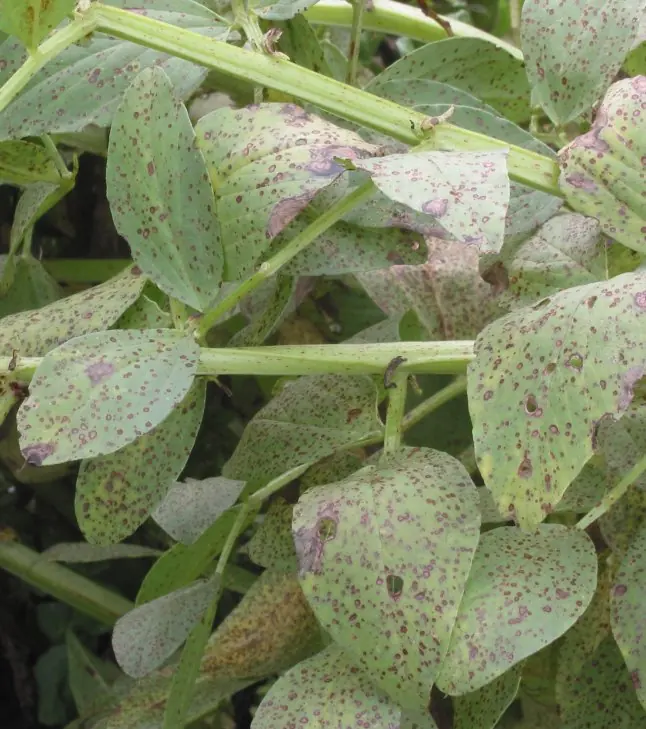
- Small, round, reddish brown to chocolate coloured spots appear scattered over the leaves, as if they have been peppered.
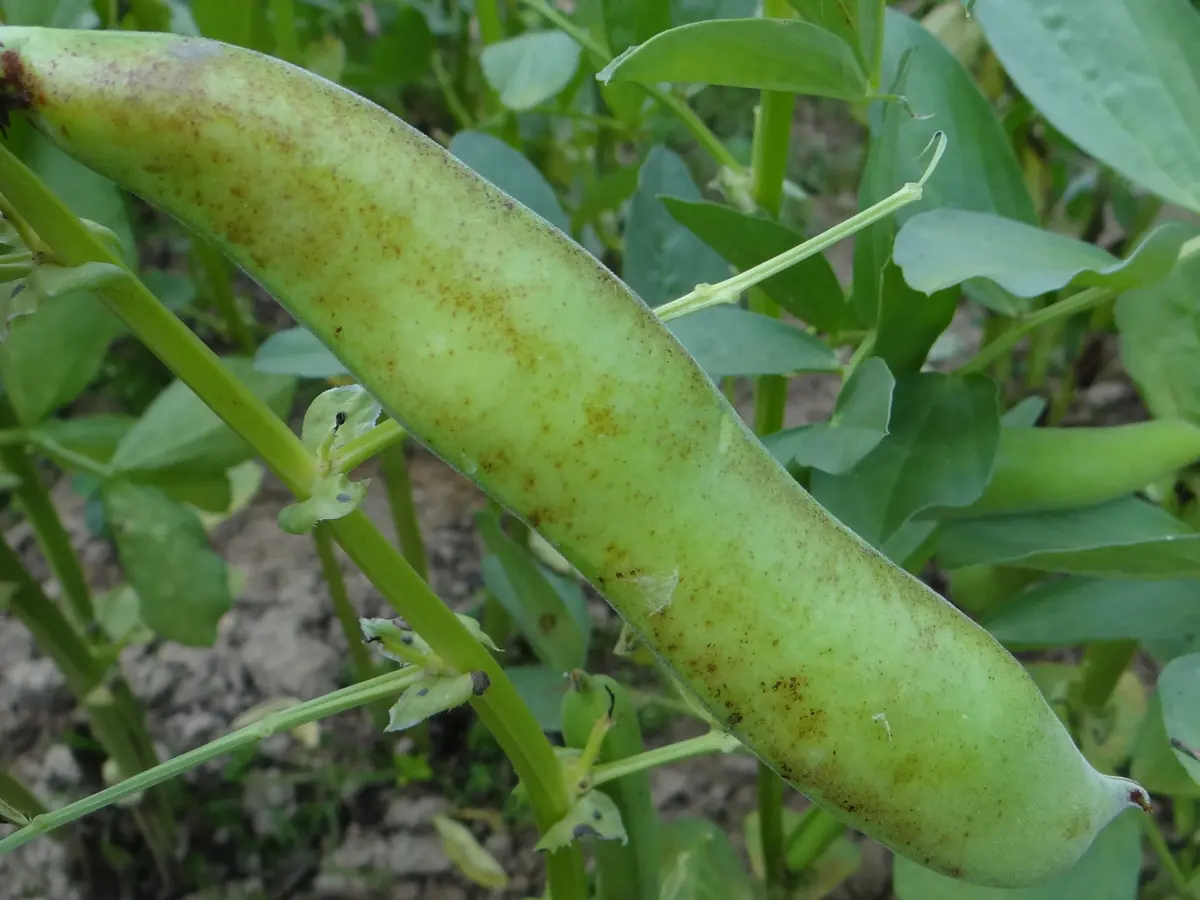
- Similar spots and streaks show on the stems, flowers and young pods.
- In warm, humid weather the spots grow, darken and merge into larger grey brown patches, sometimes with faint rings.
- In the aggressive phase, leaves and flowers turn black and look dusted with chocolate powder, then drop, and whole plants can collapse.
- Flowers that are infected fall without setting pods, so the crop is light even if the plant survives.
.jpg)
What it is often confused with
Rust
Broad bean rust makes raised orange brown pustules that leave a powdery deposit on your finger, while chocolate spot is flat and does not rub off.
Botrytis
Chocolate spot is caused by a Botrytis that specialises in broad beans. General grey mould makes a fuzzy grey growth on damaged tissue rather than crisp red brown spots.
Leaf spot
Ascochyta leaf spot of broad beans makes larger grey to brown spots with a dark edge and tiny black dots in the centre, rather than many small chocolate spots.
When and where it is worst
Broad beans are grown through the cool months across southern Australia, and chocolate spot is common wherever spring is mild and damp: Melbourne, Hobart, Adelaide, Canberra, the NSW tablelands and coastal Sydney. It is less of a problem in dry inland gardens and in Perth's drier springs. The disease builds from late winter, and outbreaks peak from August to October once temperatures sit between about 15 and 22 degrees with high humidity or drizzle.
The fungus survives on old bean stubble and volunteer plants, and its spores blow and splash onto new crops. Dense, tall plantings, sheltered corners, low light and plants short of potassium or stressed by waterlogging are hit hardest.
Plants it affects
These plants in our library list it as a problem to watch for.
How to prevent it
- Sow broad beans at the recommended spacing, in rows running with the prevailing breeze, so the plants dry quickly after rain.
- Choose a sunny, open position with good drainage, and avoid sheltered corners where the air is still.
- Do not overfeed with nitrogen, which makes soft, dense growth, and use a balanced fertiliser or compost instead.
- Clear away and bin old bean plants after harvest, and pull out volunteer broad beans that come up later.
- Rotate broad beans so they do not follow beans or peas in the same bed for at least three years.
- Support tall varieties with string or stakes so that plants do not lodge and stay wet near the ground.
Organic control, step by step
- Pick off and bin spotted lower leaves as soon as you see them, especially before a spell of humid weather.
- Thin crowded plants and remove some lower leaves to let air into the base of the planting.
- Water at the base in the morning, or not at all during wet spells.
- Pull out and bin plants that have gone black in the aggressive phase, so they do not spread spores to healthy plants.
Conventional control
- Commercial faba bean growers protect crops with farm fungicides at flowering, but we could not confirm a home garden fungicide in Australia that lists chocolate spot on broad beans.
- Some home garden copper and mancozeb products list beans for other diseases, so only use one for chocolate spot if broad beans and this disease are on the label.
- Always read the label, check that your crop is listed, and keep to the withholding period before you pick.
Frequently asked questions
Can I still eat broad beans from plants with chocolate spot?
Yes. The disease affects leaves, flowers and pods, but the beans inside clean pods are safe to eat. Discard pods with large black patches.
Why did my broad beans go black almost overnight?
After a few warm, humid days, chocolate spot can switch from small spots to an aggressive phase that kills leaves and flowers within about two days. Spacing, air flow and removing early spotted leaves help stop it reaching that point.
Should I dig the old plants into the soil?
Healthy broad bean plants make a good green manure. If they had chocolate spot, bin them instead, because the fungus survives on the old stems and leaves.
Related problems
Sources: Agriculture Victoria, Chocolate spot of faba bean; Extension AUS, Identification and management of field crop diseases in Victoria: chocolate spot of faba bean. Identification and control follow these sources. Always read the product label before use.