
When to Pick a Mango: Signs of Maturity and Harvest Months in Australia
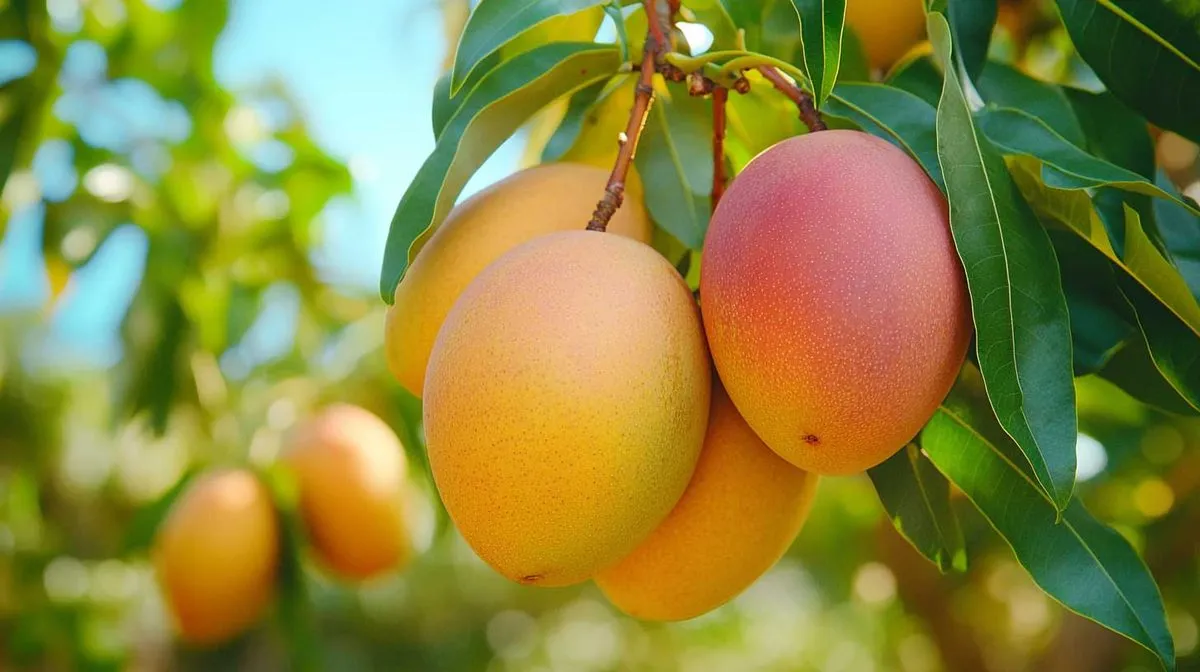
A mango that is picked too early stays sour and starchy, and one left too long drops and bruises. The aim is to pick when the fruit is mature but still hard, then let it ripen on the bench. Commercial growers in Queensland judge maturity by flesh colour and dry matter, and the Northern Territory Government gives home growers a set of simpler signs that this page follows.
Signs a mango is mature
| Sign | What to look for |
|---|---|
| Shoulders | The fruit has filled out above the stalk, so the top and bottom look rounded, not flat. |
| Skin | The surface turns smoother and the colour shifts from dark green to a lighter green, often with yellow, orange or red blush depending on the variety. |
| Stalk end | The end near the stalk swells and may show a slight bulge. |
| Aroma | A fruity smell near the stalk, as our plant guide notes, is a good late sign. |
| A test fruit | Cut one open. The flesh should be lemon-yellow around the seed, depending on variety. Pale or white flesh needs longer. |
Queensland research uses a flesh colour card for each cultivar, for example Honey Gold and Keitt, together with dry matter and the heat accumulated since flowering. Home growers can use the same idea on a smaller scale: record the date of the first flowering, then check a test fruit well before the earliest likely date.
Harvest months by region
| Region | Jan | Feb | Mar | Apr | May | Jun | Jul | Aug | Sep | Oct | Nov | Dec |
|---|---|---|---|---|---|---|---|---|---|---|---|---|
| South East Queensland | ✓ | ✓ | · | · | · | · | · | · | · | · | ✓ | ✓ |
| Northern Rivers NSW | ✓ | ✓ | · | · | · | · | · | · | · | · | ✓ | ✓ |
| Sydney & Coastal NSW | ✓ | ✓ | · | · | · | · | · | · | · | · | ✓ | ✓ |
| Melbourne & Victoria | Not normally grown outdoors here | |||||||||||
| Adelaide & SA | Not normally grown outdoors here | |||||||||||
| Perth & WA | · | · | ✓ | ✓ | · | · | · | · | · | · | · | · |
| Tasmania | Not normally grown outdoors here | |||||||||||
| Canberra & ACT | Not normally grown outdoors here | |||||||||||
| North Queensland | ✓ | ✓ | · | · | · | · | · | · | · | · | ✓ | ✓ |
| Darwin & Top End | · | · | · | · | · | · | · | · | ✓ | ✓ | ✓ | · |
Harvest months come from our plant data for each region. Perth's window is shown as the data gives it, and the cooler southern regions are not listed because mangoes are not normally grown outdoors there.
How to pick and ripen
- Pick with secateurs or a picking pole and leave a short stalk, which limits the sap that runs onto the skin.
- Stand the fruit stalk-end down for a few minutes so the sap drains, and wash it with a mild detergent soon after, as the Northern Territory Government advises.
- Ripen on the bench out of direct sun. The fruit softens and smells sweet in a few days, then goes in the fridge.
- Pick before fruit bats, birds and fruit fly find it. Net the tree and protect it from fruit fly, as our mango growing guide explains.
For varieties, pruning after harvest and what to do in a cooler climate, read the mango growing guide and the mango plant page.
Common questions
How do you know when a mango is ready to pick?
The shoulders have filled out, the skin has shifted from dark to lighter green or begun to colour, the surface looks smoother, and the stalk end has swollen. Cutting one test fruit should show the flesh turning yellow, as the Northern Territory Government describes.
When is mango season in Australia?
In Darwin and the Top End, September to November in our data, and usually between September and December according to the Northern Territory Government. In South East Queensland and northern New South Wales, November to February.
Should I ripen mangoes on the tree?
No. Pick them mature but still firm and ripen them on the bench, then move ripe fruit to the fridge. Fruit left to drop from the tree often bruises.
Why does mango sap burn?
Sap that runs from the stalk when you pick can burn skin and mark the fruit. Cut with a short stalk, let the sap drain stalk down and wash the fruit soon after picking, as the Northern Territory Government advises.
Can I grow mangoes in Melbourne?
Not outdoors in most gardens. Our data lists mangoes as not normally grown outdoors in Melbourne, Adelaide, Hobart or Canberra. Our mango growing guide covers the options for cooler climates.
- Northern Territory Government, Mango: Working out when to harvest, for the maturity signs and the sap and washing advice.
- Northern Territory Government, Mango (home gardens), for the usual September to December harvest in the Territory.
- Queensland Government research on mango maturity (Amaral and others, 2023, Horticulturae 9), for flesh colour and heat-unit targets.
- Harvest months, sowing months and the shoulder, colour and aroma advice are from the Planting Season plant data for this site.
Keep reading
How to grow mangoesMango plant pageFruit flyThe harvestHarvest calculatorAll growing guides