
When to Harvest Pumpkins in Australia: Signs of Ripeness and Months by Region
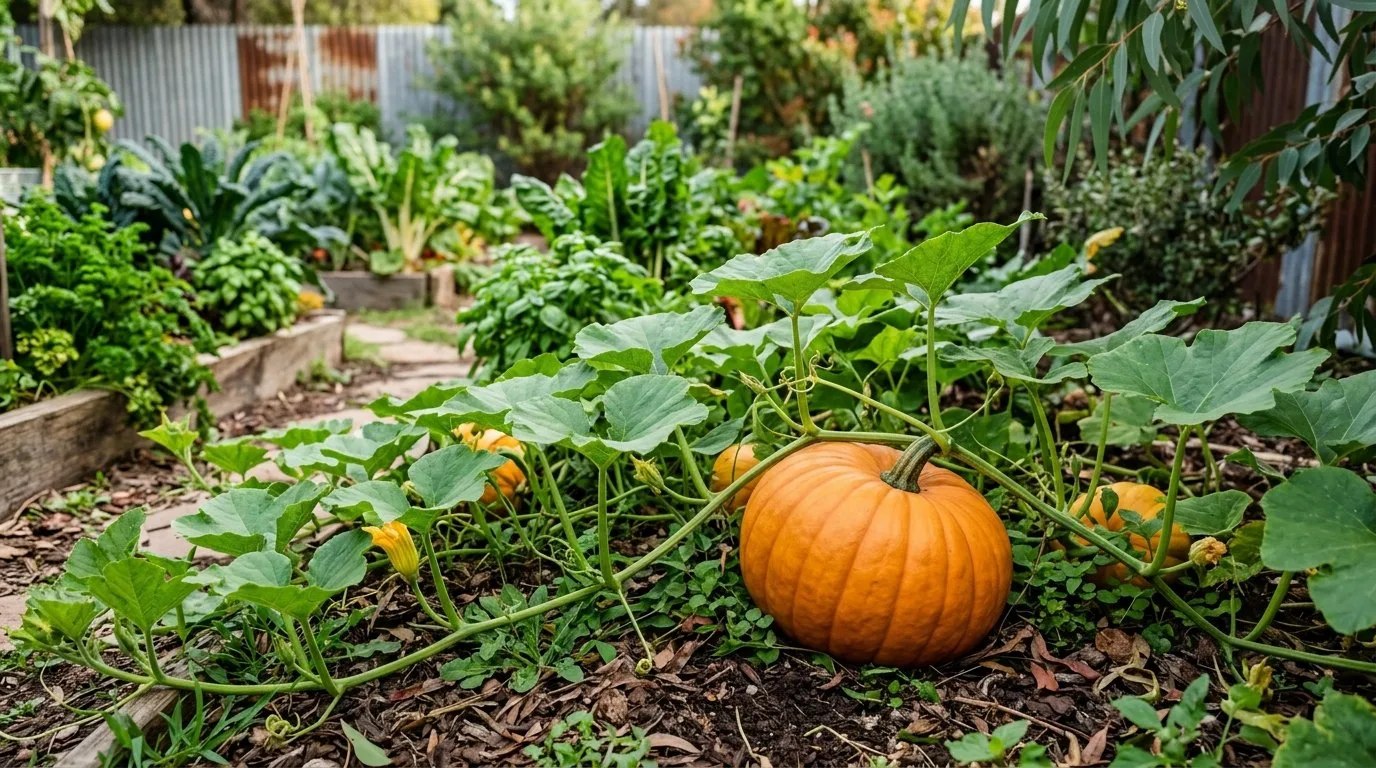
A pumpkin is ready when the fruit says so, not when the calendar does. In most of Australia pumpkins are sown in spring and cut in autumn, and in the tropical north the season runs through the dry. The ripeness signs below are the same wherever you grow, and our planting data gives each region its own harvest window.
Signs a pumpkin is ready
| Check | What ripe looks like |
|---|---|
| The rind | Hard enough that a fingernail cannot scratch it. A soft or glossy rind means it needs longer. |
| The colour | Deep and solid for the variety, with no green patches. Illinois Extension says pumpkins can be picked whenever they are a deep, solid colour and the rind is hard. |
| The stem | Dry, woody and ridged where it joins the vine. A green, soft stem is a sign of an unripe fruit. |
| The ground spot | The patch where the fruit rested has changed from white or pale green to cream or yellow. |
| The vine | The leaves are dying back and the tendril nearest the fruit has dried. |
Most pumpkins need about 120 days from sowing, according to our planting data, though a cool season or a late sowing can add weeks. Watch the fruit and not the count.
Harvest months by region
| Region | Jan | Feb | Mar | Apr | May | Jun | Jul | Aug | Sep | Oct | Nov | Dec |
|---|---|---|---|---|---|---|---|---|---|---|---|---|
| South East Queensland | ✓ | ✓ | ✓ | ✓ | ✓ | ✓ | ✓ | · | · | · | · | ✓ |
| Northern Rivers NSW | ✓ | ✓ | ✓ | ✓ | ✓ | ✓ | ✓ | · | · | · | · | · |
| Sydney & Coastal NSW | ✓ | ✓ | ✓ | ✓ | ✓ | · | · | · | · | · | · | · |
| Melbourne & Victoria | · | ✓ | ✓ | ✓ | ✓ | · | · | · | · | · | · | · |
| Adelaide & SA | ✓ | ✓ | ✓ | ✓ | · | · | · | · | · | · | · | · |
| Perth & WA | ✓ | ✓ | · | · | · | · | · | · | · | · | · | ✓ |
| Tasmania | · | ✓ | ✓ | ✓ | · | · | · | · | · | · | · | · |
| Canberra & ACT | · | · | ✓ | ✓ | · | · | · | · | · | · | · | · |
| North Queensland | ✓ | · | · | · | · | · | · | ✓ | ✓ | ✓ | ✓ | ✓ |
| Darwin & Top End | · | · | · | · | · | · | · | ✓ | ✓ | ✓ | ✓ | ✓ |
Harvest months are worked out from our planting months for each region plus the roughly 120 days a pumpkin needs from sowing. Cool weather can add weeks, so treat each tick as a window and use the ripeness signs above to decide.
How to cut and cure
Cut the pumpkin from the vine with secateurs, leaving a stem of 8 to 13 cm. Never carry the fruit by its stem and never cut it off, since a pumpkin without a stem usually does not keep well, according to Illinois Extension.
Cure the fruit at around 27 to 29°C with good air flow for 5 to 7 days, as Oregon State Extension recommends, in a sunny, sheltered spot out of the rain. Then store it dry at 10 to 13°C. Utah State Extension notes pumpkins held in a ventilated, shaded place usually keep for 3 to 5 weeks in cool weather.
Rain, heat and frost
In the humid north and east, wet weather at harvest is the main risk, so cut on a dry day and let the skin dry before you handle the fruit. Penn State Extension notes that a hard freeze, below about -2°C, weakens the rind, which matters in Tasmania, the ACT and the cooler inland districts. If frost is forecast and the fruit is nearly ripe, cut it and finish it under cover.
Our pumpkin growing guide covers sowing, spacing and feeding, why pumpkins rot on the vine covers rot, and the pumpkin plant page lists companions and pests.
Common questions
How do you know when a pumpkin is ready to pick?
The rind resists a fingernail, the colour is deep and even, the stem has dried and turned woody, and the patch on the ground has changed from pale to cream or yellow.
When should I pick pumpkins in Australia?
In most regions between late summer and winter, depending on when you sowed. Tropical gardeners in North Queensland and Darwin sow in the cooler months and harvest later in the year. The chart shows each region.
Can I pick a pumpkin before it is fully coloured?
A fruit that is mostly coloured with a hard rind can finish ripening in the sun for a few days. A green pumpkin with a soft rind will not sweeten much.
How long do you cure pumpkins?
About 5 to 7 days at 27 to 29°C with good airflow, then store them dry at 10 to 13°C.
Why are my pumpkins rotting on the vine?
Wet ground, a damaged rind or an early frost are the usual causes. Our guide to pumpkins rotting on the vine explains each one.
- Penn State Extension, Pumpkins and Winter Squash in the Garden and the Kitchen, for harvest season, curing humidity and freeze damage.
- Oregon State University Extension, When should I harvest my pumpkins?, for the fingernail test and curing.
- University of Illinois Extension, Growing Pumpkins, for colour and the importance of the stem.
- Utah State University Extension, How to Grow Pumpkins in Your Garden, for stem length and storage life.
- Planting months and days to harvest are from the Planting Season plant data for this site.
Keep reading
How to grow pumpkinsWhy pumpkins rot on the vinePumpkin plant pageButternut pumpkinThe harvestHarvest calculatorAll growing guides