
Spinach vs Silverbeet: Is Silverbeet Spinach?
Updated November 2026
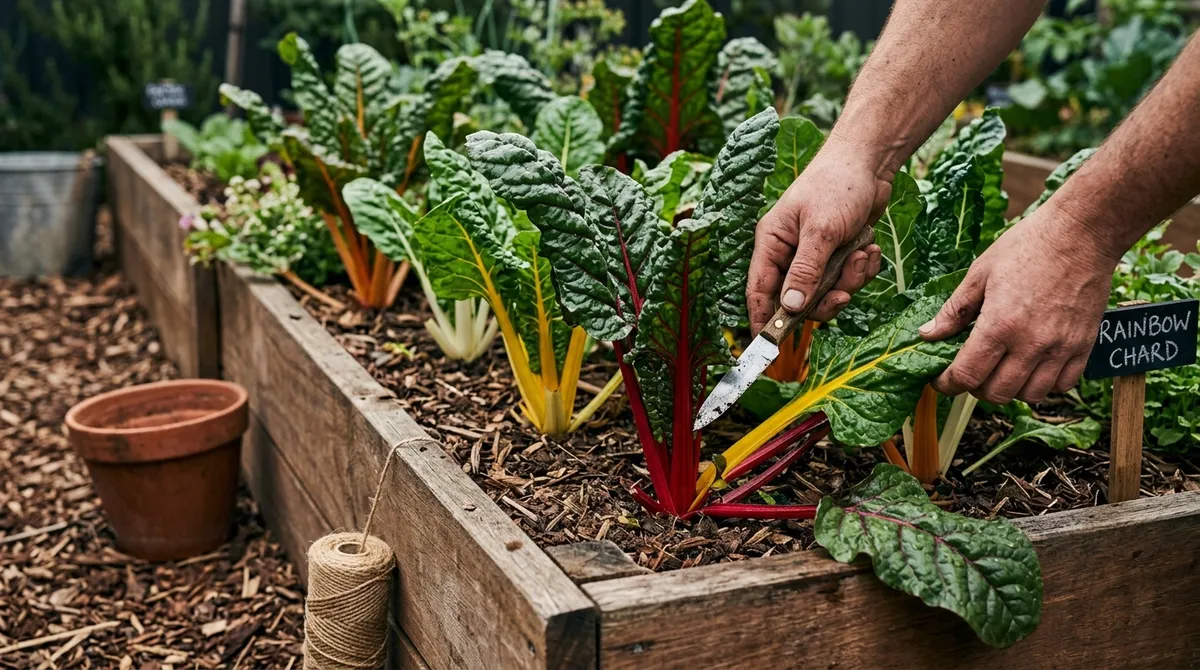
English spinach, silverbeet, perpetual spinach and rainbow chard compared, with named varieties and warm-season substitutes.
In Australian shops and gardens, the leafy green sold as “spinach” is very often silverbeet, which is the same plant as chard. English spinach is a different plant with smaller, softer leaves that bolts as soon as the weather warms, and perpetual spinach is a leaf beet that sits between the two. This page sorts out the names, compares them side by side and lists the named varieties sold here.
Is silverbeet spinach? Not botanically. Silverbeet (Beta vulgaris, also called chard) is a beet grown for its leaves. English spinach (Spinacia oleracea) is a separate species. They are cousins in the same plant family and are cooked in the same ways, which is why the names get swapped.
Why spinach and silverbeet get mixed up
Cooks here have used “spinach” as a loose word for any cooked leafy green for generations. A bunch of big, crinkled leaves with a thick white stem is silverbeet, yet recipes and greengrocers routinely call it spinach. Seed packets add to the muddle. Perpetual spinach is sold under the name spinach even though it is a leaf beet, and several warm-season plants carry “spinach” in their common names without being related to any of them (more on those further down).
It helps to sort the names into four groups.
- English spinach (Spinacia oleracea): the true spinach. Small to medium leaves, thin stems, a cool-season crop that runs to seed quickly.
- Silverbeet or chard (Beta vulgaris): large leaves, thick stems that are white, yellow, pink, orange or red. Includes the rainbow chard mixes.
- Perpetual spinach (also sold as spinach beet or erbette): a leaf beet with thin stems and softer, lighter leaves than silverbeet. Botanically a beet, in the kitchen very close to spinach.
- Warm-season “spinaches”: unrelated plants that give a cooked green through summer, listed near the end of this page.
Spinach vs silverbeet at a glance
| English spinach | Silverbeet (chard) | Perpetual spinach | |
|---|---|---|---|
| Botany | Spinacia oleracea | Beta vulgaris | Beta vulgaris (leaf beet) |
| Leaf | Smooth or crinkled, small to medium, thin stems | Large, glossy or crinkled, thick white or coloured stems | Medium, soft, thin pale stems |
| Season | Cool season, prefers short days | Tolerates cool and warm weather | Cool to mild, copes with more heat than spinach |
| Bolting | Bolts quickly as days lengthen and the weather warms | Slow to bolt in the first year | Slow to bolt, hence the name |
| How long it crops | A few weeks to a couple of months, then it is finished | Cut leaves for many months from one planting | Cut leaves for many months from one planting |
| Days to first harvest | About 55 days | About 60 days | Similar to silverbeet |
| Sowing months | See the spinach table below | See the silverbeet table below | Sow with silverbeet |
| Frost | Hardy | Hardy | Hardy |
The days figures come from our plant data and are a guide only. Cold slows growth and warmth speeds it up.
When to sow each one
English spinach
Spinach germinates best in cool soil, so it is sown in the cooler part of the year in each region. Sow it directly where it will grow, because it dislikes root disturbance, and sow a short row every few weeks rather than one big planting.
| Region | Sowing months |
|---|---|
| South East Queensland | Apr to Jul |
| Northern Rivers NSW | Apr to Jul |
| Sydney & Coastal NSW | Apr to Jul |
| Melbourne & Victoria | Mar to Aug |
| Adelaide & SA | Mar to Sep |
| Perth & WA | Mar to Sep |
| Tasmania | Feb to May and Aug to Oct |
| Canberra & ACT | Mar to Apr and Aug to Oct |
| North Queensland | May to Aug |
| Darwin & Top End | May to Aug |
Silverbeet and perpetual spinach
Silverbeet is far more forgiving and has a much longer sowing window in most regions. Perpetual spinach can go in on the same dates.
| Region | Sowing months |
|---|---|
| South East Queensland | Jan to Dec |
| Northern Rivers NSW | Jan to Dec |
| Sydney & Coastal NSW | Jan to Dec |
| Melbourne & Victoria | Mar to Oct |
| Adelaide & SA | Jan to Dec |
| Perth & WA | Jan to Dec |
| Tasmania | Sep to Feb |
| Canberra & ACT | Aug to Feb |
| North Queensland | May to Sep |
| Darwin & Top End | May to Sep |
For full growing steps see the spinach guide and the silverbeet guide, or open the spinach and silverbeet plant profiles for your region.
Silverbeet varieties
Silverbeet is one of the easiest leaf crops to find as seed. The varieties below are listed by Australian sellers, and the Diggers, Mr Fothergill's, Yates and Seed Collection product pages named in the sources were read for this update.
| Variety | What the sellers say | Seller pages read |
|---|---|---|
| Fordhook Giant | Dark, crinkled leaves with white stems up to about 60 cm. Diggers calls it one of the oldest open-pollinated chards here, valued for tolerating warmer weather, and advises mulching and watering in hot dry spells to delay bolting. | Diggers, Mr Fothergill's, Yates, Seed Collection |
| Bright Lights (rainbow chard mix) | A mix of stem colours including red, pink, orange, yellow and white. Good for ornamental beds as well as the kitchen. | Seed Collection |
| Rainbow Chard | Sold as a mix of white, red, orange, yellow and pink stemmed silverbeet rather than a single variety. White stemmed plants in a mix are often the strongest. | Seed Collection, Succeed Heirlooms |
Eden Seeds also lists leaf beets, but we did not read its product pages for this update, so check its current catalogue before ordering a particular colour.
English spinach varieties
Pick the variety to suit the season. Southern Harvest advises arrow-leaf or semi-savoy types when you must sow into warmer weather, since the smooth, thin-leaved types bolt first.
| Variety | What the sellers say | Seller pages read |
|---|---|---|
| Bloomsdale Long Standing | Compact heirloom with thick, crinkled green leaves. Seed Collection describes it as slow to bolt and better in hot and cold weather than most spinach. | Seed Collection, Little Veggie Patch Co |
| Winter Giant | Large-leaved and suited to cold climates. | Seed Collection |
| Giant Noble | Large, thick, tender leaves and slow to bolt. | Seed Collection |
| Hector | Johnsons variety suited to baby leaf picking or growing on to mature leaves. | Johnsons listing at Woolworths |
| Pungi F1 | Hybrid listed as ideal for baby leaf. | Happy Valley Seeds |
Perpetual spinach and other leaf beets
Perpetual spinach is the answer for gardeners who want spinach flavour and texture without the constant resowing. Seed Collection lists a perpetual spinach called Perpetual Gator. It grows like a small silverbeet, is picked leaf by leaf and keeps going through the year in mild regions. Cut the outer leaves and leave the heart to regrow.
Treat it as silverbeet for sowing: use the silverbeet table above. Because it is a beet, it will go to seed in its second spring, and at that point it is best pulled and replaced.
Rainbow chard
Rainbow chard is silverbeet bred and selected for stem colour. It grows, bolts and cooks the same way as the white-stemmed types. The stems keep much of their colour in a quick saute but fade in long cooking. Sow it with the silverbeet dates, give it the same 30 cm spacing and it will crop for months. In mixes, expect some plants to be stronger than others. Pulling the weakest while they are small leaves room for the rest.
Warm-season substitutes for spinach
English spinach struggles through the warm months. In the subtropics and tropics, and in any region once summer arrives, these plants fill the gap. None of them is closely related to spinach.
- Brazilian spinach: a vigorous perennial that crops year round in the warm north and spreads as a groundcover.
- Malabar spinach: a climbing vine with thick, mild leaves that thrives in heat and humidity.
- kang kong (water spinach): a fast, hollow-stemmed green for wet or well-watered soil in warm weather.
- Warrigal greens: a coastal native with fleshy leaves that handles heat, salt and poor soil.
South East Queensland, the north of the country and Darwin all suit these plants, so read the South East Queensland and Darwin and the Top End hubs for local timing, and keep in mind that silverbeet is the best choice in Melbourne and Victoria for a cooked green through the cooler months.
Which should you grow
- Want one planting that feeds the household for most of a year: silverbeet or perpetual spinach.
- Want tender baby leaves for salads in cool weather: English spinach, sown thinly every few weeks.
- Want colour in the vegetable patch: rainbow chard.
- Want a cooked green in the heat of summer: one of the warm-season substitutes above.
A note on cooking
Spinach, silverbeet and the leaf beets all contain oxalates, which give raw leaves a dry, chalky feel on the teeth when eaten in quantity. Cook the leaves, and the texture softens. Silverbeet stems take longer than the leaves, so cut them off and start them first.
Frost is rarely a problem, since all three are hardy. See frost dates for your area, and the how long vegetables take to grow guide for planning succession sowings.
Questions
Is silverbeet the same as spinach?
No. Silverbeet is a beet (Beta vulgaris) grown for its leaves, while English spinach is Spinacia oleracea. Shops in Australia often sell silverbeet as spinach, which causes the confusion.
What is the difference between chard and silverbeet?
Nothing important. Chard is the common name used overseas, and silverbeet is the name used here. Rainbow chard is silverbeet with coloured stems.
What is English spinach?
It is true spinach, a cool-season leaf crop with thinner stems and smaller leaves than silverbeet that bolts as the weather warms.
What is perpetual spinach?
It is a leaf beet with thin stems and soft leaves, picked leaf by leaf for months. It is sold as perpetual spinach, spinach beet or erbette.
Can I grow spinach in summer?
English spinach usually bolts in summer heat. Grow silverbeet, or warm-season plants such as Malabar spinach, Brazilian spinach or kang kong.
Can I swap silverbeet for spinach in recipes?
Yes in most cooked dishes. Silverbeet leaves are tougher and larger, so cook them a little longer and cook the stems separately.
Sources
- Diggers: Silverbeet Fordhook
- Mr Fothergill's: Silver Beet Fordhook Giant
- Yates: Silverbeet Fordhook Giant
- The Seed Collection: Spinach Bloomsdale Long Standing
- Succeed Heirlooms: Silverbeet Rainbow Chard
Plant profile
The silverbeet profile has sowing times for your region, companion plants and common pests.