
How to Stop Powdery Mildew in the Australian Garden
Updated June 2026
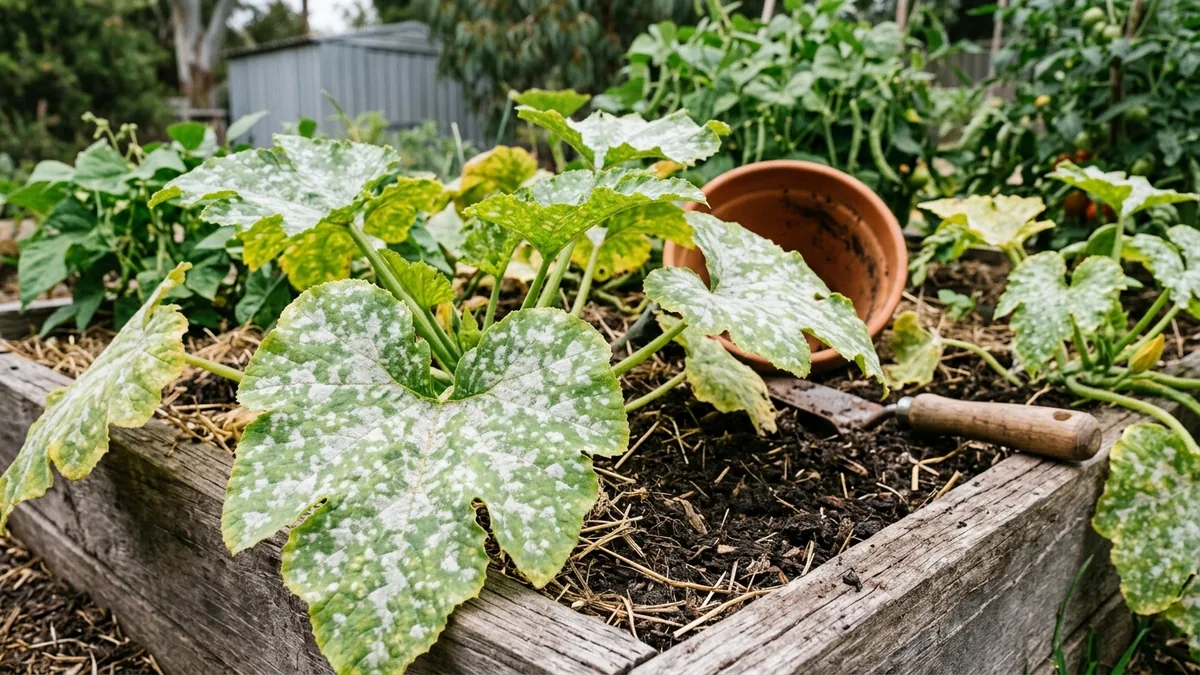
Identify it, understand why it spreads, and beat it with an organic-first plan that is safe for bees and pets
Powdery mildew is one of the most common diseases in Australian backyards. If you have grown zucchini, pumpkin, cucumber or grapes, you have almost certainly seen it: a white, dusty coating that creeps across the leaves and looks like someone has dusted the plant with flour. It rarely kills a plant outright, but it weakens it, drops the yield and shortens the season. The good news is that it is very manageable once you understand how it works and act early.
This guide explains how to tell powdery mildew apart from look-alikes, why it spreads even in dry weather, what the damage does, and a clear organic-first plan. Use the tool below to build your plan around where you are right now, whether you are trying to prevent it, treat it organically, or step up because it has taken hold.
Build your powdery mildew plan
Pick the approach that fits where you are right now. Every option here leads with airflow and the gentlest, most bee-friendly sprays, and keeps the stronger products to a careful last resort.
How to identify powdery mildew
Powdery mildew is usually easy to spot once you know the signs.
- White to grey powdery coating. It looks like a dusting of flour or talc, almost always on the upper surface of the leaves first.
- Starts as small spots. It begins as small round white patches, then spreads and joins up until whole leaves and even stems look coated.
- Leaves yellow, curl and drop. Badly affected leaves turn yellow, curl, dry out and fall early, leaving fruit exposed.
Telling it apart. Downy mildew is a different disease that grows on the leaf undersides as a greyish or purplish fuzz, with yellow patches on top, and it needs cool, wet conditions and leaf wetness. Powdery mildew sits mostly on the upper surface and can take hold in dry weather. Do not confuse it with edema either, which causes small corky bumps from the plant taking up too much water, not a fungal coating you can rub off. If you are unsure, the in-app Plant Doctor can help you confirm before you treat.
Conditions and lifecycle
Powdery mildew is a fungal disease, but it behaves differently from most. It is unusual in that it thrives in warm, dry days with high humidity, and cool, damp nights, and it does not need the leaf to be wet to infect. That is why it can appear in a dry spell when you would expect a fungus to struggle. The spores are carried on the wind, so it can arrive seemingly from nowhere and spread quickly from plant to plant.
It is at its worst where airflow is poor, in shade, and where plants are crowded together. Soft, sappy growth from too much nitrogen is especially vulnerable. The fungus overwinters on plant debris and old infected material, so a garden that was hit last year often gets hit again unless you clean up. The practical lesson is to deny it the conditions it likes: open up the plant, give it sun and air, and remove infected material before it can spread.
What the damage does
Powdery mildew rarely kills an established plant, but it steadily robs it.
- Less photosynthesis. The coating blocks light, so leaves make less energy and the whole plant weakens.
- Lower yields and quality. Fruit is smaller and slower to ripen, and flavour and sugar levels suffer, which matters a lot for grapes.
- Sunburn on fruit. When mildew kills the canopy leaves, exposed fruit can scorch in the sun.
- Premature defoliation. Heavy infection strips the leaves early, cutting the season short and stressing the plant.
The organic IPM ladder
Integrated pest management means starting with the gentlest, most reliable tools and only stepping up if you need to. For powdery mildew the ladder looks like this.
1. Airflow and hygiene, the non-negotiable first step
Most of the battle is won before you spray. Space plants properly, prune for an open canopy, and remove crowded or older lower leaves so air moves freely. Grow in full sun, water at soil level rather than over the foliage, and water in the morning. At the first white spots, remove and bag affected leaves rather than composting them in an open heap. Good crop rotation and a clean-up of infected debris at season end stops it carrying over.
2. Milk spray
Milk spray is a well-known organic treatment that works best early. Mix roughly one part milk to nine parts water, spray it on a sunny day so it can react in the light, and repeat about weekly. Cover both sides of the leaves. It is cheap, completely pet-safe, and most useful at the first signs rather than on a heavy infection.
3. Potassium bicarbonate spray
Potassium bicarbonate is more effective than baking soda (sodium bicarbonate) and avoids the salt build-up in soil that sodium causes over time. Mix it with a little wetting agent so it sticks, cover the leaves thoroughly including the undersides, and repeat weekly. Test on a few leaves first and follow the product label.
4. Protectant oils
Some growers add a few drops of horticultural oil, or a dilute neem, as a protectant that coats the leaf and deters new infection. Keep watering off the foliage, and never apply oil in high heat or close to a sulphur spray (see below).
How to prevent powdery mildew next season
- Choose resistant varieties. Many cucurbits and grapes now come in powdery-mildew-resistant cultivars, which is the easiest win of all.
- Space and prune for airflow. Give plants room and keep an open canopy so leaves dry and air moves.
- Grow in full sun. Shade and crowding are the conditions it loves.
- Water at soil level, in the morning. Avoid overhead watering, and let any splashed foliage dry early in the day.
- Go easy on nitrogen. Soft, lush growth from excess nitrogen is the most vulnerable.
- Clean up debris. Remove old and infected leaves through the season and clear all debris at the end, and rotate crops.
Susceptible plants
Powdery mildew affects a very wide range of plants, though the exact fungus differs between hosts. The most commonly hit in home gardens include:
- Cucurbits: cucumber, zucchini, pumpkin, melon and squash are the classic victims.
- Grapes: one of the most economically important hosts, and a regular backyard problem.
- Roses and many other ornamentals.
- Peas and beans.
- Tomatoes.
- Apples and other fruit trees.
Resistant cultivars exist for both cucurbits and grapes, so it is worth seeking them out. See our guides to cucumbers, zucchini and grapes for crop-specific growing advice.
When it is serious
If powdery mildew has coated most of the canopy, treat it as a heavy infection: strip and bag the worst leaves, improve airflow hard by thinning and pruning, and move to a strict weekly potassium bicarbonate program. If you turn to a sulphur-based fungicide, do not use it within about two weeks of an oil spray, and not in high heat above roughly 30C, as it can scorch leaves, and be aware sulphur can harm some cucurbits, so check the label. Use any registered fungicide only as a last resort, follow the label exactly, and rotate between different modes of action so the fungus does not build resistance. At season end, remove and destroy severely infected plants so they do not carry the disease over.
Catch powdery mildew before it spreads
The Planting Season app includes a Pest Calendar that flags when conditions favour powdery mildew in your region, plus an in-app Plant Doctor to confirm what is on your leaves before you treat.
Open the App →Frequently Asked Questions
What does powdery mildew look like?
It shows up as a white to grey powdery or dusty coating, usually on the upper surface of leaves. It starts as small round spots that spread and join up until whole leaves look dusted with flour. Affected leaves can yellow, curl and drop early. Unlike downy mildew, which grows on the leaf undersides and needs cool wet conditions, powdery mildew sits mostly on top of the leaf.
What causes powdery mildew?
It is a fungal disease spread by airborne spores. Unusually, it thrives in warm dry days with high humidity and cool damp nights, and it does not need the leaf to be wet to infect, which is why it can take hold even in a dry spell. Poor airflow, shade, crowding and excess soft nitrogen-fed growth all make it worse. The fungus overwinters on plant debris and old infected material.
Does milk spray work on powdery mildew?
Milk spray is a popular and reasonably effective organic option, especially as an early or preventive treatment. Mix roughly one part milk to nine parts water, spray it on a sunny day so it can work in the light, and repeat about weekly. Cover both sides of the leaves. It works best at first signs rather than on a heavy, established infection.
Is potassium bicarbonate better than baking soda?
Yes. Potassium bicarbonate is generally more effective against powdery mildew than baking soda (sodium bicarbonate) and avoids the sodium that can build up in soil over time. Use it as a spray with a little wetting agent, cover the leaves thoroughly including the undersides, and repeat on a weekly schedule. Always test on a few leaves first and follow the product label.
Can I just remove the affected leaves?
Removing the worst affected leaves is a good first step because it cuts down the spores and improves airflow. Bag and bin them rather than composting them in an open heap. On its own it will not cure a spreading infection, so pair leaf removal with better spacing and an organic spray such as milk or potassium bicarbonate.
Are powdery mildew sprays safe for bees and pets?
Milk spray and potassium bicarbonate are low risk and pet-safe when used sensibly. Most powdery mildew sprays are low-risk to bees, but still spray in the early morning or evening, avoid open flowers, and keep concentrates and any sulphur or oil products away from pets and waterways. Sulphur needs extra care: do not use it within about two weeks of an oil spray, and not in high heat.
When should I act on powdery mildew?
Act at the very first white spots. Powdery mildew spreads fast in the warm season, so early removal of affected leaves and a weekly organic spray will hold it far better than waiting until leaves are coated. Prevention through resistant varieties, spacing for airflow and watering at soil level in the morning is even better than treatment.
See also: Pest and Disease Guide and How to Grow Pumpkin