How to Grow Turmeric in Australia
Updated June 2026
Planting, harvesting, and variety picks for this tropical rhizome
Turmeric (Curcuma longa) is a tropical rhizome closely related to ginger. The bright orange-yellow flesh is used in curries, golden milk, smoothies, and traditional medicine. Fresh turmeric from your own garden has a vibrant flavour and colour that store-bought powder cannot replicate.
Turmeric grows similarly to ginger but needs more heat. Plant rhizome pieces in spring, keep them warm and moist through summer, and harvest 8 to 10 months later when the leaves die back in autumn. This guide covers the best varieties, growing conditions, and planting times by region.
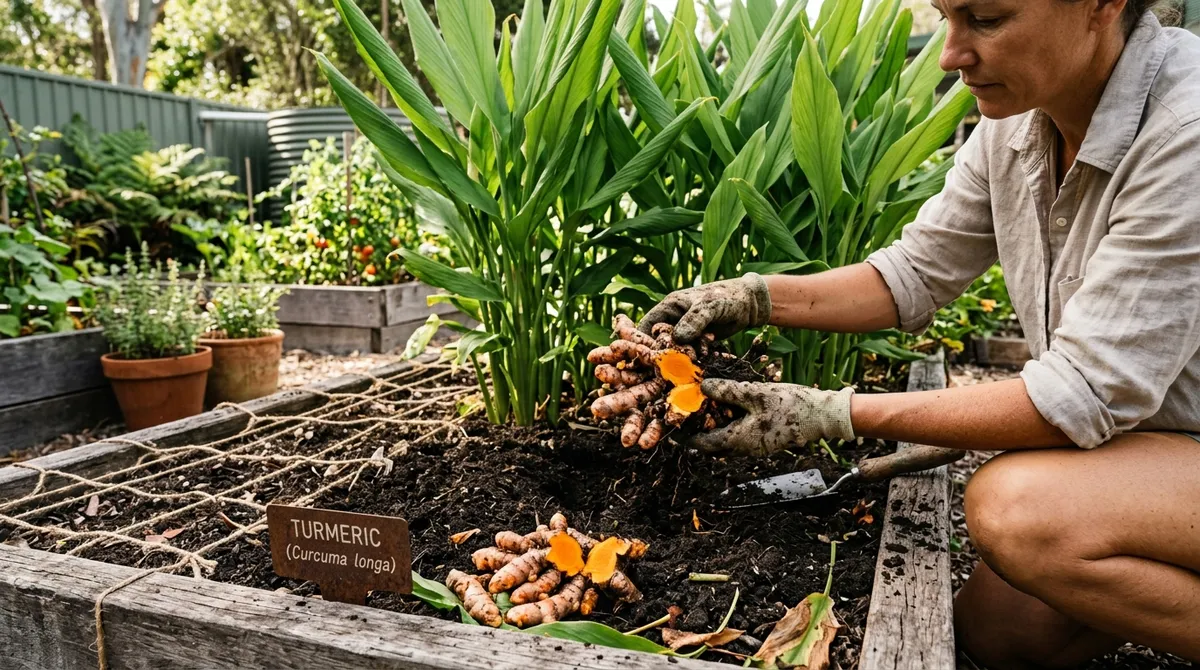
What it looks like as it grows


🌱 Plant profile: Turmeric, with sowing times for your region, companion plants and common pests.
When to Plant in Your Region
Varieties
Madras
The standard culinary turmeric with deep orange flesh and strong colour. Widely available and reliable in Australian conditions. Good all-rounder for cooking and preserving.
Alleppey
A premium variety with high curcumin content and rich, deep colour. Preferred for its stronger medicinal properties and intense flavour. Grows the same way as Madras turmeric.
White Turmeric
A milder variety (Curcuma zedoaria) with pale flesh, used in Indonesian and Thai cooking. Less pungent than orange turmeric. The flavour is subtle with a slight mango-like note. Grows well in the same conditions as standard turmeric.
Planting
Start with fresh turmeric rhizomes that have visible buds (the small pointed bumps on the surface). Organic turmeric from a greengrocer works well. Plant pieces 5 cm deep with the buds facing up, spaced 20 to 30 cm apart.
- Rich soil with plenty of compost gives the best results
- Turmeric is a heavy feeder and benefits from regular applications of compost or well-rotted manure
- Keep the soil moist but never waterlogged
- Mulch heavily (10 to 15 cm) to retain moisture and keep the soil warm
Sun and Shade
Turmeric grows naturally as an understorey crop in tropical forests. Part shade suits it well, and it performs better with some afternoon shade protection than in full, blazing sun. Morning sun with afternoon shade is the ideal position.
The broad, lush leaves can scorch in full sun during hot, dry weather. Plant turmeric beneath taller crops like corn or fruit trees, or along the shady side of a garden bed. Dappled light throughout the day also works well.
Growing in Pots
Turmeric is a strong container crop. Use a wide pot (at least 40 cm across and 30 cm deep) filled with rich potting mix. Add extra compost and a handful of aged manure at planting time.
Container growing is the best approach in cooler regions. You can move the pot to the warmest spot in your garden and bring it under cover during cold snaps. Turmeric needs a minimum of 15 degrees to grow actively, so a warm, sheltered position is essential.
Harvesting and Curing
Turmeric is ready to harvest when the foliage yellows and dies back in late autumn or early winter (8 to 10 months after planting). Dig up the whole clump carefully with a garden fork. Shake off the soil and snap the rhizomes apart.
Save a few healthy pieces with good buds for replanting next spring. The rest can be used fresh or cured for storage.
- Fresh turmeric can be grated, sliced, or juiced straight after harvest
- Cured turmeric lasts months. Dry the rhizomes in a shady, well-ventilated spot for about a week until they feel firm
- Store cured rhizomes in a cool, dry place or freeze fresh pieces for later use
Common Problems
Too cold
Turmeric needs a minimum soil temperature of 15 degrees to grow. Below this, rhizomes sit dormant and may rot. Gardeners in cooler regions should start turmeric in pots indoors and only move it outside once reliable warmth arrives. A heat mat under the pot speeds up early sprouting.
Root rot in heavy soil
Heavy clay soils hold too much moisture around the rhizomes, causing rot. Improve drainage by adding coarse sand, perlite, and plenty of compost. Raised beds work well in areas with heavy soil. Container growing avoids the problem entirely.
Rhizome rot from overwatering in dormancy
Turmeric goes dormant after the foliage dies back. The rhizomes do not need water during this period. Overwatering dormant turmeric is the most common cause of failure. Reduce watering as the leaves yellow and stop completely once they have died down. Resume watering in spring when new shoots appear.
Frequently Asked Questions
When should I plant turmeric in Australia?
Plant turmeric rhizomes in spring once the soil has warmed to at least 15 degrees. September to November is ideal in subtropical and tropical regions. Cooler areas should wait until October or November and start rhizomes in pots indoors for a head start.
How long does turmeric take to harvest?
Turmeric takes 8 to 10 months from planting to harvest. Plant in spring and harvest in late autumn or early winter when the foliage dies back naturally. The leaves yellowing and collapsing is your signal that the rhizomes are ready to dig.
Can I grow turmeric in a pot?
Yes. Turmeric grows well in large pots (at least 40 cm across and 30 cm deep). Use rich, free-draining potting mix and keep the pot in a warm, sheltered spot. Container growing lets you move the plant to follow warmth and protect it from cold.
Can I use fresh turmeric instead of dried?
Fresh turmeric has a brighter, more complex flavour than dried powder. Grate or finely chop the fresh rhizome and add it to curries, soups, smoothies, or golden milk. Fresh turmeric stains everything it touches, so wear gloves when handling it.
See also: Turmeric in the Plant Library
Plant profile
The turmeric profile has sowing times for your region, companion plants and common pests.