How to Grow Tomatillos in Australia
Updated June 2026
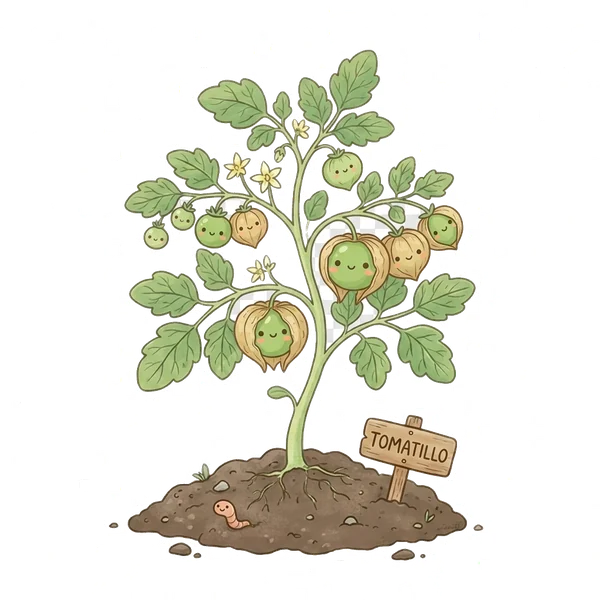
The husked, tangy base of salsa verde, grown like a sprawling tomato
Tomatillos are the tart, green, husked fruit behind Mexican salsa verde. They are a warm-season relative of the tomato, grown the same way but more forgiving, and Australian seed suppliers like Green Harvest and Eden Seeds stock the seed. Each fruit grows inside a papery lantern that fills out and splits when ripe.
There is one rule that catches people out: you must grow at least two plants. Tomatillos are largely self-incompatible, so a lone plant flowers beautifully and sets almost no fruit.
🌱 Plant profile: Tomatillo, with sowing times for your region, companion plants and common pests.
When to Plant in Your Region
Grow Two (or More)
This is the single most important tip. Unlike tomatoes, tomatillos cannot pollinate themselves, so they need a second plant nearby for bees to cross-pollinate. One plant on its own is the number one reason people report flowers but no fruit. Always plant two or more.
Varieties to Try
Toma Verde
The standard green tomatillo. Tangy, productive and the classic choice for salsa verde.
Purple
Sweeter, purple-blushed fruit, a little smaller, good eaten fresh as well as cooked.
How to Grow Tomatillos
Start seed in spring once the weather warms, the same timing as tomatoes, and plant out after frost. Space plants about 60 cm apart and give them a stake or cage, because they sprawl into big, branching bushes a metre or more across. They want full sun, free-draining soil and steady water. They are tougher and more pest-resistant than tomatoes and crop heavily once they get going.
Pick the fruit when the papery husk fills right out and starts to split, and the fruit inside is firm and full-sized. Green types are best slightly underripe and tart for salsa; let them go a touch softer for a sweeter, fresher flavour.
Common Problems
Flowers but no fruit
Almost always a single plant. Grow two or more so bees can cross-pollinate. A lack of bees in cool, wet spring weather can also reduce set.
Fruit fly
As a fruiting crop in warm areas, tomatillos can be hit by Queensland and Mediterranean fruit fly. Use exclusion netting or traps and pick up any fallen fruit.
Sprawling mess
Unstaked plants flop and the fruit sits on damp soil. Cage or stake them early to keep the husks clean and the bush productive.
Frequently Asked Questions
Why is my tomatillo flowering but not fruiting?
The usual cause is growing only one plant. Tomatillos are self-incompatible and need a second plant nearby so bees can cross-pollinate. Always grow at least two.
When should I plant tomatillos in Australia?
Tomatillos are a warm-season crop sown in spring, like tomatoes, and planted out after the last frost. In SEQ that is roughly August to November. Check the calendar above for your region.
How do I know when a tomatillo is ripe?
Pick when the papery husk fills out and starts to split and the fruit inside is firm and full-sized. For tart salsa verde, slightly underripe green fruit is ideal; for sweeter flavour, let them ripen a little more.
Are tomatillos the same as green tomatoes?
No. They are a different plant in the same family, grown inside a papery husk, with a distinctive tart, citrusy flavour. Green (unripe) tomatoes are not a substitute for the real salsa verde taste.
See also: Tomatillos in the Plant Library
Plant profile
The tomatillo profile has sowing times for your region, companion plants and common pests.