How to Grow Taro in Australia
Updated June 2026
Varieties, planting times, water needs, and harvest tips for this tropical staple
Taro is a tropical and subtropical staple grown for its starchy corms. It has fed communities across the Pacific, Asia, and Africa for thousands of years, and it thrives in the warm, wet conditions found across northern and eastern Australia.
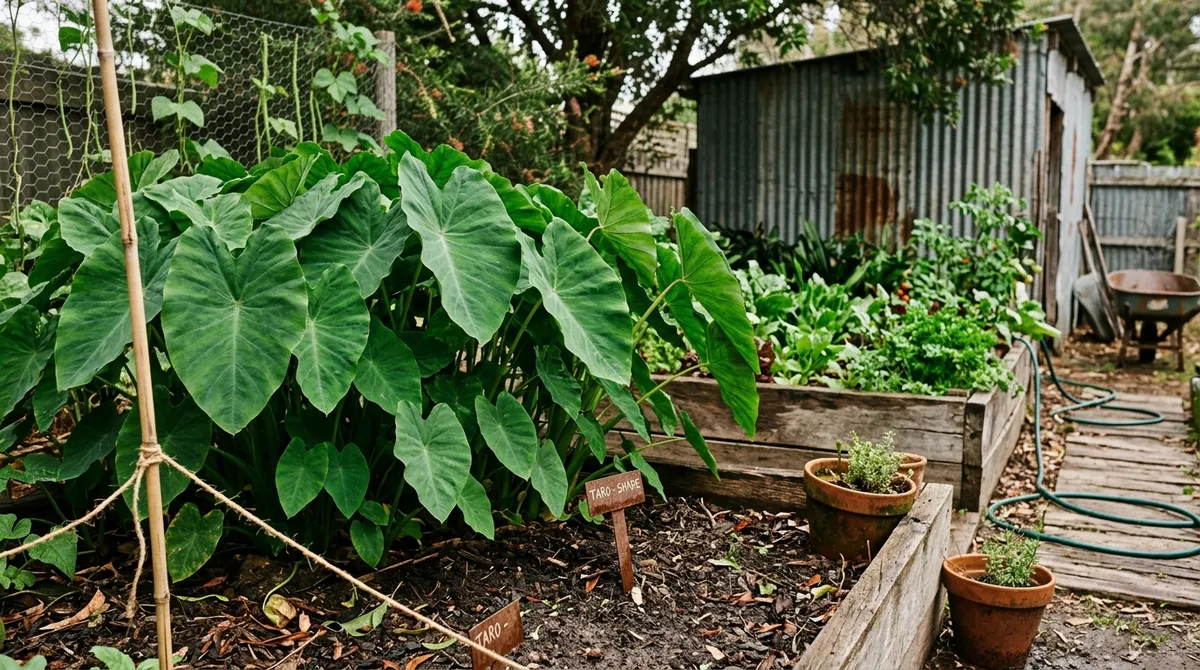
The large, heart-shaped leaves are striking in the garden, and the corms are a versatile carbohydrate source in the kitchen. This guide covers the best varieties for Australian gardens, planting times by region, and how to grow, harvest, and prepare taro at home.
What it looks like as it grows


🌱 Plant profile: Taro, with sowing times for your region, companion plants and common pests.
When to Plant in Your Region
Varieties
Eddoe (Colocasia esculenta var. antiquorum)
Produces clusters of smaller corms rather than one large central corm. More cold tolerant than other types, making it the best choice for subtropical and borderline-temperate areas. Nutty flavour and firm texture.
Dasheen (Colocasia esculenta var. esculenta)
The classic taro. Grows a single large central corm that can weigh 1 to 3 kg. Creamy, starchy flesh that works well boiled, steamed, or mashed. Needs consistent warmth and moisture to reach full size.
Bun Long (Chinese Taro)
A barrel-shaped corm with dry, dense flesh. Popular in Chinese and Southeast Asian cooking. Holds its shape well in soups and braises. Produces fewer side corms than other varieties.
Planting
Taro is grown from corms or tops, not seeds. Plant a whole small corm or the top 3 to 5 cm cut from a larger corm. Set the planting piece 10 cm deep in rich, moist soil with the growing point facing up.
Space plants 40 to 60 cm apart in rows 60 to 90 cm apart. Taro leaves grow large, often reaching 60 cm across, so the plants need room to spread.
Plant in spring after the last frost, once soil temperatures are above 18 degrees Celsius. Taro will not grow in cold soil. In tropical regions, planting from September through to December gives the longest growing season.
Soil and Position
Taro needs rich, moisture-retentive soil. Heavy clay is fine as long as drainage is adequate and the soil stays consistently damp. Sandy soils dry out too fast unless heavily amended with compost and mulch.
Full sun produces the best corms, but taro tolerates part shade. In very hot tropical gardens, light afternoon shade can reduce heat stress on the leaves.
Dig in plenty of compost or well-rotted manure before planting. Taro is a heavy feeder and benefits from generous soil preparation.
Watering
Taro needs more water than almost any other vegetable. Keep the soil consistently moist throughout the growing season. Dry soil produces small, fibrous corms that lack flavour.
Mulch heavily with sugarcane mulch, straw, or compost to retain moisture and suppress weeds. A 10 to 15 cm layer of mulch makes a real difference to corm size.
In tropical areas, taro planted during the wet season often needs no supplementary watering. In drier climates, drip irrigation or regular deep soaking keeps the soil at the right moisture level.
Feeding
Side-dress taro with compost every 6 weeks during the growing season. The large leaves and developing corms demand consistent nutrition. A handful of blood and bone or pelleted chicken manure around each plant works well as a supplement.
Yellowing older leaves mid-season usually signal a need for more nitrogen. Liquid seaweed applied fortnightly through summer supports healthy foliage and strong root development.
Harvesting
Taro takes 8 to 12 months from planting to harvest. The corms are ready once the leaves begin to yellow and die back naturally. In tropical areas with a long warm season, corms reach full size in 8 to 9 months. Cooler regions may need the full 12 months.
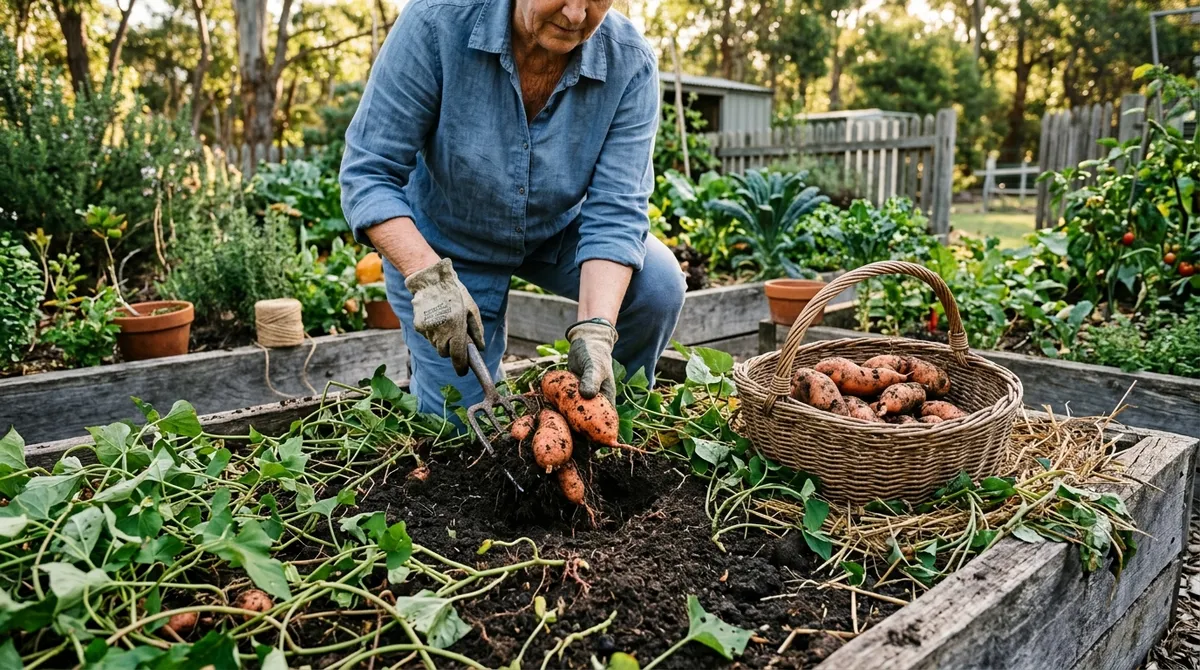
Dig carefully around the base of the plant with a garden fork. Lift the entire clump and shake off loose soil. Separate the main corm from any side corms (cormels). Both the main corm and cormels are edible. Save a few cormels for replanting.
Harvested corms store for 2 to 3 weeks in a cool, dry spot. They don't keep as long as potatoes, so plan to use them within a few weeks or process them for longer storage.
Common Problems
Small, fibrous corms
The most common problem is undersized corms. This is almost always caused by too little water during the growing season. Taro needs consistently moist to wet soil. Dry spells stunt corm development and make the flesh tough and stringy.
Cold damage
Taro leaves blacken and collapse below 10 degrees Celsius. A light frost will kill the foliage entirely. In subtropical areas, growth stalls over winter and picks up again in spring. Mulch heavily around the base to insulate the corms through cooler months.
Taro beetle
Taro beetles bore into corms and stems, mainly in tropical areas of Queensland and the Northern Territory. Look for holes in the leaf petioles and damage on the corm surface. Remove and destroy affected plants. Crop rotation and clean planting material help prevent infestations.
Frequently Asked Questions
When should I plant taro in Australia?
Plant taro in spring after the last frost, once soil temperatures are consistently above 18 degrees Celsius. In tropical regions, plant from September to December. Subtropical areas suit October to December best. Southern growers have a narrow window from November to January and should choose the warmest, most sheltered spot in the garden.
How long does taro take to harvest?
Taro takes 8 to 12 months from planting to harvest. The corms are ready once the large leaves begin to yellow and die back. In cooler regions, growth slows over winter and the full cycle may stretch closer to 12 months.
Can I grow taro in a pot?
Yes. Choose a large pot of at least 40 litres with drainage holes. Use rich potting mix and keep it consistently moist. Taro is a heavy feeder, so liquid feed every 4 to 6 weeks. Pot-grown plants produce smaller corms than those in the ground, but it works well on balconies and patios in warm climates.
Why must taro be cooked before eating?
Raw taro contains calcium oxalate crystals that cause intense irritation to the mouth and throat. Cooking breaks down these crystals completely. Always boil, steam, roast, or fry taro before eating. The leaves are also edible but must be thoroughly cooked for the same reason.
See also: Taro in the Plant Library
Plant profile
The taro profile has sowing times for your region, companion plants and common pests.