Growing Peanuts in Australia: How to Plant, Grow and Harvest
Updated October 2026
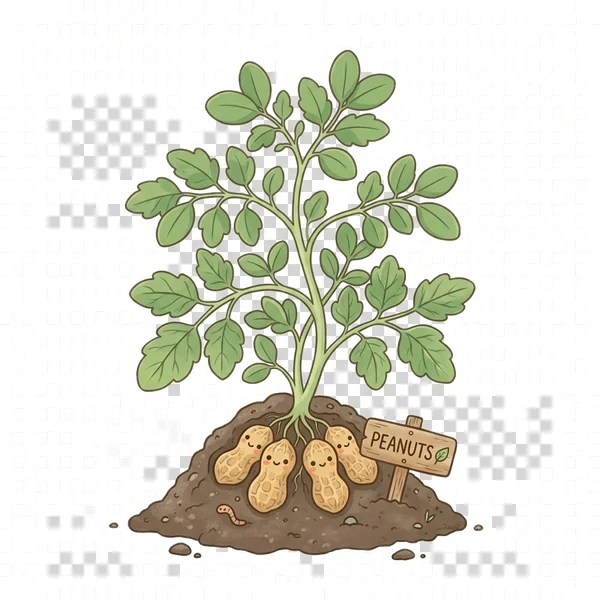
A fun, warm-season legume that ripens its pods underground
Peanuts are one of the most rewarding novelty crops for a warm Australian garden. They are a legume, so they fix their own nitrogen, and watching the flowers bend down and bury themselves to form pods underground never gets old. Queensland's Kingaroy district built a whole industry on them, but any gardener with a long, frost-free, warm season can grow a crop.
This guide covers when to plant, the loose soil peanuts need, how the pods form, the best varieties, and how to harvest and dry your crop.
🌱 Plant profile: Peanuts, with sowing times for your region, companion plants and common pests.
When to Plant Peanuts in Your Region
Peanuts need a long, warm, frost-free run, so the sowing window is short in the south and shifts to the end of the wet season in the tropics. These are the sowing months for each region from our planting data. Each region links to its full vegetable planting calendar, and the Peanut plant page has spacing, companions and care notes for your region.
| Region | Sow kernels | Local note |
|---|---|---|
| South East Queensland | September to December | |
| Northern Rivers NSW | September to December | |
| Sydney & Coastal NSW | October and November | Sow Oct to Nov once the soil is warm. Peanuts need about five warm months, so later sowings do not fill their pods before autumn. |
| Melbourne & Victoria | October and November | Marginal. Sow Oct to Nov into warm loose soil in the hottest bed. Peanuts need four to five warm months, and cool Melbourne summers give small crops. |
| Adelaide & SA | October and November | Sow Oct to Nov once soil passes 18C. Needs 5 warm months; lift before the cold wet soil of late autumn. |
| Perth & WA | September to November | Sow Sep to Nov once soil passes 20C. Sandy soil suits the pegs; keep moisture even and lift in autumn. |
| Tasmania | Not recommended outdoors | Unsuitable outdoors. Peanuts need four to five warm frost free months, and Tasmanian summers are too cool. |
| Canberra & ACT | November | Marginal. Peanuts need four to five frost free months, so sow in November once the last frost has passed and the soil is warm. |
| North Queensland | March to May | Sow Mar to May as the wet eases, for harvest in dry weather. Allow about 170 days for a dry season crop. |
| Darwin & Top End | March to May | Sow Mar to May as the wet eases, for harvest in dry weather. Allow about 170 days for a dry season crop. |
Varieties to Try
Virginia (Bunch)
Large-kernel bunch type and the classic roasting peanut. Upright habit, easy to lift, and the best all-rounder for home gardens.
Red Spanish
Smaller, sweet, red-skinned kernels that mature a little earlier, so a good pick for shorter or cooler seasons.
How to Grow Peanuts
Peanuts need warmth and time: four to five frost-free months with soil above 18°C. Sow in spring once the soil has warmed, or from March to May in the tropical north as the wet season eases, using raw, shelled kernels (raw and unroasted, straight from a seed supplier or a bag of raw peanuts). Plant them 3 to 4 cm deep and about 30 cm apart in light, sandy, free-draining soil. Heavy clay makes it hard for the pods to form, so dig in compost and coarse sand first, or grow in a deep tub of loose mix.
How peanuts grow underground
After the yellow flowers appear, each one sends down a stalk called a peg that pushes into the soil, and the pod swells underground at its tip. Keep the soil loose and hill up a little around the base so the pegs can enter easily. Water steadily through flowering and pod fill, then ease off as the crop matures.
Soil, Position and Feeding
Peanuts want full sun and light, loose, sandy soil, and our plant data gives an ideal pH of 5.5 to 7. Heavy, crusted soil is the most common reason for a poor crop, because the pegs cannot push into it, so dig in compost and coarse sand first or grow in a raised bed of loose mix.
Go easy on feeding. Peanuts are legumes and fix their own nitrogen, so heavy nitrogen feeding only produces leaf. A little calcium helps the pods fill. Water steadily while the plants flower and the pegs go down, then let the soil dry out more as the pods mature, because pods rot in heavy, wet ground. In the bed, peanuts grow well alongside corn, cucumber and sunflowers, and our companion data suggests keeping them away from onions and garlic. The companion planting chart has the full list.
Growing Peanuts in Pots
You can grow peanuts in a container if it is wide enough for the pegs to spread. Our plant data calls for a pot at least 40 cm wide, filled with a light, loose mix that the pegs can push into easily, so a wide, shallow tub or trough works better than a tall, narrow pot. Stand it in full sun, keep the mix evenly moist through flowering, and tip the whole pot out at harvest time to collect the pods.
How Long Do Peanuts Take to Grow?
Our plant data allows about 140 days from sowing to harvest, a little over four and a half months, with seedlings appearing in about 10 days once the soil is warm. In the tropics, a crop sown from March to May as the wet season eases takes longer, around 170 days, and is lifted in dry weather. Each plant gives a handful of pods, so sow a short row or a small block if you want enough to roast. Once fully dried, peanuts keep for months in airtight jars, or you can freeze them.
Harvesting and Drying
The crop is ready when the leaves yellow and start to die back, usually four to five months after sowing. Lift the whole plant with a fork on a dry day, shake off the soil, and check a few pods: mature kernels fill the shell and the inside of the pod is veined and dark. Hang the whole plants somewhere airy and dry for two to three weeks, then pull the pods and cure them a little longer before roasting or storing.
Common Problems
Poor pod set
Usually heavy or crusted soil the pegs cannot penetrate, or a season too short or cool. Grow in loose, sandy soil, hill up gently, and make sure you have a long warm run after flowering.
Leaf spot and rust
Fungal leaf diseases in humid weather. Space plants for airflow, water at the base rather than overhead, and rotate where you grow legumes each year.
Rats, birds and bandicoots
They will dig for ripening pods. Lift promptly once mature and consider a mesh cover late in the season if you have a problem.
Frequently Asked Questions
When should I plant peanuts in Australia?
Peanuts are a warm-season crop. Sow once the soil is above about 18 degrees and all frost has passed: September to December in South East Queensland and the Northern Rivers, September to November in Perth, October and November in Sydney, Melbourne and Adelaide, and November in Canberra. In North Queensland and Darwin, sow from March to May as the wet eases so the crop matures in dry weather. Peanuts need four to five frost-free months to mature.
Can I grow peanuts from raw peanuts from the shop?
Yes, as long as they are raw and unroasted, still in or freshly out of the shell. Roasted, salted or blanched peanuts will not sprout. Seed suppliers like Green Harvest also sell named varieties.
How do peanuts grow underground?
After the plant flowers above ground, each fertilised flower sends down a stalk called a peg. The peg pushes into the soil and the peanut pod swells at its tip underground. That is why loose, sandy soil matters so much.
How long do peanuts take to grow?
About four to five months from sowing to harvest. The crop is ready when the foliage yellows and dies back and the kernels fill their shells.
Can I grow peanuts in Melbourne or Sydney?
Yes, with a warm bed and good timing. Sydney and Melbourne both sow in October and November once the soil is warm. Peanuts need four to five warm months, so later sowings do not fill their pods before autumn, and Melbourne's cooler summers give smaller crops. Tasmania's summers are too cool for an outdoor crop.
How many peanuts do you get from one plant?
A handful of pods per plant, according to our plant data. That makes peanuts a fun crop rather than a bulk one, so grow a short row or a small block if you want enough to roast.
Do peanuts need a lot of water?
They need steady moisture while flowering and while the pegs push into the soil, then less as the pods mature. Too much water late in the season in heavy soil rots the pods, so light, free-draining soil and even watering give the best crop.
See also: Peanuts in the Plant Library
Plant profile
The peanuts profile has sowing times for your region, companion plants and common pests.