How to Grow Jicama (Yam Bean) in Australia
Updated June 2026
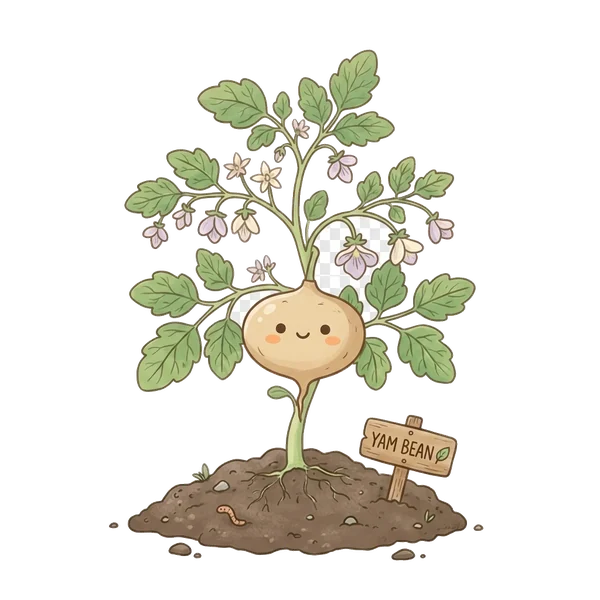
A warm-season root crop for the home garden
Growing your own Jicama (Yam Bean) is one of the more satisfying things you can do in an Australian backyard. It is rated intermediate to grow. Rarely sold fresh in Australia, so really only available if you grow it.
This guide covers when to plant Jicama (Yam Bean) in your region, the position and soil it likes, how to sow and space it, day-to-day care, the pests and diseases to watch, and how to harvest and store your crop.
What it looks like as it grows


When to Plant in Your Region
Jicama (Yam Bean) is a warm-season crop, frost-tender and needs a frost-free run. In subtropical South-East Queensland it is sown in September, October and November. Timing shifts with your climate, so choose your region below for a local calendar.
Varieties to Try
Jicama (Yam Bean)
Standard yam bean grown for its crisp white tuber. Sold as seed by tropical specialists.
Try: Boondie Seeds, Green Harvest (seasonal)
Position and Soil
Give Jicama (Yam Bean) full sun (at least 6 hours a day). It does best in free-draining soil with a pH around 6 to 7. Dig through plenty of compost before planting, and mulch to hold moisture and keep weeds down. It grows happily in a pot of 40cm+ with support, which makes it a fine choice for balconies and courtyards.
Sowing and Spacing
Sow seed about 3 cm deep. Thin or space plants to about 30 cm apart. Seedlings usually appear in around 14 days, fastest when the soil is between 20 and 32 degrees.
A tropical legume vine grown for its crisp, sweet, water-chestnut-like tuber, suited to long warm seasons in the NT, QLD and northern NSW. Sow in spring once it is warm, give it something to climb, and pinch off flowers to push energy into the tuber. Needs five or more frost-free months. IMPORTANT: only the tuber is edible. The pods, seeds and mature foliage are toxic (they contain rotenone), so never eat them and keep seeds away from children and pets.
Care
Water consistently, roughly 6 L per plant every 2 days in warm weather, less in cool or wet spells. Feed every few weeks through the growing season with a balanced organic fertiliser, and keep mulch topped up.
Pests and Diseases
Keep an eye out for Aphids. The main diseases to watch are Root rot. Good spacing, watering at the base rather than over the leaves, and crop rotation prevent most problems. See our Pest and Disease Guide to identify and fix any issue.
Harvesting and Storage
Jicama (Yam Bean) is typically ready to harvest in about 5 months. Unwashed tuber in a cool, dry spot for 1-2 months.
In the Kitchen
In the kitchen, jicama (yam bean) is good raw in salads and slaws, crudite sticks with lime and chilli, stir-fried (stays crunchy) and fresh spring rolls. Nutritionally: crisp, low-calorie and high in fibre and good source of vitamin C.
Companion Planting
Jicama (Yam Bean) grows well alongside Corn and Beans. Our Companion Planting Guide has the full pairings.
Track Your Jicama (Yam Bean) Growing
Add jicama (yam bean) to your garden in the Planting Season app and get reminders for planting, care and harvest, tuned to your region.
Open the App →Frequently Asked Questions
When should I plant Jicama (Yam Bean) in Australia?
Jicama (Yam Bean) is a warm-season crop. In subtropical regions like South-East Queensland it is sown in September, October and November. Timing changes with your climate, so use the calendar above for your region.
How long does Jicama (Yam Bean) take to grow?
Jicama (Yam Bean) is generally ready to harvest in about 5 months.
Can I grow Jicama (Yam Bean) in a pot?
Yes. Jicama (Yam Bean) grows well in a container of 40cm+ with support with free-draining mix and regular watering.
How much sun does Jicama (Yam Bean) need?
Give it full sun (at least 6 hours a day) for the healthiest growth and best harvest.
See also: Jicama (Yam Bean) in the Plant Library