
How to Get Rid of Fungus Gnats
Updated June 2026
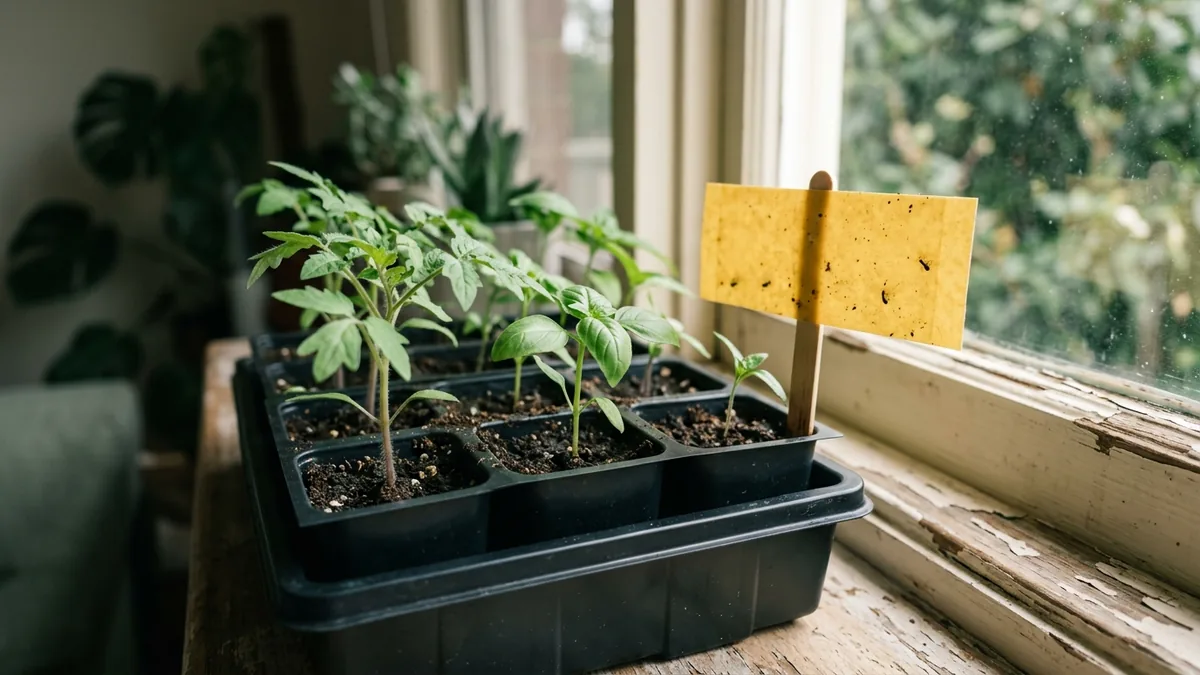
The little flies around your houseplants and seedlings, and the honest plan that actually works
If a cloud of tiny flies lifts off the soil every time you water a pot, you have fungus gnats. They are one of the most common problems indoor gardeners and seed raisers run into, and the good news is they are completely beatable once you understand what keeps them going.
This guide covers what fungus gnats are, why they keep appearing, how to confirm you actually have them, and a clear step-by-step control plan. Every method here is one that genuinely works. There are no miracle sprays.
What are fungus gnats?
Fungus gnats are small, dark, mosquito-like flies, usually 2 to 4 mm long, with long legs and a weak, drifting flight. You see the adults around houseplants, seed trays and potting mix, and they often wander to windows and screens.
The adults themselves do little harm. They do not bite and they do not eat your plants. The damage comes from the larvae, tiny clear-to-white grubs with a black head that live in the top few centimetres of damp potting mix. They feed on fungi, algae, decaying organic matter and, when numbers are high, on fine plant roots.
Why they appear
Fungus gnats are a symptom of one thing above all: potting mix that stays too wet. Their larvae need constantly moist soil and the film of fungi and decaying matter that grows in it. The common triggers are:
- Overwatering. The single biggest cause. Mix that never dries out is perfect for larvae.
- Poor drainage. Pots without holes, or saucers that hold water, keep the mix soggy.
- Rich, organic mixes. Mixes high in undecomposed compost, bark or coir feed the larvae.
- Bringing them in. New plants and fresh bags of mix often arrive already carrying eggs and larvae.
- Warm, still indoor air. Speeds up the breeding cycle, which is why winter windowsills full of seedlings are a hotspot.
How to confirm it is fungus gnats
Before you treat, make sure you have the right pest. Fruit flies hover around ripe fruit and the kitchen, not the soil. Fungus gnats stay close to the pots.
- Yellow sticky traps. Lay or stand a yellow sticky trap at the soil surface. Fungus gnat adults are strongly drawn to yellow and will stick to it within a day. This both confirms the problem and starts knocking down numbers.
- The potato test for larvae. Push a chunk of raw potato cut-side down onto the top of the mix. After a few days, lift it and check the underside for small clear larvae feeding on it. This tells you how active the larvae are.
- Watch the surface. Disturb the top of the mix and watch for adults lifting off. Larvae and their slime trails are sometimes visible on the surface of badly affected pots.
The control plan
No single trick clears fungus gnats. You break the cycle by drying out the breeding ground, trapping the adults and killing the larvae, all at the same time, for at least one full life cycle of three to four weeks.
1. Let the top of the mix dry out
This is the foundation. Let the top 2 to 3 cm of mix dry completely between waterings. Dry surface mix kills eggs and young larvae and makes the pot unattractive for laying. For most houseplants, letting the surface dry will not harm the plant. Just back off the watering can.
2. Bottom-water instead of top-watering
Stand the pot in a tray of water and let the mix draw moisture up from below, then tip out any excess. The roots stay watered while the surface stays dry, which is exactly the opposite of what the larvae need.
3. Yellow sticky traps for the adults
Keep yellow sticky traps at soil level near affected plants. They will not fix the problem alone because they only catch adults, but every trapped adult is eggs that never get laid. Replace them as they fill.
4. A BTi drench for the larvae
This is the most effective treatment for the larvae. BTi (Bacillus thuringiensis israelensis) is the same naturally occurring soil bacterium sold as mosquito bits or mosquito dunks. It targets fly larvae and is harmless to plants, pets and people. Steep the bits in your watering water, or soak a dunk in it, then water the pots with the BTi-rich water. Repeat with each watering for three to four weeks to catch newly hatched larvae.
5. A sand or grit top layer
Once the surface is dry, cap the mix with a 1 to 2 cm layer of coarse sand, fine gravel or perlite. Adults will not lay in it and emerging adults struggle to get through it. It is a simple, permanent barrier that works well on houseplants you are not reseeding.
6. Hydrogen peroxide drench, as a last resort
For a stubborn pot, a diluted hydrogen peroxide drench kills larvae on contact. Mix one part 3 percent household hydrogen peroxide with four parts water and water the mix with it. It fizzes as it contacts organic matter, which is normal. Use it sparingly and not as your main method, because it is a blunt tool. The drying-out, BTi and traps combination is gentler and more reliable over time.
How to prevent fungus gnats
- Water less. Let the surface dry between drinks. This alone prevents most infestations.
- Use pots with drainage and empty saucers so mix never sits wet.
- Quarantine new plants for a couple of weeks and check the soil before they join the rest.
- Store potting mix sealed and dry, and consider a fresh bag if an old one is damp and infested.
- Use a fast-draining seed mix for trays, and keep a sticky trap on the propagation shelf as an early warning.
- Clear away dead leaves and debris from the soil surface, which feed larvae.
Catch plant problems early
Track your seedlings and pots in the Planting Season app and use the in-app Pest and Plant Doctor tools to identify and fix problems before they spread.
Open the App →Frequently Asked Questions
What are the tiny flies around my houseplants?
They are almost certainly fungus gnats, small dark flies about 2 to 4 mm long that live in damp potting mix. The adults are harmless but annoying. The damage is done by the larvae in the top few centimetres of soil, which feed on fungi, decaying matter and fine roots.
Why do I keep getting fungus gnats?
Fungus gnats thrive in constantly damp potting mix. The usual causes are overwatering, mix that stays wet, poor drainage and rich mixes high in undecomposed organic matter. Let the top of the mix dry out between waterings and the cycle breaks.
Do fungus gnats harm my plants?
Mature plants usually shrug them off. The real risk is to seedlings and cuttings, where larvae feeding on tender roots can stunt or kill young plants. Heavy infestations also spread fungal problems like damping off.
How long does it take to get rid of fungus gnats?
Allow two to four weeks. The life cycle from egg to adult is about three to four weeks, so you need to keep up drying out the mix, sticky traps and a BTi drench through at least one full cycle to break it. Stopping early lets a new generation hatch.
Does cinnamon get rid of fungus gnats?
Cinnamon has a mild anti-fungal effect on the soil surface and may slow larvae a little, but it is not a reliable cure on its own. The proven combination is letting the mix dry, yellow sticky traps for adults and a BTi (mosquito bits) drench for larvae.
See also: Pest and Disease Guide and Container Vegetable Gardening