Why Have My Chickens Stopped Laying? Egg Problems Solved
No eggs, soft shells, weird eggs and where on earth they are hiding them.
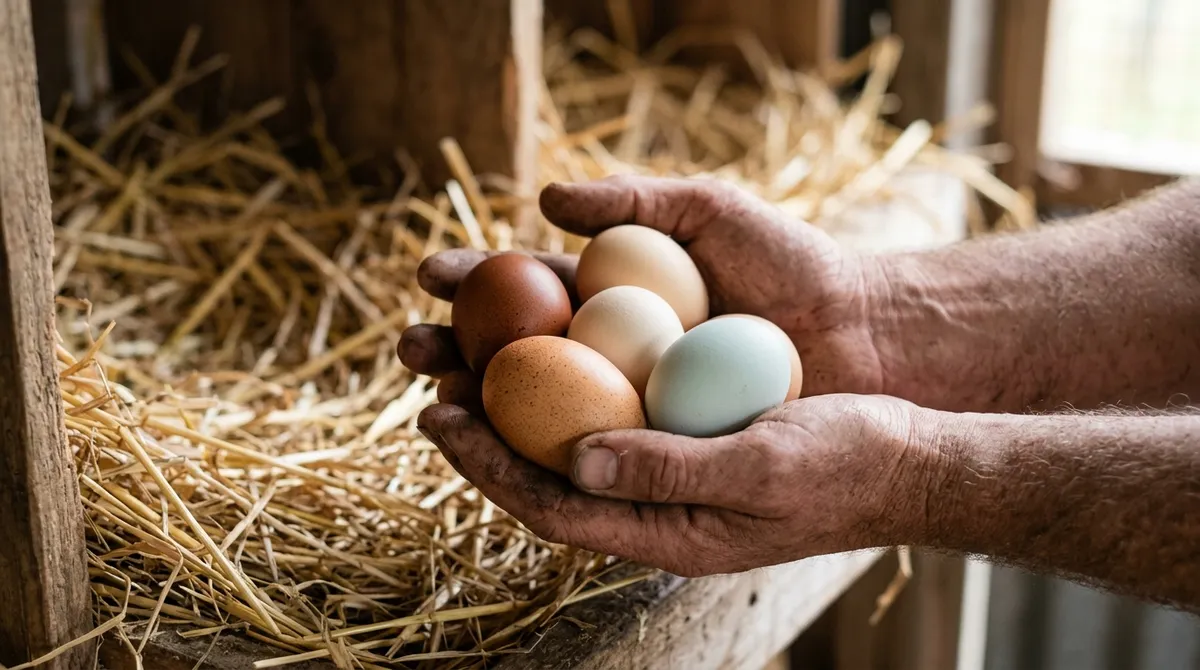
Every keeper hits the no-egg week eventually. Work through the list in order, it is usually the first three.
The usual suspects, in order
- Daylight. Hens need ~14 hours of light to lay. From autumn through winter, production drops or stops, especially in southern states. Normal, not broken. It returns with spring.
- Moult. Once a year (usually autumn) hens replace their feathers and stop laying for 6-10 weeks. Feathers everywhere + scruffy birds = moult. Boost protein (sunflower seeds, cooked egg) and wait.
- Age. Commercial hybrids (ISA, Hy-Line) lay hard for 2-3 years then taper steeply. A 4-year-old ISA laying twice a week is not sick, she is retired-ish. Heritage breeds taper slower.
- Broodiness. A hen glued to the nest, growling, is broody and on strike. Lift her off daily or give her fertile eggs to hatch.
- Stress. New flock members, predator scares, moving house, extreme heat: all pause laying for days to weeks.
- Hidden nests. Free-rangers laying away from the box is the happiest diagnosis: follow a hen at mid-morning and prepare to find fifteen eggs under the rosemary.
- Health. If none of the above fits and birds look off, check worms and mites, both quietly steal eggs.
Shell problems decoded
- Soft or no shell: calcium shortfall or a glitch: shell grit free-choice always, quality layer feed, and the odd soft egg from a young or old hen is normal.
- Thin shells in summer: heat reduces calcium uptake. Cool water, shade, and grit help.
- Wrinkled, bumpy or odd shells: occasional ones are harmless production-line hiccups; persistent weirdness from one hen plus respiratory signs is worth a vet chat.
- Blood spot inside: harmless ovary blip, not a fertilised embryo. Fine to eat.
- Tiny yolkless egg: a "fairy egg", the production line firing blanks. Charming, harmless.
Egg eating
Once a hen learns eggs are food, it spreads. Collect often, keep one ceramic egg in the nest (pecking it hurts and teaches nothing tasty lives there), fix any calcium shortfall, and darken nest boxes. Never feed recognisable raw egg.
See the pattern, not the panic. The app graphs your flock’s lay rate week by week, so a normal moult dip looks like what it is, and a real problem stands out.
Get the monthly Australian backyard guide
What to plant, flock and hive jobs for the month, in one short email. No spam.
Unsubscribe any time.