Chicken Health Problems: Spot Them Early, Fix Them Fast
Mites, lice, worms, scaly leg and the daily 30-second health check.
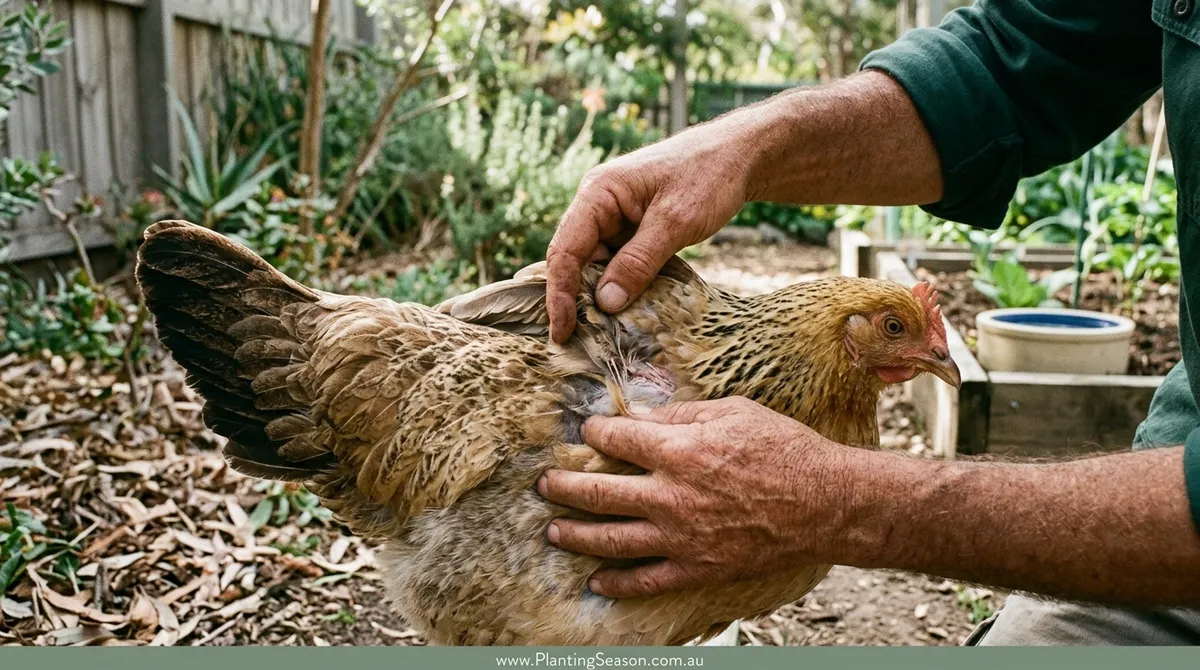
A healthy chicken is busy: pecking, scratching, gossiping. The single best health tool you own is knowing your birds, because a quiet, fluffed-up, tail-down hen is telling you something is wrong a week before anything else will.
The 30-second daily check
At feed time, just watch: is everyone moving, eating and bright-eyed? Combs red (not pale or purple)? Feathers smooth? Droppings firm with white caps? Anyone hiding in a corner gets picked up for a closer look. That habit catches 90% of problems early.
The common five
The number one Australian flock problem. They live in coop crevices by day and feed on roosting birds at night: anaemia, pale combs, drop in laying, birds reluctant to roost. Check: wipe a white tissue under the perch ends at night, red smears = mites. Fix: strip and scrub the coop, treat crevices (registered mite treatments or heat), repeat in 7 days to catch hatchlings. Dust baths help prevent.
Live on the bird: look for straw-coloured crawlers and egg clumps at feather bases around the vent. Treat birds directly with a registered poultry dust or spray, all birds, repeat per label.
Pale combs, dirty vents, drop in condition while eating well. Worm the whole flock with a registered poultry wormer every 6 months (more in warm wet climates), and respect egg withholding periods on the label.
Raised, crusty, thickened leg scales. Slow-burn misery, easy fix: dunk legs in vegetable oil weekly (suffocates the mites) or use a registered treatment; repeat for several weeks until scales smooth over.
The Australian killer: panting, wings held out, lethargy on 35°C+ days. Shade, multiple waterers, frozen water bottles, and never confine birds in unventilated coops on hot afternoons. The app warns you when a heatwave is forecast for your region.
When it is serious
A bird that is limp, gasping, purple-combed, or has been "off" for more than 48 hours needs a vet (avian or poultry-experienced). And one legal note: unusual deaths of multiple birds should be reported to the Emergency Animal Disease Hotline on 1800 675 888, that is how Australia catches avian influenza early.
What to plant, flock and hive jobs for the month, in one short email. No spam.
Unsubscribe any time.