Chicken Coop Ideas and Plans for Australian Backyards
Design principles that survive Australian summers, foxes and councils, whatever style you build or buy.
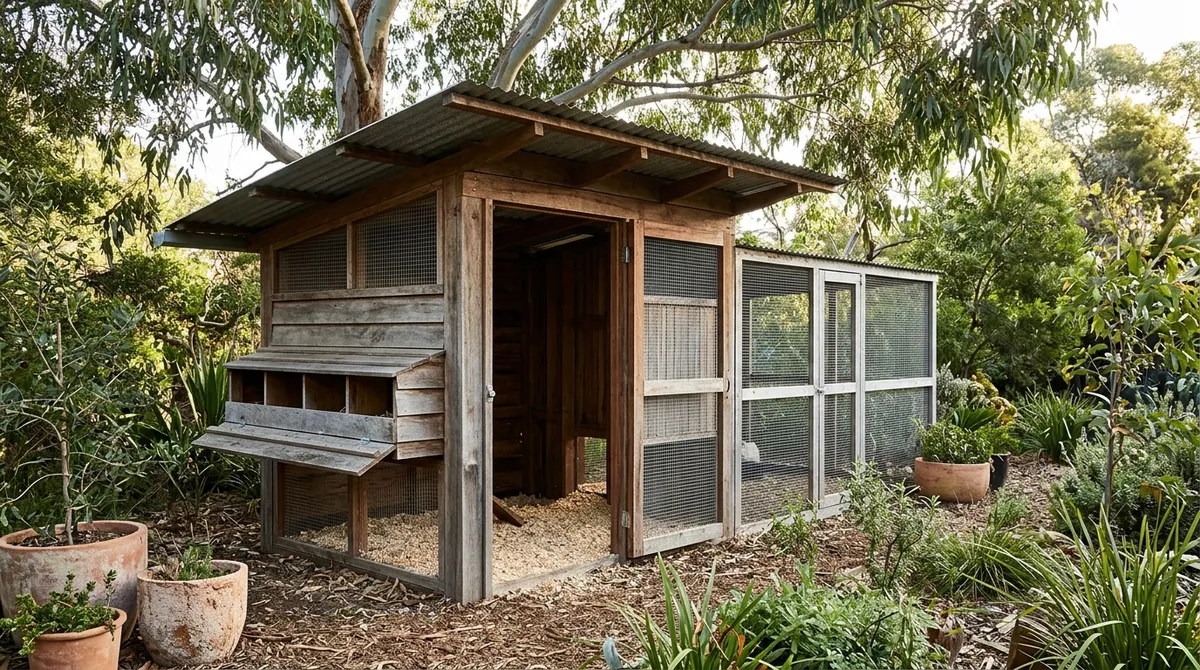
Most coop plans on the internet are written for North American winters. Australian coops have the opposite problem: our birds die of heat, not cold. Build for shade and airflow first, predators second, cleaning third, and looks last, then any style works.
The numbers every design must hit
- Floor space: 1m² per bird inside, minimum. 2m² each in the run, double it if they never free-range.
- Roosts: 25-30cm of perch per bird, 5-10cm wide timber with rounded edges, higher than the nesting boxes (birds sleep at the top of the room).
- Nesting boxes: one per 3 hens, 30x30x30cm, in the darkest corner.
- Ventilation: permanent openings high under the roofline, away from roost height. Airflow above the birds, never a draught across them.
- Shade: the whole structure benefits from tree shade or a double roof; an uninsulated tin box in full sun is an oven.
Inside: roosts, boxes, deep litter
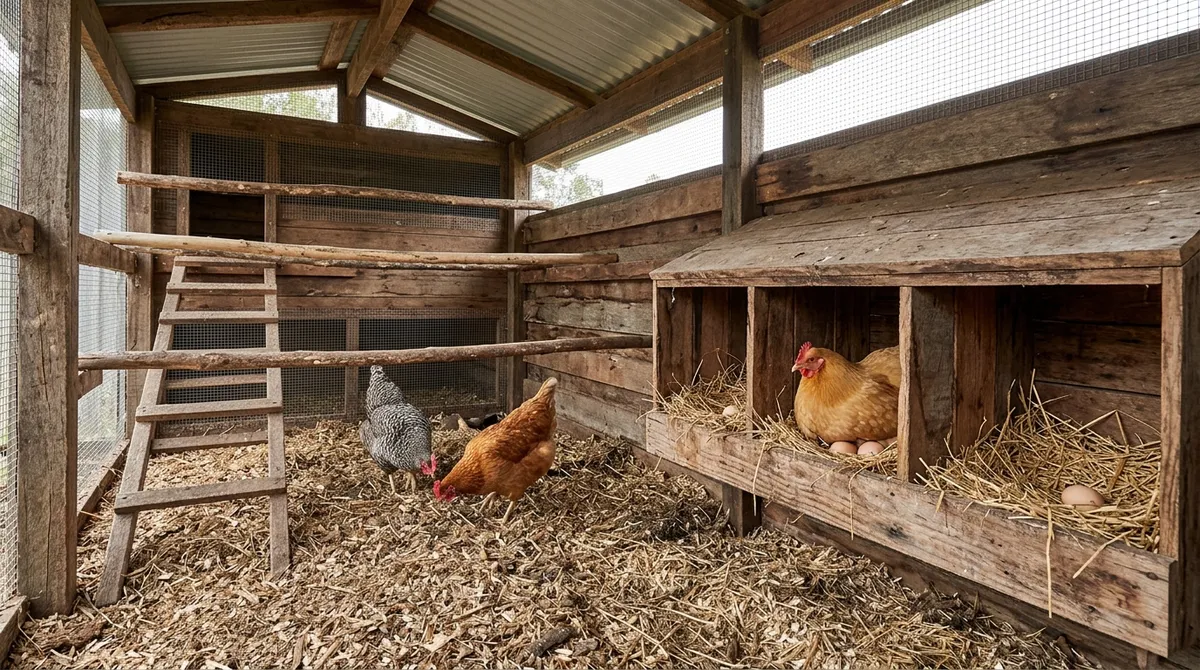
The deep litter method suits Australian keepers best: 10-15cm of wood shavings or chopped straw on the floor, stirred occasionally, fully replaced a few times a year, straight into the compost as superb garden fuel. Sand floors work in dry climates and rake like cat litter. Bare timber or concrete means weekly scraping, avoid.
The three coop styles
Walk-in (the keeper's favourite)
Head-height coop and run you can walk into. Easiest cleaning, easiest egg collection, easiest bird handling, and the style that survives decades. Costs more in materials ($500-1,500 DIY, $1,500-4,000 bought) but nobody who builds one regrets it. If you have the space, build this.
Chicken tractor (the lawn improver)
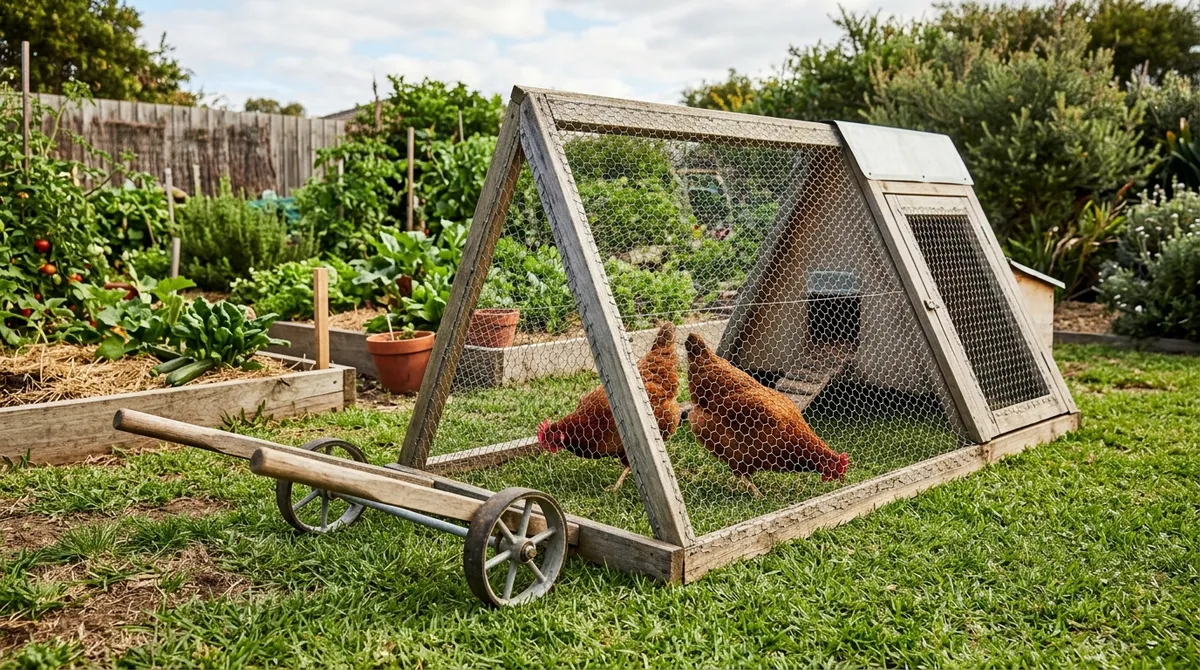
A bottomless portable coop you drag to fresh grass every day or two. The flock mows, fertilises and degrubs your lawn in rotation, brilliant for 2-4 birds on a suburban block. Limits: small capacity, daily moving discipline, and it must still be predator-solid because it sits on open ground.
Fixed coop + run (the standard kit)
The flat-pack hardware-store option. Fine bones, two warnings: the advertised bird capacity is always optimistic (halve it), and the pine and staples are usually predator-weak. Plan to reinforce mesh and latches the weekend you assemble it.
Predator-proofing, the Australian list
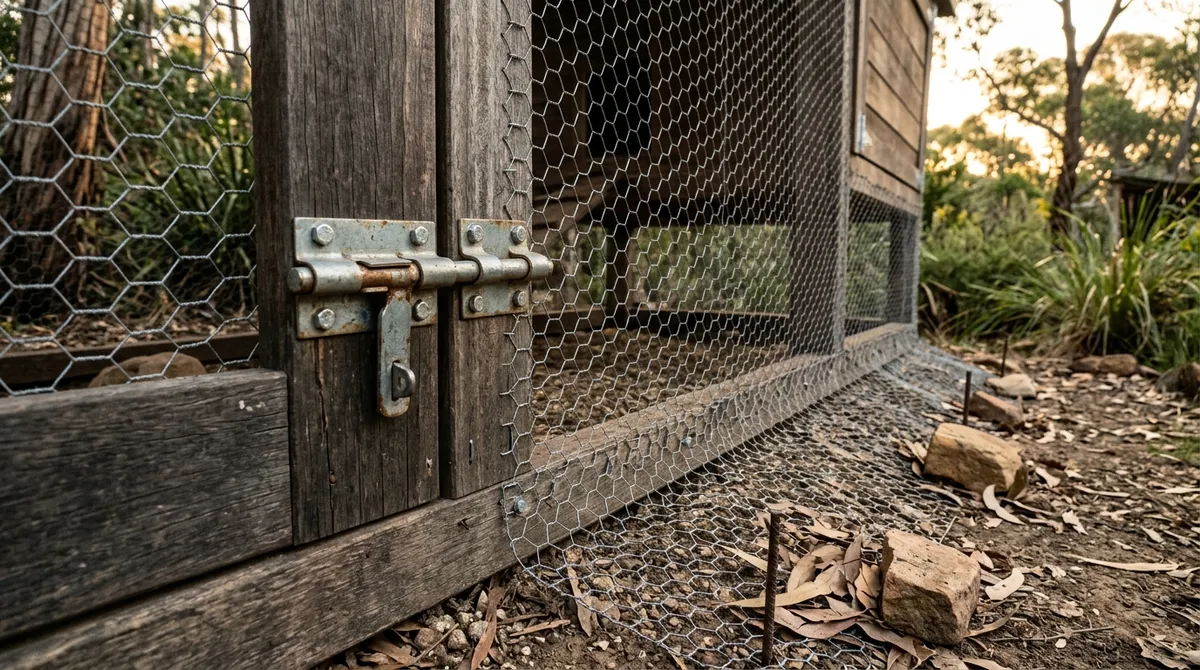
Foxes live in every capital city and are smarter than your latch. Goannas, pythons, dogs, hawks and rats fill out the roster depending on where you live.
- Mesh: galvanised weldmesh or heavy aviary mesh, never "chicken wire", a fox tears chicken wire open. 10mm or smaller holes also stop snakes after eggs.
- The skirt: mesh apron extending 30-40cm outward along the ground (or buried 30cm) defeats diggers.
- Latches: anything a toddler could open, a fox or cockatoo can too. Spring clips or padlock-style closures.
- Roof the run: mesh or solid. Hawks take bantams, and foxes climb better than seems fair.
- Lock-up at dusk: the single most protective habit in chicken keeping. An automatic door ($150-300) does it when you forget.
The run: shade, dust, boredom
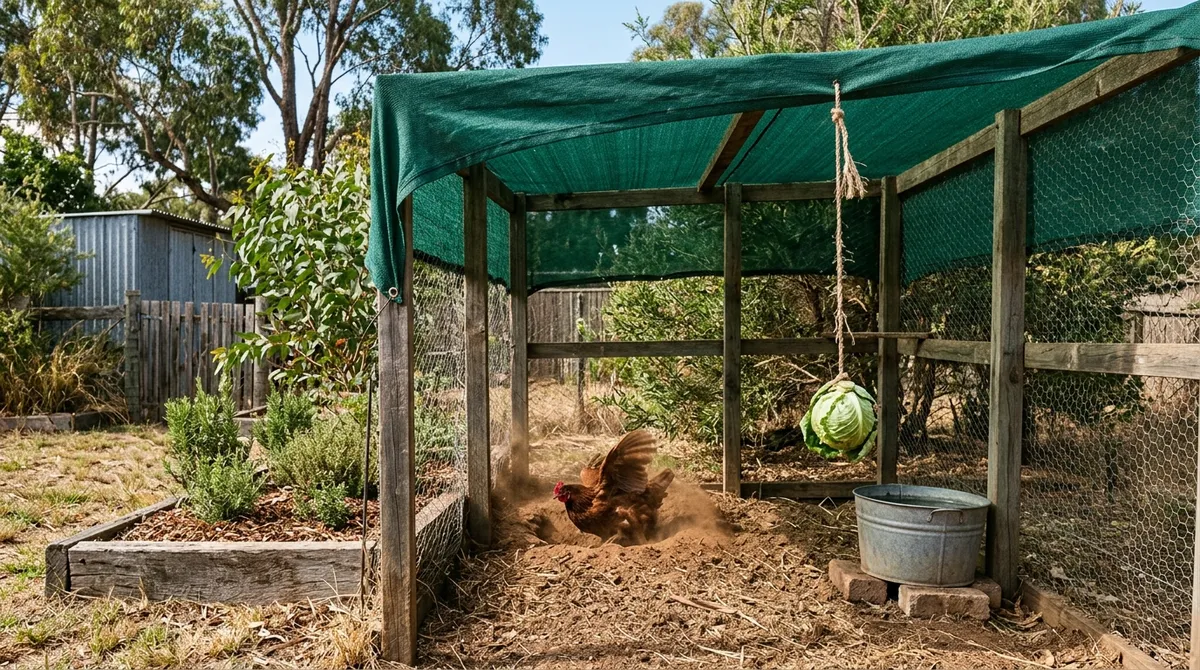
A run needs deep shade (shade cloth is cheap and transforms summer), a dry dust-bathing pit (their parasite control and favourite hobby), water in the shade, and something to do: a hung cabbage, a pile of autumn leaves to scratch through, a log to stand on. Bored chickens invent feather-pecking.
Council box-ticking
Most councils require coops be 1m or more off boundaries (some specify distance from neighbouring dwellings), kept clean, and rodent-managed. Check "[your council] keeping poultry" before you pour concrete, and see how many hens you're allowed.
What to plant, flock and hive jobs for the month, in one short email. No spam.
Unsubscribe any time.