How Many Chickens Do You Need (and How Many Can You Have)?
The egg maths, the social minimum, and what Australian councils allow.
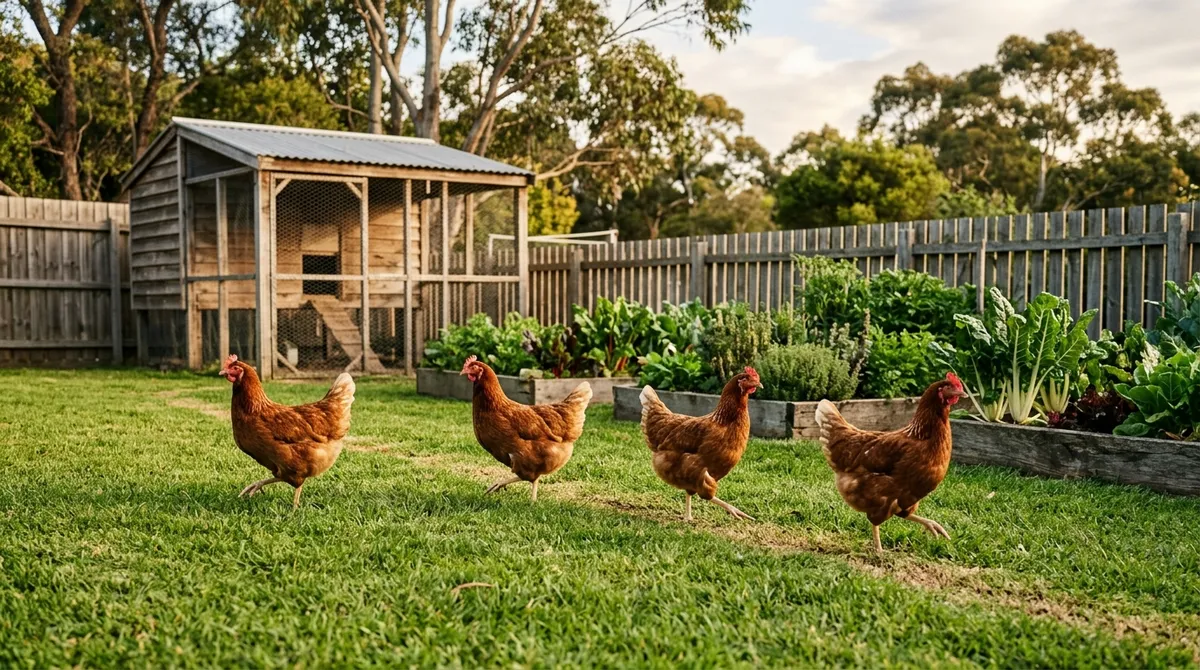
The egg maths
A healthy young hen lays 4 to 6 eggs a week in season. So: a family of four wanting a dozen a week needs 3 to 4 hens. Output drops in winter and as hens age, so most keepers run one more bird than the maths says.
- Couple, light use: 2-3 hens
- Family of four: 3-4 hens
- Family of six or keen bakers: 5-6 hens
- Selling a few dozen at the gate: 8-12 hens (check your state's egg-sale rules first)
Never fewer than three
Chickens are intensely social flock animals. A lone chicken is a stressed chicken, and two leaves a lonely survivor when one dies. Three is the welfare minimum and keeps the pecking order stable.
How many are you allowed?
Rules are set by local councils, but the patterns are consistent. Typical residential allowances, no permit needed:
- Brisbane City: up to 6 hens on blocks under 800m², no roosters.
- Most Sydney councils: around 10 birds without approval, no roosters in residential zones.
- Melbourne metro: commonly 5-10 hens depending on block size; some inner councils want permits above a handful.
- Adelaide, Perth, Hobart, Darwin metro: typically 6-12 with distance rules (coops 1m+ from boundaries, further from neighbouring homes).
- Roosters: effectively banned in residential areas everywhere, and you do not need one for eggs.
Search "[your council] keeping poultry" for the exact local law, usually a one-page fact sheet.
Space per bird
Minimum 1m² per bird in the coop and 2m² each in the run; double it if they rarely free-range. Crowding causes pecking, parasites, and the smells that make neighbours call the council.
What to plant, flock and hive jobs for the month, in one short email. No spam.
Unsubscribe any time.