Brahma Chickens: The Australian Keeper’s Guide
~150 brown eggs a year · Giant (3.5-5.5kg) · typically $50-120 per bird
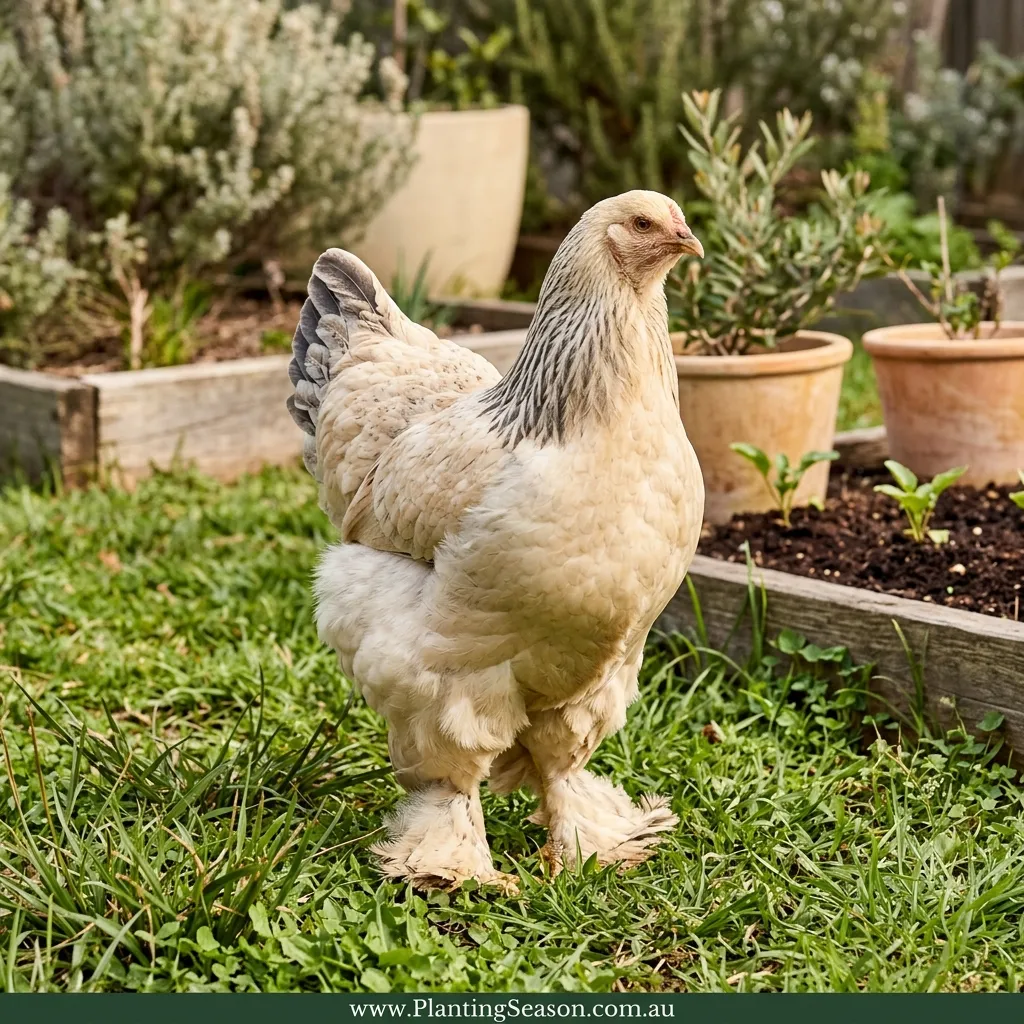
The Brahma is the gentle giant of the chicken world: knee-high, feather-footed, and so calm that they make better garden companions than most dogs. Australians keep them for presence and personality, with eggs as the side benefit.
Eggs and laying
Around 150 medium brown eggs a year, and unusually, Brahmas lay best through the cooler months when other breeds slow down. Pullets mature slowly (6-7 months to first egg), so be patient with young birds.
Temperament
Famously placid. Brahmas tolerate handling, rarely fuss, and their size means they barely register predatory swooping that panics smaller breeds. Despite the size they sit LOW in pecking orders, they are lovers, not fighters.
Australian climate fit
A cool-climate bird: Melbourne, the ranges, Canberra and Tasmania suit them perfectly. The dense feathering that laughs at frost makes Brisbane summers genuinely dangerous, in the subtropics they need deep shade, water and airflow, and even then a heatwave is a risk.
Care notes
Feathered feet hate mud: sort your run drainage or the feathers ball up with muck in winter. They eat noticeably more than light breeds (the feed calculator in the app accounts for size). Low perches, those big bodies injure legs jumping from height.
Common questions
Hens 3.5-4.5kg, roosters up to 5.5kg, standing knee-high. Easily double a commercial layer.
It is their weakness. North of Sydney they need serious shade and water management; in the tropics, choose a lighter breed instead.
Just bigger: 1.5m² each inside, low perches (30-40cm), and wide pop-holes. Standard kit coops are usually too small.
More breeds
What to plant, flock and hive jobs for the month, in one short email. No spam.
Unsubscribe any time.