Freezing the Harvest: What to Blanch and for How Long
Blanch most vegetables for the tested time, chill them as fast, then freeze at -18°C or colder.
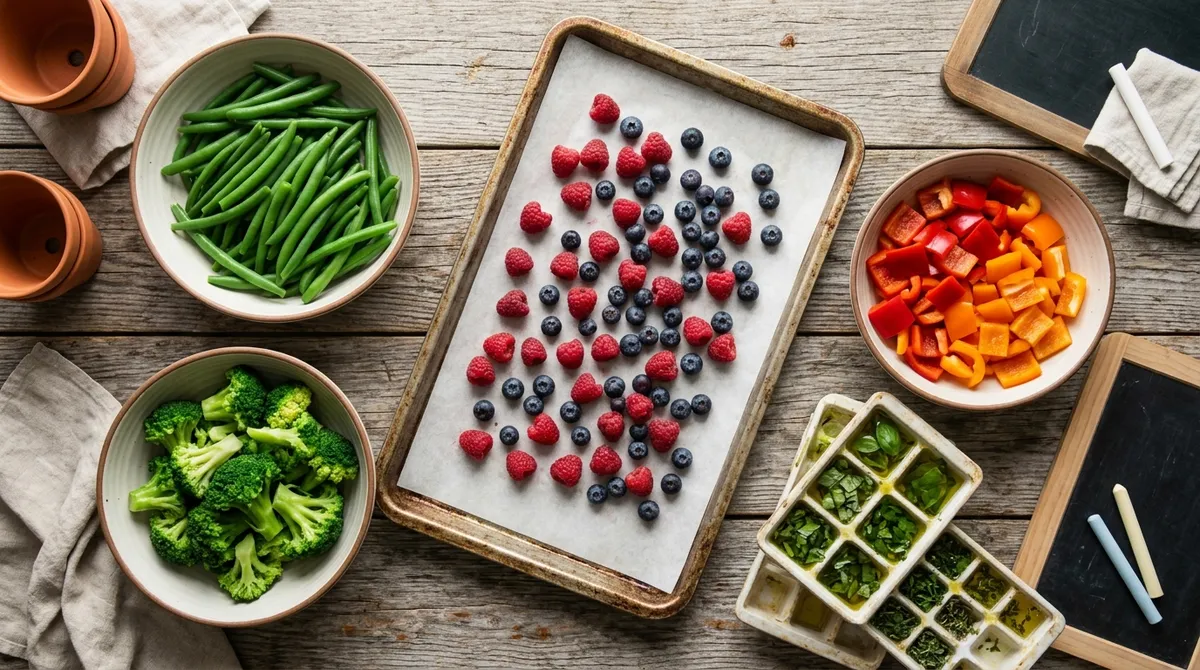
Freezing is the safest way to keep a vegetable glut, and for beans, corn, peas and pumpkin it is the better choice than bottling in Australia. Most vegetables need blanching first: a short, timed boil that stops the enzymes that make frozen vegetables tough and dull. Under-blanching is worse than none, so time it. Cool them in iced water for the same time, drain well, and freeze at -18°C. Use them within 8 to 12 months for best quality.
Blanching times
| Vegetable | Boiling water blanch |
|---|---|
| Beans (green) | 3 minutes |
| Peas | 1½ minutes |
| Broccoli, 4 cm florets | 3 minutes (5 if steamed) |
| Cauliflower, 2.5 cm florets | 3 minutes |
| Carrots, sliced or diced | 2 minutes (5 if small and whole) |
| Sweet corn on the cob | 7 to 11 minutes by size |
| Corn kernels | 4 minutes on the cob, then cut |
| Zucchini and squash slices | 3 minutes |
| Silverbeet, spinach and other greens | 2 minutes |
| Capsicum halves or strips | 3 or 2 minutes, or freeze raw |
Use about 4 litres of boiling water for each 500 g of vegetables, so it returns to the boil within a minute, and start timing when it does. Pumpkin and sweet potato are cooked, mashed and frozen rather than blanched.
No blanching needed
Berries and most fruit (spread on a tray to freeze, then bag), chillies (just wash and stem), capsicum for raw use, chopped herbs wrapped in freezer wrap, and tomatoes, which freeze whole or in pieces for cooking once peeled.
What not to freeze
Lettuce, cucumber, radish, celery and raw cabbage turn limp and watery. Boiled potatoes go mealy.
Garlic or herbs in oil
Keep them in the fridge for no more than 4 days, or freeze them. Oil gives botulism the airless conditions it needs.
Sources we checked (October 2026): National Center for Home Food Preservation: Blanching Times, Blanching Vegetables, Foods That Do Not Freeze Well, Freezer Management, How Long Can I Store Frozen Foods, Dry or Tray Packing, Freezing Peppers, Hot Peppers, Tomatoes, Fresh Herbs, Garlic-in-Oil; Food Safety Information Council, Home bottling and canning.
Common questions
Almost all vegetables, yes, for the tested time. It stops the enzymes that spoil colour, flavour and texture in the freezer. Fruit, chillies and raw capsicum do not need it.
8 to 12 months for best quality at -18°C. They stay safe after that but lose quality.
For Australian kitchens, usually. Bottling them safely needs a pressure canner; freezing needs only a blanch.
What to plant, flock and hive jobs for the month, in one short email. No spam.
Unsubscribe any time.