
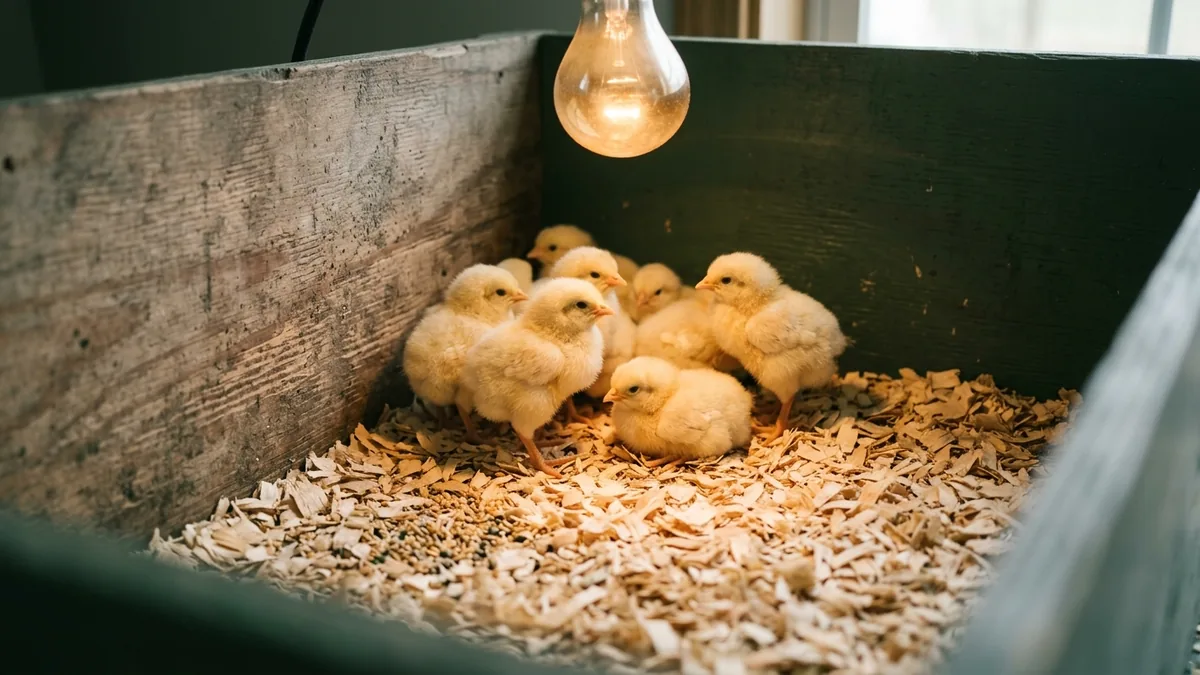
The first six weeks shape healthy, well grown birds. This guide walks through the brooder, getting the heat right, feed and water, a week by week plan, and how to move chicks outside and into the flock.
Day old chicks cannot regulate their own body temperature, so for the first weeks they rely on a warm, clean, draught free brooder that stands in for a mother hen. Get the heat, feed and water right and chicks grow steadily into feathered birds that can handle the outdoors.
Almost everything in this period comes back to two things: a safe, even source of warmth with a cool zone to escape to, and constant access to clean water and a starter feed made for chicks. The week by week plan below shows how the heat steps down as the birds feather up.
A brooder is simply a safe, contained, draught free space. A large plastic tub, a sturdy cardboard box or a purpose built brooder all work. Allow a little space per chick to begin with and plan to expand it as they grow, because crowded chicks get stressed and dirty.
Chicks need a warm spot of about 32 to 35 C in their first week. Lower the temperature by roughly 3 C each week until you reach the surrounding air temperature, then they can come off heat. A heat plate is ideal because chicks duck under it for warmth and step out to cool down, much as they would with a hen.
The single most important rule is to always leave a cool zone. If the whole brooder is hot, chicks have nowhere to escape and can overheat. Watch their behaviour as your real thermometer: a happy brood spreads out evenly and moves around. The calculator below gives the target range for each week.
For the first few days, line the brooder with paper towel so chicks learn to peck at feed and not the bedding. After that, switch to pine shavings. Never use cedar shavings, as the oils can harm chicks' airways.
Use this as a guide and let the birds and the weather fine tune it.
The chicks tell you whether the heat is right. Read the brood at a glance.
Chicks huddle in a tight pile directly under the heat and cheep loudly. Lower the heat source or raise the temperature.
Chicks pant, hold their wings out and crowd to the far edges away from the heat. Raise the heat source or lower the temperature.
Chicks spread out evenly across the brooder, move around freely, and rest in loose groups. Leave the setup as it is.
Once birds are fully feathered, usually around 6 weeks, and nights are mild, they can move to an outdoor coop. Acclimatise them with short supervised daytime trips first so the change is gradual rather than a shock.
If you already have an established flock, never mix tiny chicks straight in with adults. Grow the young birds to near adult size first, and quarantine any new birds bought from elsewhere before they meet your flock. When the young birds are ready, use the look but no touch method: keep them side by side behind mesh for 1 to 2 weeks so the birds get used to each other safely. Then integrate at night, placing the newcomers on the roost after dark, which tends to make for a calmer introduction.
Enter the chick's age in weeks to see the target brooder temperature and what to do that week.
| Week | Target temp (C) | Feathering / stage | What to do |
|---|---|---|---|
| Week 1 | 32 to 35 | Down only, no feathers | Settle chicks, watch heat closely, check eating and drinking. |
| Week 2 | 29 to 32 | Wing feathers starting | Drop heat by about 3 C, add a little more space. |
| Week 3 | 26 to 29 | Feathering across wings and back | Continue lowering heat, keep a clear cool zone. |
| Week 4 | 23 to 26 | Well feathered, downy head | More room. Short supervised trips outside on warm days. |
| Week 5 | 20 to 23 | Mostly feathered | Reduce heat further. More time outside when warm. |
| Week 6 and on | 18 to 20, then off heat | Fully feathered | Wean off heat. Move to coop once night air is mild, around 18 C. |
The free Planting Season app includes a Poultry module with a Flock tracker, so you can record hatch dates, watch each bird's age tick over week by week, and log the day the first egg arrives. It makes it easy to see when chicks are ready to come off heat or move outside.
It works offline, with no App Store needed. Open the app and add your chicks to begin.
Start at about 32 to 35 C in week one, measured at chick level under the heat source. Drop the temperature by roughly 3 C each week. Always leave a cooler zone so chicks can move away from the heat and self regulate.
Short supervised trips outside on warm days can start from about 3 to 4 weeks. Chicks can move outside permanently once they are fully feathered, around 6 weeks, and night temperatures are mild, roughly 18 C or above.
Most chicks need supplementary heat for about 6 weeks, less in warm weather. By then they are fully feathered and can hold their own body heat. A heat plate is preferred over a bulb because it is safer and mimics a hen.
Feed chick starter at about 18 to 20 percent protein as the only feed for the first weeks, with fresh clean water always available. Avoid treats early on, as they unbalance the diet.
No. Layer feed has far too much calcium for chicks and can damage their kidneys. Keep them on chick starter, then grower feed, and only move to layer feed at point of lay.
Pasty butt is often linked to stress and a brooder that is too hot. Keep the temperature correct with a cool zone, provide clean fresh water, and gently clean any droppings stuck to the vent with warm water so the chick can pass droppings freely.
Most hens start laying at about 18 to 24 weeks, depending on the breed and the season. Birds reaching point of lay as days shorten in autumn may wait until daylight increases again.
Wait until the young birds are close to adult size, never mix tiny chicks straight into an adult flock. Use a see but not touch setup for 1 to 2 weeks so birds get used to each other through a barrier, then integrate at night for a calmer introduction.
Log hatch dates, watch each bird's age, and record that first egg with the free Flock tracker in the Planting Season app.