
Sweet Potato vs Yam: Yam Bean, Chinese Yam and Native Yams in Australia
Updated November 2026
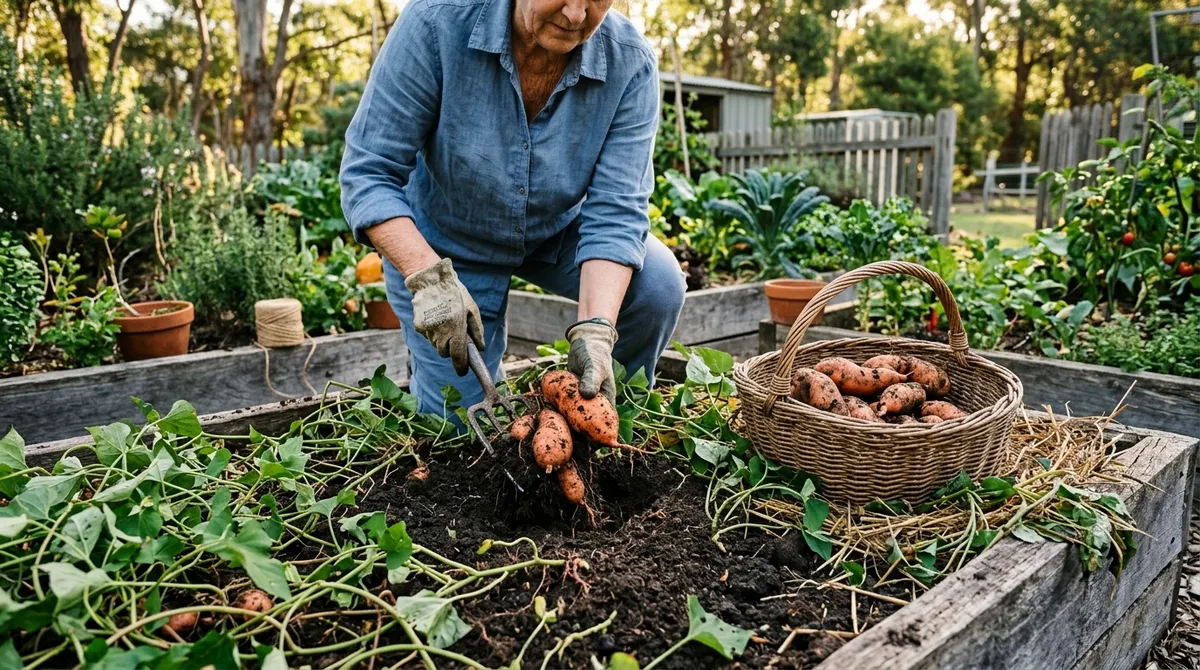
Four root crops that share the word yam, what each one is, and where in Australia you can grow them.
A sweet potato is not a yam. Sweet potato (Ipomoea batatas) is a trailing vine in the morning glory family. True yams are Dioscorea species, a separate group of climbing vines. The yam bean is a third plant, a legume grown for its crisp tuber and sold as jicama. Chinese yam (Dioscorea polystachya) is a true yam from East Asia. In Australia the word yam is used for all of them, and for some native plants too, so it helps to know which one you are looking at.
Short answer: if you want an easy home crop, grow sweet potato in the warm months. Yam bean (jicama) grows well in the tropics and subtropics, and only its tuber is eaten, because the seeds and leaves are toxic. True yams and Chinese yam are more specialised, and native yams belong to the bush.
Sweet potato
Sweet potato is the one most Australians have actually eaten. It is native to the tropical Americas, and it is a frost-tender vine that spreads across the soil and produces thickened storage roots. Skin and flesh colour vary a lot: white, orange, rose and purple types are all sold here. It is not related to the common potato, which belongs to the nightshade family.
It is grown from slips, which are rooted shoots started from a sprouted sweet potato, rather than from seed. Our sweet potato slips guide shows how to make them, and the sweet potato growing guide covers the full season. Our data lists about 150 days from planting to harvest.
True yams
True yams are climbing vines in the genus Dioscorea, in the family Dioscoreaceae. They are monocots, which puts them in a different branch of the plant family tree from sweet potatoes. The edible part is a tuber, often large, with thick, rough skin and starchy flesh. Most yams eaten in the world come from West Africa, and they are grown across the tropics of Asia and the Pacific as well. In Australia they are mainly an import, found in Pacific, African and Asian grocers, and they are not a common home crop.
Yam bean (jicama)
Yam bean is a different plant again. It is the legume Pachyrhizus erosus, sold in shops as jicama. It is a twining vine that forms a single, round, turnip-shaped tuber with a crisp, juicy texture, and it is usually eaten raw or lightly cooked. It has nothing to do with true yams apart from the name.
One safety point matters a great deal. Only the tuber is eaten. The mature seeds, pods and leaves contain rotenone, a natural insecticide that is toxic, and a review in the open literature warns that eating the seeds can cause severe poisoning. Keep the pods away from children, do not cook with the seeds or leaves. Our jicama growing guide and the jicama plant page cover the crop in detail.
| Plant | Botanical name | Family | Edible part | Climate |
|---|---|---|---|---|
| Sweet potato | Ipomoea batatas | Morning glory | Storage root | Warm; frost tender |
| True yam | Dioscorea species | Dioscoreaceae | Large tuber | Hot tropics |
| Yam bean (jicama) | Pachyrhizus erosus | Legume | Tuber only; seeds, pods and leaves are toxic | Warm tropics and subtropics |
| Chinese yam | Dioscorea polystachya | Dioscoreaceae | Long tuber | Temperate to warm |
| Long yam (native) | Dioscorea transversa | Dioscoreaceae | Long, slim tuber | Eastern and northern Australia |
Chinese yam
Chinese yam is a true yam, Dioscorea polystachya, a perennial climbing vine from East Asia. It is the long, slim, pale tuber sold in Asian grocers, and it can grow deep. The vine has heart-shaped leaves and can produce small aerial tubers called bulbils. Outside its home range it has become an invasive weed in parts of North America, according to the Florida Natural Areas Inventory and Canada's food inspection agency, and that is a good reason to be careful with any yam that makes bulbils. We could not confirm its weed status or its availability from garden sellers in Australia, so check with your state biosecurity agency before you plant any Dioscorea, and never let bulbils escape into bushland or waterways.
Native yams
Australia has native yams, and they have long been an important food for Aboriginal people. The long yam, Dioscorea transversa, is a vine of eastern and northern Australia. The Australian National Botanic Gardens notes that its tuber can reach 50 cm in length and 5 cm in diameter, is eaten raw or roasted, and tastes similar to sweet potato. The leaves are heart-shaped with several prominent veins. We have not found a garden seller we can name for it, and native plants are often protected, so please do not dig wild tubers. If you would like to grow one, ask a native plant nursery or your local Aboriginal land council about plants that are sold legally and locally.
Which yams grow in which part of Australia
The sweet potato is the easiest of the group, and it grows in every mainland region we cover, though the planting window narrows as you head south. These are the months in our data:
- South East Queensland: Sep to Feb. See the South East Queensland calendar.
- Northern Rivers NSW: Sep to Feb. See the Northern Rivers calendar.
- Sydney: Oct to Dec. See the Sydney calendar.
- Melbourne: Oct to Dec. See the Melbourne calendar.
- Perth: Sep to Dec. See the Perth calendar.
- Darwin and the Top End: Sep to Feb. See the Darwin calendar.
Our data shows no sweet potato planting window for Tasmania. Check local frost patterns on the frost dates page, because sweet potato slips need warm soil and no frost for the whole season.
Yam bean timing
Yam bean wants the same heat. In our data it is planted in:
- South East Queensland: Sep to Nov
- Sydney: Oct to Nov
- North Queensland: Jan to Dec, because the tropics allow planting nearly all year. See the North Queensland calendar.
- Darwin and the Top End: Apr to Jun
It is not listed for Tasmania or Canberra, where the summers are too short and cool for a good tuber.
Oca, the other "yam"
You may also see oca (Oxalis tuberosa) sold as the New Zealand yam. It is a small, colourful Andean tuber, not a true yam, and it prefers cool autumn weather. Our oca data lists planting in Sep to Nov for Melbourne and Oct to Nov for Tasmania, and it is a good fit for the cooler south. The oca plant page has the full calendar.
Sweet potato vs yam in the kitchen
A sweet potato is soft and sweet when cooked. A true yam is dry and starchy, more like a potato, and a yam bean is crisp and watery and is usually eaten raw. These three are not interchangeable in recipes, so check the plant before you swap one for another.
Questions
Is a sweet potato a yam?
No. Sweet potato (Ipomoea batatas) is a morning glory family vine from the Americas. True yams are Dioscorea species, a separate group of vines from Africa and Asia.
What is a yam bean?
Yam bean (Pachyrhizus erosus), sold as jicama, is a legume grown for its crisp tuber. Only the tuber is eaten, because the seeds, pods and leaves are toxic.
Can you grow Chinese yam in Australia?
Chinese yam (Dioscorea polystachya) is a true yam from East Asia. It is regarded as invasive in parts of North America, and we could not confirm its status in Australia, so check with your state biosecurity agency first.
What is the native Australian long yam?
The long yam (Dioscorea transversa) is a native vine of eastern and northern Australia with an edible tuber, eaten raw or roasted by Aboriginal people according to the Australian National Botanic Gardens. Do not dig wild plants.
Which of these grows best in Sydney?
Sweet potato is the easiest, planted in the warm months listed in our data. Yam bean also suits Sydney, though the window is short.
When do I plant sweet potato slips?
Plant slips once frost danger has passed and the soil is warm. The months depend on your region, so check the sweet potato plant page.
Sources
- Australian National Botanic Gardens: Dioscorea transversa
- PubMed Central: Pachyrhizus erosus review (rotenone in seeds)
- Florida Natural Areas Inventory: Dioscorea polystachya
- Canadian Food Inspection Agency: Chinese yam
- Green Harvest: Oca growing information
- University of Illinois Extension: What's the difference between sweet potatoes and yams?
Plant profile
The sweet potato profile has sowing times for your region, companion plants and common pests.