
How to Grow Donut Peaches in Australia
Updated June 2026
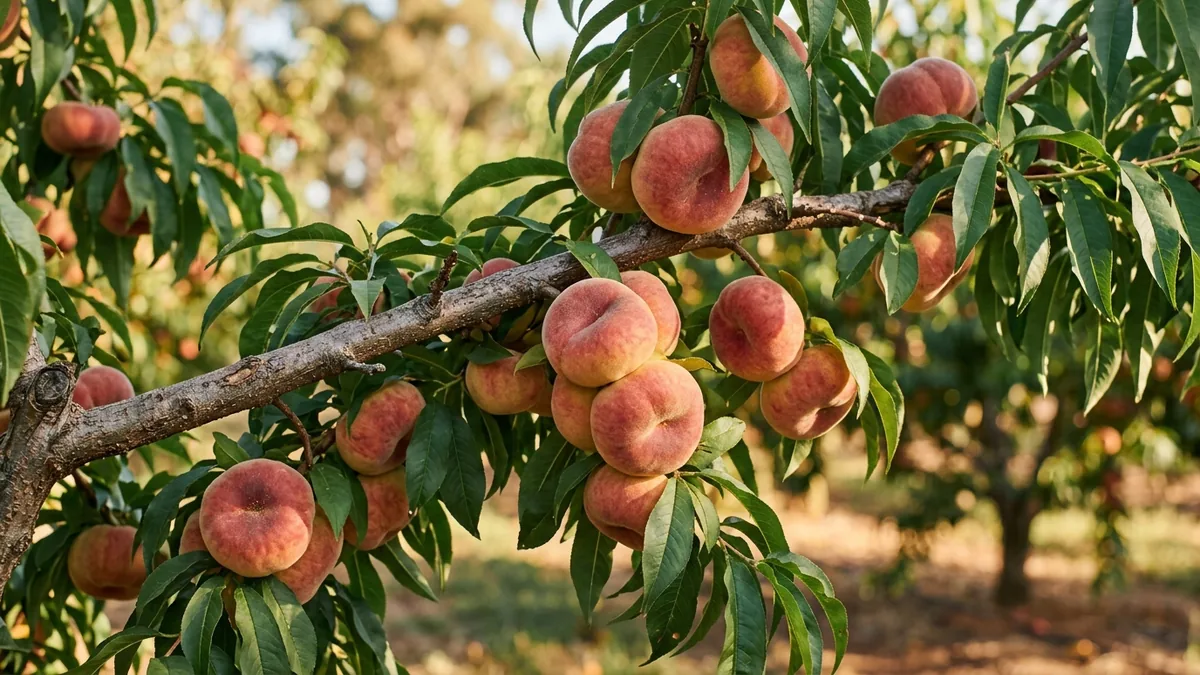
The sweet, flat, dimpled peach is just a peach with a different shape, so the chill-hours rule is everything
Donut peaches, also called flat or Saturn peaches, are a naturally flattened form of the ordinary peach (Prunus persica var. platycarpa). They carry the same honeyed white or yellow flesh and the same small stone, in a squashed, doughnut-like shape that children love and that costs a fortune at the shops. The tree is a normal deciduous peach, so it grows and is cared for exactly like a round one.
The make-or-break decision is winter chill. Peaches need a spell of cold while dormant to flower and fruit properly, measured in chill hours. Match the variety's chill need to the winter your area really delivers and the tree thrives. Get it wrong and it sulks. The tool below sorts that out for your climate.
Will donut peaches grow in your climate?
The whole question with peaches is chill. Pick your Australian climate below for a clear verdict on whether donut peaches will fruit, and which kind of variety to buy.
Climate and position
Donut peaches suit warm temperate and cool temperate Australia best, and crop reliably in cold districts too. In subtropical areas they need a genuinely low-chill cultivar, and in the true tropics there is rarely enough winter chill even for low-chill types, so they generally struggle. Wherever you are, give the tree full sun, all day if you can, and shelter from strong wind.
The tree is frost-hardy while dormant in winter, but the spring blossom is tender and a late frost can wipe out a crop. Avoid frost pockets at the bottom of a slope, and in frosty districts pick a spot that warms early in the day. Soil must drain freely. Peaches hate wet feet, so improve heavy clay with compost and gypsum, or plant on a raised mound.
Planting
Bare-root deciduous trees are planted in winter while dormant, which is the cheapest and best way to buy a peach. Potted trees can go in almost any time but establish best planted in autumn or winter. Dig a hole wider than the roots, spread them out, set the tree at the same depth it grew in the nursery with the graft union above the soil, backfill, firm gently and water in well.
Give a standard tree about 3 to 4 metres of room. Dwarf and patio donut peaches stay much smaller and grow happily in a large pot, which is a good option for courtyards and balconies, though pots dry out fast and need attentive watering. Mulch the root zone, keeping the mulch clear of the trunk.
Watering and feeding
Water young trees regularly through their first couple of summers to establish a strong root system. An established tree needs deep watering through the warm months, especially while the fruit is swelling, when a dry spell gives small, dry peaches. Ease right off over winter dormancy.
Feed in late winter to early spring as growth starts, with a balanced fertiliser or aged manure and compost, and a second lighter feed after fruit set. Avoid heavy nitrogen late in the season, which pushes soft growth prone to disease. A spring mulch of compost feeds the tree slowly and keeps moisture in.
Pruning and thinning
Peaches fruit on wood grown the previous year, so annual pruning is essential to keep young fruiting wood coming. Train and prune to an open vase shape, three to five main branches around an open centre that lets light and air into the tree. Prune in late winter, removing dead, crowded and crossing wood and shortening the previous year's growth to renew the fruiting wood. A lighter prune after harvest helps control size.
Harvest and storage
Donut peaches ripen through summer, the exact month depending on your variety and district. Pick when the background colour has turned from green to creamy yellow or gold, the fruit smells sweet, and it gives slightly and parts easily from the branch with a gentle twist. They bruise easily, so handle them softly. Ripe peaches keep only a few days, best in the fridge, so eat, share or preserve a glut quickly. They are excellent bottled, poached, dried or frozen in slices.
Pests and problems
- Peach leaf curl: the classic peach disease, puckering and reddening the new leaves. Spray a registered copper fungicide at bud swell in late winter, before the buds open, and again at leaf fall if it was bad. Rake up and bin infected leaves.
- Brown rot: rots the fruit on the tree, worse in wet summers. Remove and bin any mummified fruit, keep the tree open and airy, and follow a registered spray program if it is persistent.
- Fruit fly: a major pest in much of Australia. Bag fruit, use traps and netting, and dispose of fallen fruit promptly.
- Aphids: cluster on soft new growth. Hose off or treat with horticultural oil; ladybirds usually help.
- Birds and possums: net the tree as the fruit colours.
Varieties to grow in Australia
| Variety | Flesh / type | Chill need | Best for |
|---|---|---|---|
| Saturn | Classic white-flesh donut | ~400 to 500 chill hours | Warm to cool temperate, the standard flat peach |
| Stark Saturn | White-flesh donut | ~400 to 500 chill hours | Reliable cropping in temperate gardens |
| Galaxy | White-flesh donut | ~400 to 500 chill hours | Sweet white-fleshed flat peach for temperate areas |
| TangOs / TangOs II | Low-chill flat peach | ~200 to 300 chill hours | Warm and lower-chill districts |
| UFO | Low-chill flat peach (bred in Florida) | ~200 to 300 chill hours | Subtropical and warm temperate AU |
Genuine low-chill donut peaches such as UFO and TangOs are the ones to seek out if your winters are mild. Dwarf and patio peaches, where available in a flat type, suit pots and small courtyards. Always check the variety's chill rating against your district before buying.
When to plant in Australia
Plant bare-root donut peach trees in winter, roughly June to August, while they are dormant. This is when nurseries sell the widest range and the trees establish best. Potted trees can also go in during autumn. In all areas the key is choosing a variety whose chill need matches your winter, then planting it in a sunny, free-draining, frost-aware spot.
For timing tuned to your exact spot, use Find My Region or open the Planting Season app. If your winters are mild, see our guide to low-chill fruit for more options.
Match the chill, get the fruit
The Planting Season app helps you track chill hours and pick fruit-tree varieties that suit your climate zone, so you buy a peach that will actually crop. Log flowering, thinning and harvest, and watch your totals build.
Open the App →Frequently Asked Questions
What are donut peaches?
Donut peaches, also called flat or Saturn peaches, are a naturally flattened, doughnut-shaped form of the ordinary peach (Prunus persica var. platycarpa). They have the same sweet white or yellow flesh and a small stone, but a squashed shape. They grow on the same kind of deciduous tree and are cared for in exactly the same way as a round peach.
How many chill hours do donut peaches need?
It depends on the variety. Classic donut types like Saturn need roughly 400 to 500 chill hours (hours below about 7 degrees while dormant). Low-chill flat peaches such as TangOs and UFO need only about 200 to 300 hours, which makes them suitable for warmer, lower-chill districts. Choose a variety whose chill need matches the winter your area actually delivers.
Do I need two donut peach trees to get fruit?
No. Donut peaches are mostly self-fertile, so a single tree will set fruit on its own. Bees still help move the pollen for a good crop, so a sunny, open position where pollinators can work the blossom is worthwhile. You do not need a second variety as a pollinator the way you do with many apples, pears and nashi.
Can I grow donut peaches in a warm or subtropical climate?
Yes, if you choose a genuinely low-chill variety such as UFO or TangOs that needs only about 200 to 300 chill hours. Standard donut peaches will not get enough winter chill in subtropical areas and will leaf and fruit poorly. In the true tropics there is generally not enough chill even for low-chill types, so peaches struggle there.
How do I stop peach leaf curl on donut peaches?
Spray with a registered copper fungicide at bud swell in late winter, just as the buds start to fatten but before they open, and again at leaf fall if curl was bad. Copper at bud swell is the key timing. Rake up and bin fallen infected leaves, and keep the tree open and airy with good pruning to reduce humidity around the foliage.
When and how do I prune donut peaches?
Prune in late winter to an open vase shape with three to five main branches and an open centre that lets in light and air. Peaches fruit on wood grown the previous year, so each winter shorten and renew the fruiting wood to keep young growth coming. A lighter summer prune after harvest helps control size and keeps the tree fruiting low where you can reach it.
Why should I thin donut peaches?
Peach trees set far more fruit than they can ripen well. Thinning to leave one fruit roughly every 10 to 15 cm gives larger, sweeter peaches, stops branches breaking under the weight, and reduces the boom-and-bust pattern where a heavy year is followed by a light one. Thin while the fruit is still small, soon after the natural fruit drop in spring.
See also: How to Grow Peaches and Low-Chill Fruit
See also: Peach in the Plant Library