
How to Cure Olives at Home in Australia: Tested Brine, Water and Salt Methods
Updated November 2026
More fruit growing help: Backyard Fruit Trees in Australia, with the best fruit for each region and when to plant it.
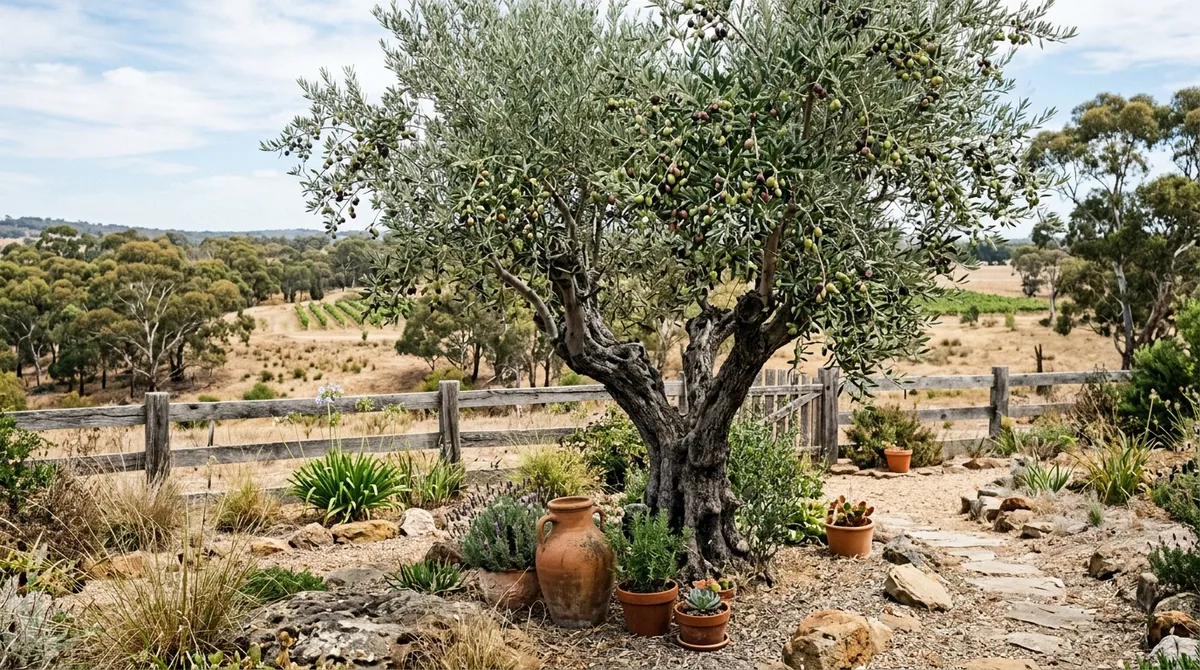
Fresh olives contain oleuropein, a very bitter compound, so they cannot be eaten until they are cured. This page gives five home curing methods with metric quantities, all taken from one tested source: University of California Agriculture and Natural Resources Publication 8267, Olives: Safe Methods for Home Pickling, revised by Sylvia Yada and Linda J. Harris of UC Davis. Food safety comes first, so the salt strengths, times and storage advice below are not to be changed, and anything that looks, feels or smells wrong goes in the bin.
Picking Olives in Australia
Olives ripen in autumn, mostly from March to May, as set out in our olive growing guide. Pick green olives for a sharper, firmer cured olive, or leave them until they turn purple black for a milder, richer one. The UC publication gives two guides: green ripe olives are full size, yellow green to straw, and release a creamy white juice when squeezed, while naturally black ripe olives are dark red to purple black and bruise easily. Choose firm, unbruised fruit, cure it within a few days of picking, and sort it by ripeness and size so each batch cures evenly.
Kalamata, Manzanilla and Frantoio are the varieties on our olive page, and Kalamata and Manzanilla are the table types. UC suits Kalamata and Mission to water curing and dry salt curing, and uses large varieties such as Sevillano for the Sicilian style. If you grow an oil variety, expect softer, more bitter table olives.
Which Method Should You Use?
| Method | Best fruit | Ready in | Keeps |
|---|---|---|---|
| Water cured, Kalamata style | Black ripe, oil rich olives | About 6 weeks: 8 to 10 days of soaking plus a month in finish brine | About 1 year in the finish brine, in a cool, dark place or the fridge |
| Water cured, cracked green | Green ripe olives, any variety | About 1 week, and best after a few more days in finish brine | Up to 1 year in the fridge, always refrigerated |
| Brine cured, Greek style | Mature, fully coloured olives | At least 2 to 3 months | At least 1 year in strong brine in a cool, dark place |
| Brine cured, Sicilian style | Green ripe olives, usually large varieties | 4 to 6 months | At least 1 year in brine in a cool, dark place |
| Dry salt cured | Small, fully ripe olives | 5 to 6 weeks | Up to 6 months in the fridge, 1 year in the freezer |
Brine cured olives ferment naturally, in the way dill pickles and sauerkraut do, and taste saltier and more complex. Water curing changes the flavour least and leaves olives slightly bitter. Dry salt curing leaves a soft, shrivelled, salty olive with some bitterness.
Salt, Vinegar and Containers
Use pure salt with no additives, sold as pickling or canning salt in Australia, because the anti-caking agents in some table salts turn the brine cloudy, and never use reduced sodium salt substitutes. Weigh the salt, because coarse and fine salt differ in density. Use glass or food grade plastic containers that close airtight, and keep the olives under the brine with a weighted plate or a sealed bag of water.
| Brine | UC quantity per gallon (3.8 litres) of cool water | Metric per litre |
|---|---|---|
| Medium brine | 8 ounces (3/4 cup) of pickling salt | About 60 g |
| Medium strong brine, for large olives | 10 ounces (1 cup) | About 75 g |
| Strong brine | 1 pound (1 1/2 cups) | About 120 g |
Water Cured Kalamata Style Olives
Use firm, fully coloured olives from an oil rich variety such as Kalamata or Mission, harvested before any frost. Large soft types such as Sevillano go too soft.
- Sort, discard bruised fruit, rinse and drain.
- Cut two lengthwise slits in each olive, about 3 mm deep.
- Cover with cool water, keep the olives submerged and close the lid loosely. After 24 hours drain and refill with fresh water, repeating daily for 8 to 10 days. Soak up to 20 days for a milder olive, tasting often, because over soaking gives soft, washed out fruit.
- Make the finish brine from 120 g of salt per litre of water, plus 250 mL of red wine vinegar per litre. This treats about 4.5 kg of olives.
- Drain the olives, cover with the finish brine, pour 6 to 9 mm of olive oil on top, close firmly and store at about 15 to 27°C for a month. Then keep them in the brine, cool and dark or in the fridge, for up to a year.
Water Cured Cracked Green Olives
- Use green ripe fruit of any variety. Sort, rinse and drain.
- Crack each olive with the flat of a mallet or a rolling pin, without breaking the stone.
- Soak in fresh cool water, changing it every 24 hours, for 6 to 7 days.
- Make the finish brine from 120 g of salt per litre of water plus about 125 mL of white wine vinegar per litre. Drain the olives and cover. Garlic, oregano and lemon slices can go in.
- Seal and refrigerate. They are ready after 4 days and keep in the fridge up to a year, and they must stay refrigerated.
Brine Cured Greek Style Black Olives
- Use mature, fully coloured, firm fruit, often Manzanillo, Mission or Kalamata. Sort by size.
- Pack into jars that close airtight, no smaller than 1 litre. Cover with medium brine (about 60 g per litre), close the lids loosely and store at about 15 to 27°C.
- After 7 days, replace with strong brine (about 120 g per litre) and close the lids firmly.
- Store for at least 2 months. Replace the strong brine monthly for 2 or 3 months for milder olives.
- If lids bulge from fermentation gas, loosen to release it, then close again, and top up any lost brine with fresh strong brine.
- Eat after 2 months if you like them bitter, or at least 3 months for milder olives. Refrigerate opened jars, and soak olives in water overnight to reduce saltiness.
Brine Cured Sicilian Style Green Olives
- Use green ripe olives, discarding any with colour, which soften. Pack into jars with seasonings such as dill pickle spices, fennel, garlic or whole chillies.
- Cover with brine plus vinegar: about 75 g of salt per litre for large olives or 120 g per litre for small olives, and about 125 mL of 5 per cent acetic acid vinegar per litre.
- Keep at about 21°C for about 2 months. In the first 4 or 5 days of vigorous fermentation, keep the jars full of brine.
- When the bubbles stop, tighten the lids and store at least another 2 to 4 months until the flavour suits you.
Dry Salt Cured Olives
- Use small, fully ripe, dark red to black olives, and discard any bruised fruit.
- Line a container with drainage, such as a slatted box or a plastic bin with holes, with cheesecloth, and set it over a tray, because the brine drains out.
- Mix the olives with salt at 500 g per kilogram of olives, then cover with a 25 mm layer of extra salt and a clean cloth. Keep at about 15 to 27°C.
- Re-mix once a week for a month, adding a thin layer of salt on top each time. Sift off the salt and dry the olives overnight at room temperature.
- Mix in 100 g of salt per kilogram of cured olives, pack airtight and use within a month, refrigerate for up to 6 months or freeze for up to a year.
Troubleshooting
| Problem | Likely cause | What to do |
|---|---|---|
| Cloudy brine at the start | Salt with anti-caking agents | Use pure pickling salt and weigh it |
| Soft olives | Over soaking, over ripe fruit or a large variety used for a small fruit method | Use firmer fruit, soak for less time and match the variety to the method |
| Still too bitter | Not enough time, or the olives were not cut | Soak or brine for longer and taste a sample |
| White film or yeast on top | Air contact | Keep containers airtight and refrigerate opened jars. Discard soft, slimy or smelly olives |
| Bulging lids | Fermentation gas | Loosen to release the gas, then close again |
Frequently Asked Questions
How long does it take to cure olives?
About 8 to 10 days of soaking plus a month in finish brine for Kalamata style, 5 to 6 weeks for dry salt curing, and at least 2 to 3 months, up to 6 months or more, for brine curing.
Can you eat olives straight off the tree?
No. Fresh olives are far too bitter because of oleuropein, so they must be cured first.
What salt should I use to cure olives?
Pure pickling or canning salt with no additives. The anti-caking agents in some table salts cloud the brine, and salt substitutes must not be used.
How do I know my cured olives are safe?
Follow the tested quantities and times, keep the olives under the brine and refrigerate where the method says so. Throw out any that are mouldy, soft or smell bad.
Source: University of California Agriculture and Natural Resources Publication 8267, Olives: Safe Methods for Home Pickling, revised by Sylvia Yada and Linda J. Harris, Department of Food Science and Technology, UC Davis, 2007. Quantities are converted to metric and rounded, with the original figures shown. Harvest months for Australia come from our olive growing guide.