
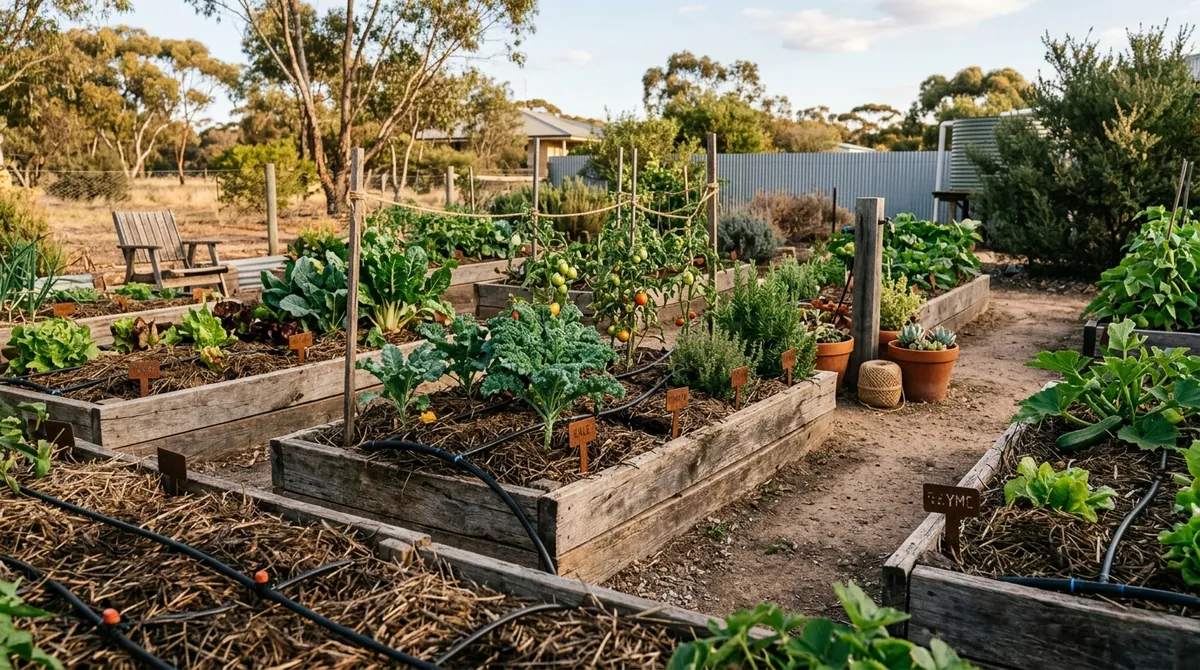
Water-Wise Gardening in Adelaide
Mulching, drip irrigation, drought-tolerant crops, greywater, and wicking beds for Adelaide's dry climate
Adelaide receives around 540mm of rainfall per year, with most falling between May and September. Summer (December to February) is hot and almost rainless, averaging less than 20mm per month. This pattern means water efficiency is a core skill for Adelaide food growers.
The good news: with the right setup, you can grow a productive vegetable garden using far less water than most people expect. Adelaide gardeners who mulch, use drip irrigation, and time their plantings around the wet season can produce food year-round with modest water use.
Mulching: The Single Most Effective Strategy
Mulching reduces evaporation from soil by up to 70%. In Adelaide's dry summers, bare soil can lose 5-10 litres of moisture per square metre per day through evaporation. A thick layer of mulch cuts this dramatically.
- Pea straw: The standard vegetable garden mulch. Breaks down over a season, feeding the soil. Apply 8-10 centimetres deep. Available at garden centres and produce stores across Adelaide.
- Lucerne hay: Higher in nitrogen than pea straw. Breaks down faster and feeds the soil more actively. Excellent around heavy-feeding crops like tomatoes and brassicas.
- Sugar cane mulch: Widely available at Bunnings. Longer-lasting than pea straw. Slightly acidic, which benefits Adelaide's sometimes-alkaline soils.
- Wood chip: Best for pathways and around fruit trees. Avoid using fresh wood chip directly on vegetable beds, as it draws nitrogen from the soil as it decomposes. Aged wood chip (6 months or older) is fine.
Apply mulch after planting and watering. Leave a gap of 3-5 centimetres around plant stems to prevent rot. Top up mulch through summer as it breaks down. A single application in October will need refreshing by January.
Drip Irrigation
Drip irrigation delivers water directly to the root zone of each plant, with almost zero waste from evaporation or runoff. It is the most water-efficient irrigation method for Adelaide vegetable gardens.
Setting Up a Basic System
- Connect a pressure reducer and filter to your garden tap.
- Run 13mm poly pipe as a main line along your garden beds.
- Branch off with 4mm drip line or individual drippers to each plant or row.
- Install an electronic timer to automate watering.
A basic system for 2-3 raised beds costs $60-$100 from Bunnings, Stratco, or an Adelaide irrigation supplier. The investment pays for itself within a season through water savings.
Watering Schedule
Summer (December to February): Water 3 mornings per week, 20-30 minutes per session. Deep, infrequent watering encourages deep root growth. Morning watering reduces evaporation.
Autumn and Spring (March to May, September to November): Water 2 mornings per week. Adjust based on rainfall.
Winter (June to August): Rainfall handles most watering needs. Supplement only during dry spells of a week or more.
Greywater
South Australia's greywater regulations allow you to use water from bathroom basins, showers, and laundry machines on your garden. This provides a significant supplementary water source, especially in summer.
- Use greywater-safe products: low-sodium, low-phosphorus soaps and detergents. Brands like Earth Choice, Ecover, and Planet Ark are suitable.
- Apply greywater through sub-surface irrigation (drip lines under mulch) rather than overhead sprinklers.
- Use on fruit trees, tomatoes, beans, and herbs grown in raised beds or pots. Avoid direct application to root vegetables (carrots, beetroot) and leafy greens (lettuce, spinach) that contact the soil.
- Rotate between greywater and mains water. Alternate weeks if possible to prevent salt build-up in soil.
- Do not store greywater for more than 24 hours, as bacteria multiply rapidly.
A diverter valve on your laundry drain is the simplest way to start using greywater. These cost $50-$100 and are straightforward to install. More elaborate systems with pumps and filtration are available for larger gardens.
Wicking Beds
Wicking beds are raised garden beds with a built-in water reservoir at the bottom. Water wicks up from the reservoir into the soil through capillary action, keeping roots consistently moist with minimal evaporation. They use 50-70% less water than conventional beds.
Build a wicking bed by lining a raised bed with pond liner, creating a reservoir of 15-20 centimetres of gravel at the bottom, adding a geotextile fabric layer, then filling with soil mix. An overflow pipe prevents waterlogging. Fill the reservoir through a vertical pipe, and plants draw water up as they need it.
Wicking beds are particularly effective for Adelaide's sandy coastal soils (Glenelg, Semaphore, Brighton), where conventional watering drains through rapidly. They also suit renters and courtyard gardeners who want a self-contained, water-efficient growing system.
Drought-Tolerant Edible Crops
These crops tolerate Adelaide's dry conditions and need less water than standard vegetables:
- Mediterranean herbs: Rosemary, thyme, oregano, sage, and lavender. Once established, they thrive on minimal water. Plant in well-drained soil in full sun.
- Sweet potato: Deep-rooted and drought-tolerant once established. Plant slips in October, harvest in April and May.
- Pumpkin and watermelon: Deep root systems access moisture that shallow-rooted crops miss. Give them space and mulch heavily.
- Tomatoes: Surprisingly drought-tolerant with deep watering every 2-3 days. Reduce watering as fruit ripens for concentrated flavour.
- Olives, figs, and pomegranate: Mature trees need minimal supplementary water. Young trees need regular watering for the first 2-3 summers.
- Native edibles: Warrigal greens, pigface, and lemon myrtle are adapted to Australian conditions. Saltbush is extremely drought-tolerant and produces nutritious leaves.
Seasonal Water Strategy
The smartest water-saving approach for Adelaide is to align your growing with the rainfall pattern.
Winter (May to August): Grow the bulk of your crops. Brassicas, broad beans, peas, garlic, leafy greens, and root vegetables all grow on rainfall alone, with occasional supplementary watering during dry spells.
Summer (December to February): Scale back to drought-tolerant crops and those already established. Tomatoes, capsicum, cucumbers, and herbs in mulched, drip-irrigated beds. Remove crops that need heavy watering. Focus production in wicking beds if water is limited.
Rainwater collection: A 2,000-litre tank connected to your shed or house roof captures enough rain from a typical Adelaide winter to supplement summer watering for a small vegetable garden. SA government rebates may apply for tank installation.
Plan Your Water-Wise Garden
Get a personalised planting calendar that matches crops to Adelaide's rainfall patterns.
Open the Planting Season AppFrequently Asked Questions
How do I reduce water use in my Adelaide vegetable garden?
Mulch beds 8-10 centimetres deep to cut evaporation by up to 70%. Install drip irrigation on a timer. Water in the early morning. Build wicking beds for sub-surface irrigation. Grow drought-tolerant crops in summer. Capture rainwater with tanks.
Can I use greywater on my Adelaide vegetable garden?
Yes. South Australia allows greywater from bathroom basins, showers, and laundry on gardens. Use greywater-safe detergents, apply through sub-surface irrigation, and avoid direct application to root vegetables and leafy greens.
What vegetables need the least water in Adelaide?
Rosemary, thyme, sage, and oregano need minimal water. Sweet potato, pumpkin, and watermelon have deep root systems that tolerate dry conditions. Broad beans and garlic grow through the wet winter and need almost no supplementary watering.
Are wicking beds good for Adelaide?
Wicking beds are excellent for Adelaide. They store water in a reservoir beneath the soil, which wicks up to plant roots through capillary action. They use 50-70% less water than standard garden beds and suit Adelaide's sandy coastal soils particularly well.
Free Monthly Planting Calendar
Get a personalised email each month with what to plant, seasonal tips, and harvest reminders for your region.
We send one email per month. Unsubscribe any time.