
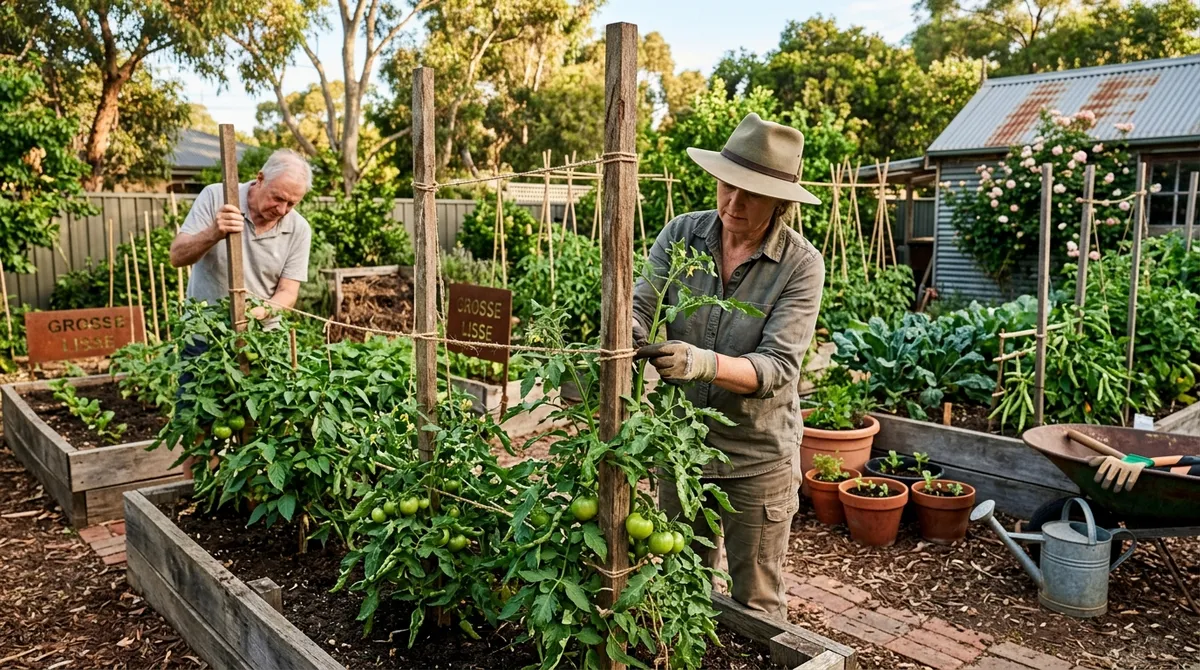
When to Plant Tomatoes in Adelaide
Timing, heat management, and varieties for Adelaide's Mediterranean climate
Adelaide's hot, dry summers and mild, wet winters create excellent conditions for tomatoes. The Mediterranean climate means low humidity and minimal fungal disease pressure, which gives Adelaide gardeners an advantage over their counterparts in Sydney and Brisbane. The challenge is managing extreme heat in January and February, when temperatures regularly exceed 40 degrees on the Plains.
The short version: sow seeds indoors from August to September, transplant from mid-October to November, and harvest from December through to April or May.
Adelaide's Tomato Timeline
Start Seeds Indoors: August to September
Tomato seeds need 20-25 degrees to germinate. Adelaide's August days average around 16 degrees, so a warm windowsill, heat mat, or greenhouse is needed for seed raising. Sow into seed trays or small pots filled with seed-raising mix. Expect germination in 7-14 days.
Start seeds in early August for the earliest possible transplant in mid-October. For a more relaxed schedule, sow in September and transplant in November. Adelaide nurseries (Bunnings, Mitre 10, and independent garden centres) stock seedlings from September onwards if you prefer to skip the seed-raising stage.
Transplant Outdoors: October to November
The main planting window opens in mid-October for the Adelaide Plains (Salisbury, Elizabeth, Parafield, Morphett Vale, Hallett Cove). Soil temperatures need to be at least 16 degrees, and overnight minimums should stay above 10 degrees consistently.
Adelaide Hills gardeners (Stirling, Crafers, Lobethal, Mount Barker, Hahndorf) should wait until late October or early November. Frost risk in the Hills extends later than on the Plains, and the cooler soil takes longer to warm.
Harden off seedlings for a week before transplanting. Place them outside in a sheltered position for a few hours each day, increasing exposure gradually. Transplant when seedlings have 4-6 true leaves. Space plants 50-60 centimetres apart in rows, with 80 centimetres between rows. Stake or cage at planting time.
Late Planting: December
A December planting can work in Adelaide, producing fruit from February to May. This late crop avoids some of the worst January heat (plants are still small) and extends harvest into the mild autumn. Choose quick-maturing varieties like Tigerella or Early Girl for late plantings.
Hills Versus Plains: Two Different Growing Conditions
Adelaide's geography creates distinct microclimates that affect tomato growing significantly.
- Adelaide Plains (Salisbury, Elizabeth, Gawler, Golden Grove, Morphett Vale): Hot summers with multiple days above 40 degrees in January and February. Frost risk ends by mid-October. Early planting from mid-October. Heat management is the main challenge. Provide afternoon shade cloth during heatwaves.
- Adelaide Hills (Stirling, Crafers, Uraidla, Lobethal, Mount Barker): 4-6 degrees cooler than the Plains. Frost risk extends until late October (sometimes early November at higher elevations). Plant 2-3 weeks later. The advantage: extreme heat is less frequent, so plants stay productive longer through summer. Harvest often extends into May.
- Northern suburbs (Gawler, Barossa fringe): Similar to the Plains but with slightly cooler winter nights. Excellent tomato country with rich alluvial soils. The Barossa Valley and surrounds have a long tradition of home-grown tomatoes.
- Coastal suburbs (Glenelg, Henley Beach, Semaphore): Sea breezes moderate extreme heat. Frost-free. Salt wind is the main concern for exposed gardens. Plant from mid-October. Coastal conditions are excellent for tomatoes.
- Southern suburbs and Fleurieu Peninsula (McLaren Vale, Willunga): Warm summers, mild winters. The wine-growing climate suits tomatoes perfectly. Rich soils and good drainage. Plant from mid-to-late October.
Best Tomato Varieties for Adelaide
Adelaide's dry heat favours varieties that handle high temperatures and low humidity. Many European heirloom varieties thrive here because the Mediterranean climate matches their origins.
- Grosse Lisse: The standard Australian slicer. Reliable heavy cropper in Adelaide. Handles heat well and produces through the entire season.
- Roma: Classic paste tomato. Produces heavy crops of meaty, low-seed fruit ideal for sauce. Determinate growth, so it crops over a concentrated period, perfect for batch preserving.
- San Marzano: The Italian paste tomato. Thrives in Adelaide's Mediterranean conditions. Longer, more slender fruit than Roma with outstanding flavour for sauce.
- Tommy Toe: Cherry tomato producing masses of sweet, small fruit. Vigorous and productive. Excellent for kids and salads.
- Sweet Bite: Reliable cherry tomato with good disease resistance. Long trusses of fruit over an extended period.
- Oxheart: Large, heart-shaped heirloom with meaty flesh and few seeds. Excellent slicing tomato. Performs well in Adelaide's dry heat because low humidity reduces disease pressure.
- Costoluto Fiorentino: Ribbed Italian heirloom with intense flavour. Adelaide's climate suits this variety better than most Australian regions. Outstanding for fresh eating and cooking.
- Black Russian: Dark-skinned heirloom with rich, complex flavour. Produces well in Adelaide's warm conditions.
For the Adelaide Hills, favour early-maturing types like Tigerella, Early Girl, or Stupice to compensate for the shorter warm season.
Managing Adelaide's Dry Heat
Adelaide's biggest tomato challenge is the intense dry heat of January and February. The city regularly experiences runs of 3-5 days above 40 degrees, and the Plains can hit 45 degrees on extreme days.
Shade Protection
Install 50% shade cloth over your tomato plants on a temporary frame. Put it up before a heatwave forecast and remove it afterwards so plants get full sun the rest of the time. Permanent shade reduces fruit quality and yield, so only use it during extreme heat events.
Watering Strategy
Deep watering every 2-3 days is more effective than light daily watering. Each plant needs 5-8 litres per watering session, applied at the base. Drip irrigation is ideal for Adelaide because it delivers water directly to roots without wetting foliage. Water in the early morning, never in the heat of the day.
Consistent watering prevents blossom end rot, which is common in Adelaide gardens during hot spells. This condition appears as a dark, sunken patch at the base of the fruit and is caused by irregular moisture affecting calcium uptake.
Mulching
Mulch 8-10 centimetres deep around tomato plants with pea straw, lucerne hay, or sugar cane mulch. Mulch is critical in Adelaide because it reduces soil temperature by up to 10 degrees, retains moisture between waterings, and suppresses weeds. Top up mulch through summer as it breaks down.
Pests and Disease in Adelaide
Adelaide's dry climate means significantly less fungal disease than in humid regions. The main concerns are:
- Fruit fly: Queensland fruit fly has established in parts of Adelaide, particularly in the eastern and northern suburbs. Use exclusion netting over plants from November. Apply protein bait sprays weekly. Check the SA government fruit fly outbreak maps for your area.
- Tomato caterpillars: Heliothis (corn earworm/tomato grub) bores into developing fruit. Check plants regularly and remove caterpillars by hand. Dipel (Bt spray) is effective.
- Spider mites: Thrive in dry, hot conditions. Look for stippled, yellowing leaves and fine webbing. Spray with a strong jet of water to dislodge them. Maintain humidity around plants with mulch and regular watering.
- Blossom end rot: Common in Adelaide. Caused by irregular watering affecting calcium uptake. Consistent, deep watering and mulching are the prevention.
Summary: Your Adelaide Tomato Calendar
August to September: Start seeds indoors on a warm windowsill or in a greenhouse.
Mid-October (Plains) to late October (Hills): Transplant hardened-off seedlings outdoors.
December to April: Harvest. Pick fruit as it colours during fruit fly season. Use shade cloth during heatwaves.
December: Optional late sowing for an autumn harvest extending into May.
Track Your Tomato Season
Get month-by-month reminders for sowing, transplanting, and harvesting in your Adelaide suburb.
Open the Planting Season AppFrequently Asked Questions
When should I plant tomatoes in Adelaide?
Sow tomato seeds indoors from August to September. Transplant seedlings outdoors from mid-October (Adelaide Plains) or late October (Adelaide Hills) once the risk of frost has passed and soil temperatures are above 16 degrees. The main planting window is October to November.
What are the best tomato varieties for Adelaide?
Grosse Lisse is the classic slicer. Roma and San Marzano are excellent for sauce. Tommy Toe and Sweet Bite are reliable cherry types. Italian heirlooms like Costoluto Fiorentino and Oxheart thrive in Adelaide's dry Mediterranean climate.
How do I protect tomatoes from Adelaide's heat?
Use 50% shade cloth over plants during heatwaves. Water deeply every 2-3 days. Mulch 8-10 centimetres deep to keep roots cool. Tomato flowers drop when temperatures exceed 38 degrees for extended periods.
Do tomatoes grow differently in the Adelaide Hills versus the Plains?
Yes. The Hills are 4-6 degrees cooler with a later frost season (frost risk until late October). Plant 2-3 weeks later than the Plains. Cooler conditions extend the harvest because extreme heat events are less severe.
Free Monthly Planting Calendar
Get a personalised email each month with what to plant, seasonal tips, and harvest reminders for your region.
We send one email per month. Unsubscribe any time.