
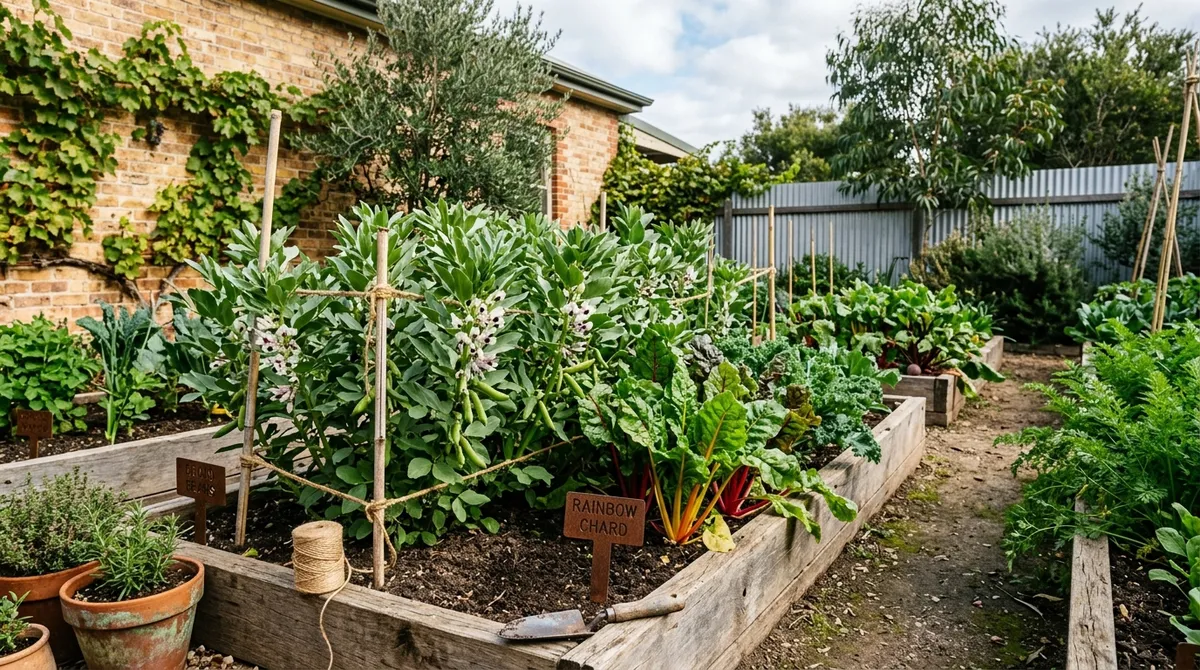
What to Plant in Winter in Adelaide
Cool-season crops for Adelaide's Mediterranean winter
Adelaide's winter is cool and wet, with reliable rainfall from May to August and daytime temperatures of 12 to 16 degrees. These conditions are ideal for a large range of cool-season vegetables. The reliable winter rain means less watering, and the cool temperatures keep pests and diseases at bay.
Adelaide's Mediterranean climate gives winter gardeners a significant advantage. The wet season does the watering. The cool days provide exactly the temperatures that brassicas, root vegetables, and leafy greens need for steady growth. The dry summers that follow are better suited to tomatoes, capsicum, and cucurbits. Working with the seasons rather than against them is the simplest way to grow food in Adelaide.
Adelaide Hills vs Coastal Plains: Two Different Climates
Adelaide's gardening climate varies dramatically depending on whether you live on the Plains or in the Hills. Understanding the difference matters for winter planting timing and variety selection.
Adelaide Plains (CBD, Western Suburbs, Northern Suburbs)
The Adelaide Plains experience a mild winter with daytime temperatures of 14 to 16 degrees and overnight lows of 5 to 8 degrees. Light frosts occur a few times per year, mainly in June and July, and rarely drop below minus 1 degree. Suburbs like Prospect, Unley, Glenelg, Modbury, and Salisbury fall into this zone. Most cool-season crops grow without frost protection. The growing season is slightly longer on the Plains because spring arrives earlier.
Adelaide Hills (Stirling, Crafers, Mount Lofty, Lobethal)
The Hills are a different proposition. Winter overnight temperatures regularly drop to minus 2 to minus 4 degrees, with occasional dips below minus 5 in the coldest spots around Lenswood, Lobethal, and the Mount Lofty summit. Hard frosts are common from May to September. Daytime temperatures sit 3 to 5 degrees cooler than the Plains. The upside is that crops requiring genuine cold perform better here. Brussels sprouts develop proper flavour after repeated frosts. Parsnips and turnips sweeten more in the prolonged cold. Garlic produces larger bulbs because the extended chill period drives proper vernalisation. The downside is that frost-sensitive crops (lettuce, coriander, young seedlings) need protection on cold nights.
Adelaide Foothills (Burnside, Glen Osmond, Belair, Blackwood)
The foothills sit between the two extremes. Frost is more frequent than on the Plains but less severe than the upper Hills. Most winter vegetables grow well with occasional frost cloth protection on the coldest nights. This zone is excellent for gardening because it gets enough cold for crops like Brussels sprouts and garlic but does not require the constant vigilance that upper Hills gardens demand.
15 Best Winter Crops for Adelaide
1. Broad Beans
The classic Adelaide winter crop. Sow direct from April to June. Aquadulce Claudia is the standard variety, bred for cold conditions. Coles Dwarf suits smaller gardens and exposed sites. Pinch out growing tips once pods form to reduce black aphid infestations. Broad beans fix nitrogen in the soil, so they improve your garden for the summer crops that follow. In the Hills, sow in April while temperatures are still mild enough for reliable germination.
2. Broccoli
Transplant seedlings in April and May. Harvest main heads from June and July, then side shoots continue for weeks. Waltham 29, Green Sprouting, and Di Cicco are reliable varieties. Adelaide's cold nights improve flavour. Space plants 40 centimetres apart and feed with blood and bone every 3 to 4 weeks. Cover with fine netting to exclude cabbage white butterfly.
3. Cauliflower
Transplant in April. Snowball, Purple Cape (produces well in cold weather), and Romanesco are all reliable in Adelaide. Needs consistent moisture and rich soil. Cauliflower is more demanding than broccoli and responds poorly to interruptions in growth. Steady watering and regular feeding produce the tightest curds.
4. Cabbage
Green, red, and savoy types all grow well. Sugarloaf is fast-maturing. Red Drumhead stores well after harvest. Transplant from April to June. Savoy types handle frost best, making them a good choice for Hills gardens. A mature cabbage head stores in the crisper for several weeks after harvest.
5. Brussels Sprouts
Adelaide's cold winters make this a reliable crop, unlike warmer regions where it struggles. Transplant seedlings in March or April. Harvest from July onwards, picking sprouts from the bottom of the stem upward as they firm. The flavour improves after frost exposure. Hills gardeners produce particularly good Brussels sprouts because of the sustained cold. This is a long-season crop (20 to 28 weeks) that rewards patience.
6. Kale
Tuscan kale (cavolo nero), curly kale, and Red Russian. Extremely cold-hardy and productive through the entire winter. Sweetens after frost. Harvest outer leaves for months of continuous production. Kale handles everything Adelaide's winter throws at it, including the heavy frosts in the Hills. Plants keep producing well into spring.
7. Peas
Sow from May to July. Snow peas (Oregon Sugar Pod) and sugar snap peas are the most productive types. Greenfeast and Massey are good shelling peas. Provide a trellis or support. Adelaide's Hills gardeners get particularly good pea crops because of the sustained cold. Peas fix nitrogen like broad beans, so they build soil fertility while producing food.
8. Garlic
Plant cloves from late April to June. Adelaide suits both softneck varieties (for plaiting and long storage) and hardneck varieties (for stronger flavour and scapes). Plant 5 centimetres deep with the pointed end up, 15 centimetres apart. The Barossa Valley and Adelaide Hills have ideal conditions for garlic. Harvest in November or December. Hardneck garlic produces scapes (curling flower stems) in spring. Cut them off and use them in cooking.
9. Onions
Sow seed in March or buy seedling bunches from nurseries in April and May. Short-day varieties (Early Texas Grano, Cream Gold) suit Adelaide's latitude. Brown Spanish is a reliable intermediate-day type. Onions need a long growing season and harvest in late spring or early summer. Red onions add colour and a milder flavour.
10. Carrots
Sow from March to July. Nantes types for general use. Baby carrots in 8 weeks, full-size in 12 to 14 weeks. Loose, well-prepared soil is essential. Adelaide's clay soils benefit from raised beds or heavy composting for straight roots. Chantenay types are shorter and handle heavier soils better than long varieties.
11. Beetroot
Sow direct from March to August. Fast and reliable. Bull's Blood produces edible leaves and roots. Detroit Dark Red is the classic round beet. Chioggia has stunning concentric red and white rings. Soak seeds for 12 to 24 hours before sowing to speed germination. Thin seedlings to 10 centimetres apart.
12. Spinach
True spinach thrives in Adelaide's cool, wet winter. Sow direct from April. Bloomsdale and Viroflay are reliable varieties. Harvest baby leaves from 4 weeks or mature leaves from 8 weeks. Spinach bolts within days in summer heat, so winter is the only practical season for it in Adelaide. Pick outer leaves to keep plants producing.
13. Lettuce
All types grow well in Adelaide winter. Cos, butterhead, oakleaf, and loose-leaf varieties. Sow every 2 to 3 weeks for continuous harvest. On the Plains, lettuce grows through winter without protection. In the Hills, protect from hard frost with cloche or fleece if temperatures drop below minus 2. Lettuce is one of the few winter crops that does not like extreme cold.
14. Leeks
Transplant seedlings in April and May. Slow-growing but trouble-free. Hill up soil around stems as they grow to blanch the lower portion and produce more usable white stem. Harvest from August onwards. Musselburgh is the standard variety. Leeks are extremely frost-hardy and actually improve in flavour through prolonged cold.
15. Coriander
Grows properly in Adelaide's cool, wet winter. Bolts to seed within days in summer, so winter is your window. Sow direct every 2 to 3 weeks from April to August for continuous leaf harvest. Slow-bolt varieties like Leisure extend the harvest. Let a few plants flower and set seed to produce your own coriander seed for cooking.
Mediterranean Climate Advantages for Winter Growing
Adelaide's Mediterranean climate means the wet season and the cool season coincide. This is a major advantage for winter gardening. From May to August, Adelaide receives 250 to 300 millimetres of rainfall, which is roughly half the annual total. This natural irrigation keeps beds moist without the need for hand-watering or irrigation systems. Compare this to Sydney, where summer thunderstorms deliver unreliable bursts, or Perth, where the rainfall pattern is similar but the soils drain much faster.
The winter rainfall also means lower water bills. A winter vegetable garden in Adelaide costs almost nothing to water from May to August. Summer gardens, by contrast, need daily watering during heatwaves and regular irrigation between rain events.
Cool temperatures slow pest lifecycles. Aphids, caterpillars, and snails are still active but far less aggressive than in summer. Fruit fly goes dormant. Fungal diseases are the main risk in wet winters. Keep good airflow between plants, avoid overhead watering late in the day, and remove any diseased leaves promptly.
Frost Management in Adelaide
Frost is a reality across Adelaide in winter. The severity depends on your location.
- Plains (light frost, occasional): Most winters bring 5 to 15 frost mornings between June and August. Temperatures rarely drop below minus 1. Most winter crops handle this without damage. Young seedlings and lettuce may need covering on the coldest nights.
- Foothills (moderate frost, regular): Frosts are more frequent (20 to 30 mornings per winter) and colder (minus 1 to minus 3). Frost cloth on a frame or hoop tunnel over beds provides reliable protection.
- Hills (hard frost, frequent): 40 or more frost mornings per winter, with temperatures dropping to minus 4 or below. Cold frames, hoop houses, or dedicated frost-protection structures are worth building if you grow lettuce, coriander, or other frost-sensitive crops.
Frost-hardy crops that handle everything Adelaide dishes out: kale, Brussels sprouts, broad beans, peas, garlic, onions, leeks, parsnips, turnips, silverbeet. These do not need protection even in the Hills.
Frost-sensitive crops that need covering below minus 2: lettuce, coriander, young seedlings of any type, Asian greens (bok choy, pak choy). Cover with frost cloth, hessian, or old bed sheets on cold nights. Remove covers each morning.
A Winter Planting Schedule for Adelaide
March to April: Sow brassica seedlings in trays. Plant garlic cloves. Sow carrots, beetroot, lettuce, spinach, and Asian greens directly. Transplant leek and onion seedlings. Start coriander and dill. Prepare beds with compost and aged manure.
May to June: Transplant brassica seedlings into beds. Sow broad beans and peas direct. Continue sowing leafy greens and root crops. Last chance for garlic planting. Reliable rain should be established by now, reducing the need for supplemental watering.
July to August: Sow lettuce, rocket, and spinach for succession. Start tomato and capsicum seeds indoors in late August if you have a warm, bright spot. Sow spring onions and radish for quick harvests. Prune deciduous fruit trees. Order seed potatoes for September planting.
Plan Your Winter Garden
Get a personalised planting calendar for your Adelaide suburb with week-by-week sowing reminders.
Open the Planting Season AppFrequently Asked Questions
What grows well in Adelaide in winter?
Adelaide winters suit brassicas (broccoli, cauliflower, cabbage, Brussels sprouts, kale), legumes (broad beans, peas), alliums (garlic, onions, leeks), root vegetables (carrots, beetroot, parsnips, turnips), and leafy greens (lettuce, spinach, silverbeet, rocket, Asian greens).
What is the difference between gardening in Adelaide Hills and Adelaide Plains in winter?
Adelaide Hills is significantly colder with regular hard frosts (minus 2 to minus 4 degrees overnight). The Plains experience occasional light frosts but are 3 to 5 degrees warmer overnight. Hills gardeners need frost protection for sensitive crops but get better results from crops that need genuine cold, like Brussels sprouts and garlic.
When should I plant garlic in Adelaide?
Plant garlic cloves from April to June. The traditional timing is around Anzac Day to the winter solstice. Adelaide suits both softneck and hardneck varieties. Harvest in November or December.
Can I grow vegetables through Adelaide winter?
Yes. Adelaide winters are mild enough for a wide range of vegetables. Frost occurs on the Plains and is more frequent in the Hills, but daytime temperatures of 12 to 16 degrees support steady growth. The reliable winter rainfall reduces watering needs significantly.
What is the best time to start winter planting in Adelaide?
Start in March and April as temperatures cool after summer. Sow brassica seeds in trays in March for transplanting in April and May. Plant garlic and broad beans from late April. Sow peas from May. Keep sowing leafy greens every 2 to 3 weeks through winter.
Free Monthly Planting Calendar
Get a personalised email each month with what to plant, seasonal tips, and harvest reminders for your region.
We send one email per month. Unsubscribe any time.