Worm Farm Setup: The Australian Beginner Guide
From empty box to working farm in an afternoon.
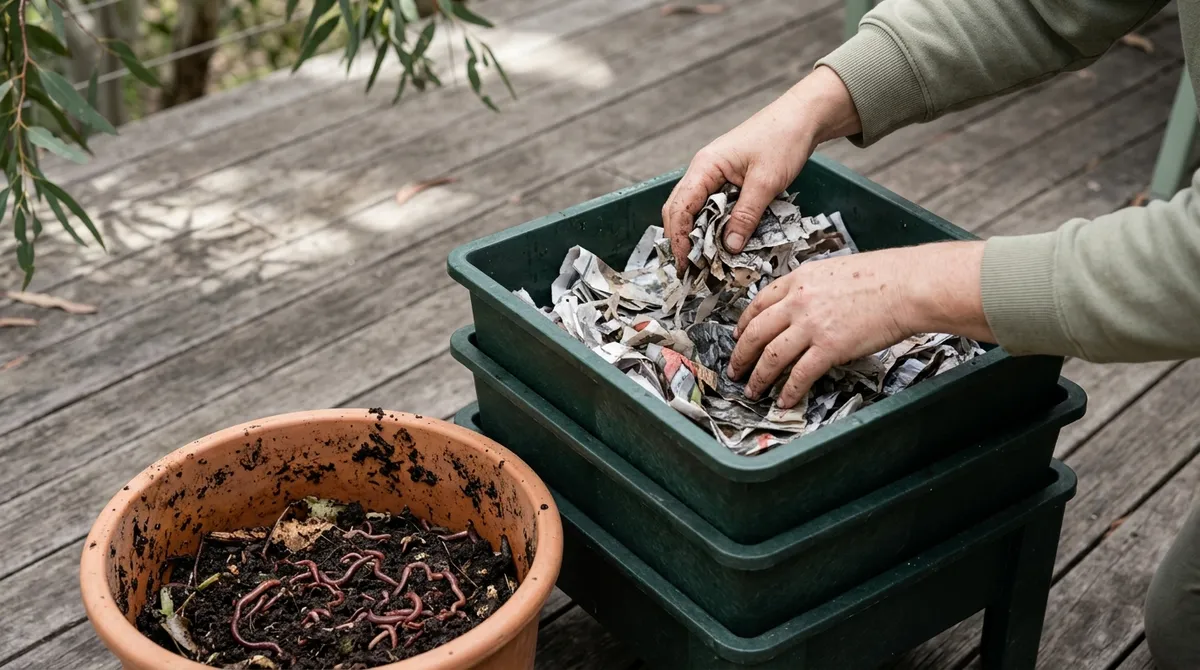
1. Choose a farm
- Tiered plastic farm (Worm Cafe, Worm Factory): the standard. Stacking trays; worms migrate up to fresh food, leaving finished castings below. $80-130, sold at Bunnings and nurseries. Best first choice.
- Hungry Bin: continuous-flow cone; castings drop out the bottom. More expensive (~$300) but the easiest to harvest and hard to overfeed.
- In-ground (worm tower / bucket sunk in a bed): cheapest, feeds the soil directly, near-invisible. Great in mild climates; worms can roam into the bed.
- DIY foam box or bathtub: two stacked polystyrene broccoli boxes with drainage holes works for $0. Less tidy, totally functional.
2. Where to put it
Shade is everything in Australia. Compost worms die above about 30C, so a worm farm must sit in full shade: under a deck, on the cool side of the house, in the laundry, or in a shady corner. Morning sun at most. In hot regions a damp hessian blanket and a frozen water bottle on extreme days keep it alive; in cold regions a sunny-ish wall and a doubled blanket get it through winter (worms slow but survive).
3. Get the right worms
Garden earthworms will NOT work; you need composting worms: tigers, reds and blues (Eisenia and relatives), sold as a 500g-1000g starter box for $40-70. One box seeds a standard farm; they breed to match the food supply. Buy from a worm supplier, produce store or online.
4. Set up the bedding
- Line the working tray with damp newspaper or coir (coconut fibre).
- Add the worms with their packing material; leave the lid off for an hour so they burrow down away from the light.
- Add a small amount of food to one corner. Do NOT bury them in scraps day one; let them settle for a week.
- Cover with a worm blanket (hessian, damp newspaper, or a proper mat). Worms eat in the dark, near the surface.
5. The rhythm
Feed small amounts as the last lot disappears (see the feeding guide). Drain the "worm tea" from the tap weekly and dilute it 1:10 with water for the garden. Harvest castings from the bottom tray every few months. That is the whole job: ten minutes a week.
What to plant, flock and hive jobs for the month, in one short email. No spam.
Unsubscribe any time.