Fermenting the Harvest: Sauerkraut and What Else Is Safe
Sauerkraut is the tested place to start. The rules are the right salt, everything under the brine, and a room that is not too hot.
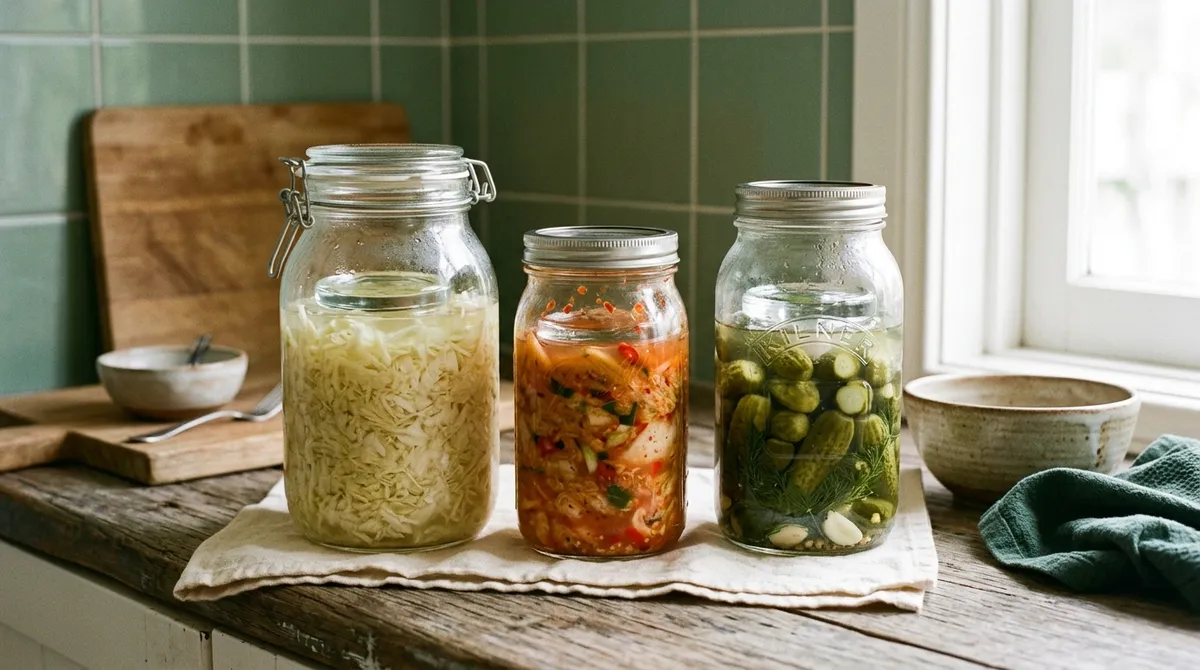
Lacto-fermenting uses the bacteria already on vegetables, plus salt, to sour them. The tested method is USDA's sauerkraut: 45 ml of pickling salt per 2.25 kg of shredded cabbage, packed under its own brine and fermented at 21 to 24°C for 3 to 4 weeks. Australia's Food Safety Information Council adds the rest: follow a trusted recipe's salt, temperature and time, measure carefully, use clean glass or food-grade plastic, and never ferment meat at home.
Temperature in an Australian house
| Room | Sauerkraut |
|---|---|
| 21 to 24°C | Ready in about 3 to 4 weeks |
| 16 to 18°C | 5 to 6 weeks |
| Below about 15°C | May not ferment |
| Above 24°C | Tends to go soft |
A Brisbane or Darwin summer is too warm for good kraut, so ferment in the cooler months or the coolest room. In a Hobart or Canberra winter, find a warmer cupboard.
Keep it under the brine
Hold the cabbage 2.5 to 5 cm under the liquid with a plate and a jar of water, or a sealed food-grade bag of brine. Skim any surface scum as often as it appears. Throw the batch out if it turns soft, slimy or smells rotten rather than sour, or if mould spreads across it.
Kimchi and brined vegetables
Only sauerkraut and fermented dill cucumbers have USDA-tested methods. We have not found a tested Tier 1 method for kimchi or brined carrots, beans and chillies, so we do not publish recipes for them. The full method is in our sauerkraut guide.
Sources we checked (October 2026): Food Safety Information Council, Fermenting food and drink at home; USDA Complete Guide to Home Canning (2015) through the National Center for Home Food Preservation: Sauerkraut, General Information on Fermenting, Suitable Containers, Covers and Weights.
Common questions
45 ml of pickling salt per 2.25 kg of cabbage (3 US tablespoons; an Australian tablespoon is 20 ml). By weight that is roughly 2.25 to 2.5%. Do not cut it.
Sauerkraut made to the tested method is. Measure the salt, keep the cabbage under the brine, ferment between 16 and 24°C and discard anything soft, slimy or foul-smelling.
No. The Food Safety Information Council says fermented meats should never be made at home.
What to plant, flock and hive jobs for the month, in one short email. No spam.
Unsubscribe any time.