Dehydrating the Harvest: Tomatoes, Fruit, Herbs and Chilli
Dry fruit and vegetables at 60°C, herbs much cooler, then condition before you store them.
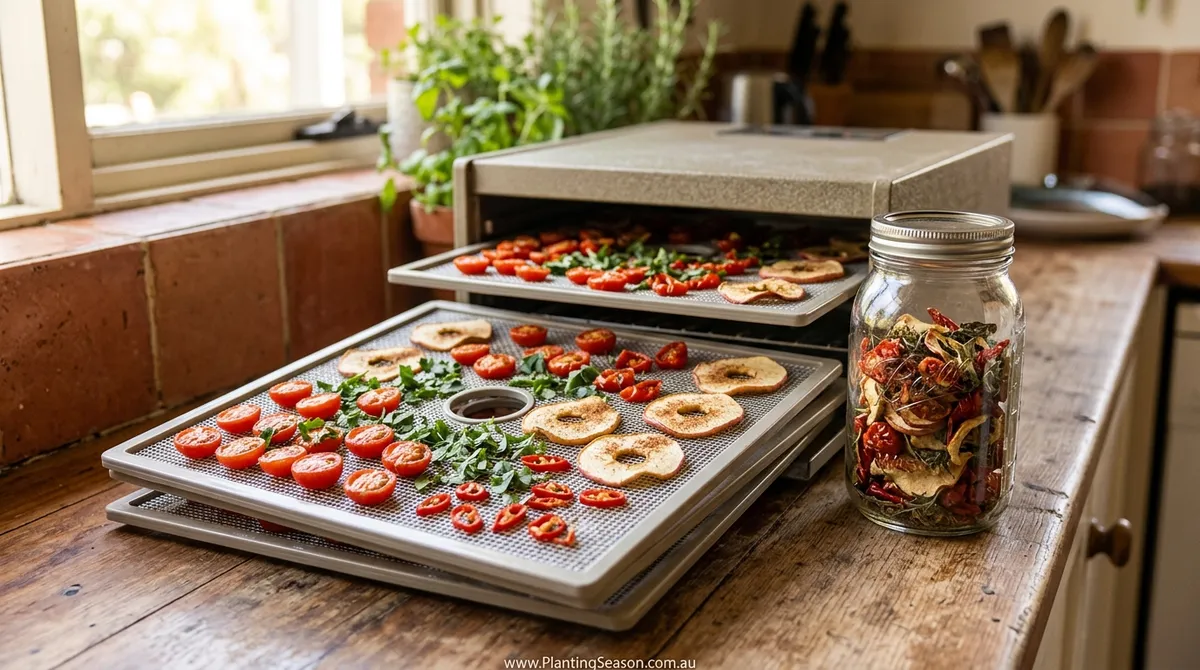
Fruit and vegetables dry well at 60°C in a dehydrator, or in an oven that can hold 60°C with the door propped open 5 to 15 cm. Dip cut fruit for 10 minutes in an ascorbic acid, citric acid or lemon juice solution first; Colorado State University's research shows it reduces bacteria as well as browning. Herbs need gentle heat: 35 to 46°C, or up to about 52°C in humid weather.
Temperatures and doneness
| Food | Temperature | Dry when |
|---|---|---|
| Herbs | 35 to 46°C (to 52°C if humid) | Leaves crumble, stems snap |
| Fruit | 60°C | Leathery and pliable, no moisture when squeezed |
| Fruit leather | 60°C | No dent when you touch the centre |
| Vegetables | 60°C | Brittle or crisp |
Sun drying in Australia
Outdoor drying needs about 30°C or more and humidity below 60%, which an inland summer in Mildura, Alice Springs or the Riverina can supply and a humid Brisbane or Darwin summer cannot. Use stainless steel or food-safe plastic screens, never galvanised mesh. Freeze sun-dried food for 48 hours afterwards to kill any insect eggs.
Condition, then store
Put cooled dried fruit loosely into jars two-thirds full for 4 to 10 days and shake daily. Moisture beading on the glass means it needs more drying. Store in airtight jars somewhere cool and dark: dried fruit keeps 6 to 12 months, dried vegetables about a year at 16°C but only 6 months at 27°C, so a cool cupboard matters in a Queensland summer.
Dried tomatoes in oil
CSIRO notes that fully dried tomatoes are acidic enough to pack in oil. Semi-dried tomatoes are not fully dried, so treat them like other vegetables in oil: keep them in the fridge and use them within 10 days (Food Safety Information Council), or freeze them. Never add raw garlic or fresh herbs to the oil unless they are acidified first.
Sources we checked (October 2026): CSIRO, Preservation of vegetables and herbs in oil; Food Safety Information Council, Home bottling and canning; Colorado State University Extension, Drying Fruits; Montana State University Extension, Drying Vegetables; National Center for Home Food Preservation: Food Dehydrators, Herbs, Fruit Leathers, Sun Drying.
Common questions
60°C in a dehydrator or oven, after a 10 minute dip in ascorbic acid, citric acid or lemon juice solution.
Only in the fridge, used within 10 days, or frozen. Fully dried tomatoes are acidic enough for oil; semi-dried ones are not fully dry.
Dried fruit 6 to 12 months in airtight jars somewhere cool and dark. Dried vegetables keep about a year at 16°C and about 6 months at 27°C.
What to plant, flock and hive jobs for the month, in one short email. No spam.
Unsubscribe any time.