Snails: identify, prevent, control
Updated June 2026
Worst in cool, wet weather from autumn to spring, March to September.
Snails are shelled molluscs that feed at night on seedlings, leafy greens and ripening strawberries. Like slugs they multiply in damp weather and can clear a row of young plants in a night, so we hit them while populations are low.
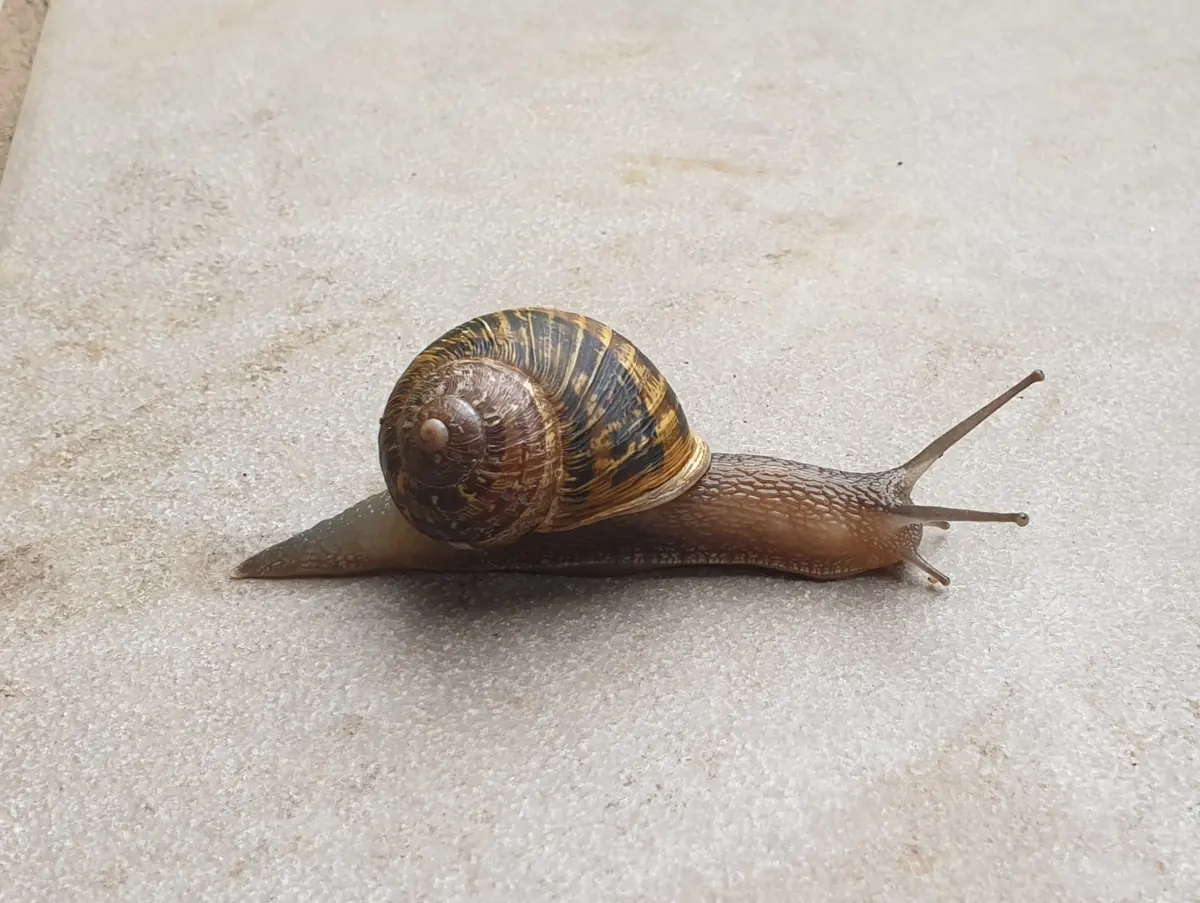
How to identify it
- Irregular holes in leaves with smooth edges
- Silvery slime trails across soil, leaves and paths
- Seedlings grazed to the stem overnight
- Snails clustered under pots, ledges and dense foliage by day
How to prevent it
- Water in the morning so surfaces dry out before nightfall
- Remove daytime shelters like garden litter, weeds and stacked pots
- Encircle seedlings with crushed eggshell, grit or a copper band
- Keep beds and surrounds tidy to reduce hiding and breeding spots
Organic control, step by step
- Hand-pick after dark or after rain with a torch and dispose of them
- Lay timber or damp newspaper as traps, then collect the snails sheltering underneath each morning
- Set beer traps sunk to soil level near vulnerable seedlings
- Scatter iron-based pellets (such as Multiguard), which are pet and wildlife safe
- Encourage natural predators like blue-tongue lizards and birds
Plants it attacks
WatercressEndiveBeans (bush)Sweet PeaDahliaSnow PeasBrazilian SpinachGlobe ArtichokeRhubarbNative Violet
Track it in the app. The free Planting Season planner lists the pests and diseases to watch for on every plant in your garden, tuned to your region.