Slugs: identify, prevent, control
Updated June 2026
Worst in wet, mild conditions through autumn, winter and early spring, March to September.
Slugs are soft-bodied molluscs that feed at night and shelter in damp, dark spots by day. They shred seedlings and leafy greens fast, so a single wet week can wipe out a tray of young plants.
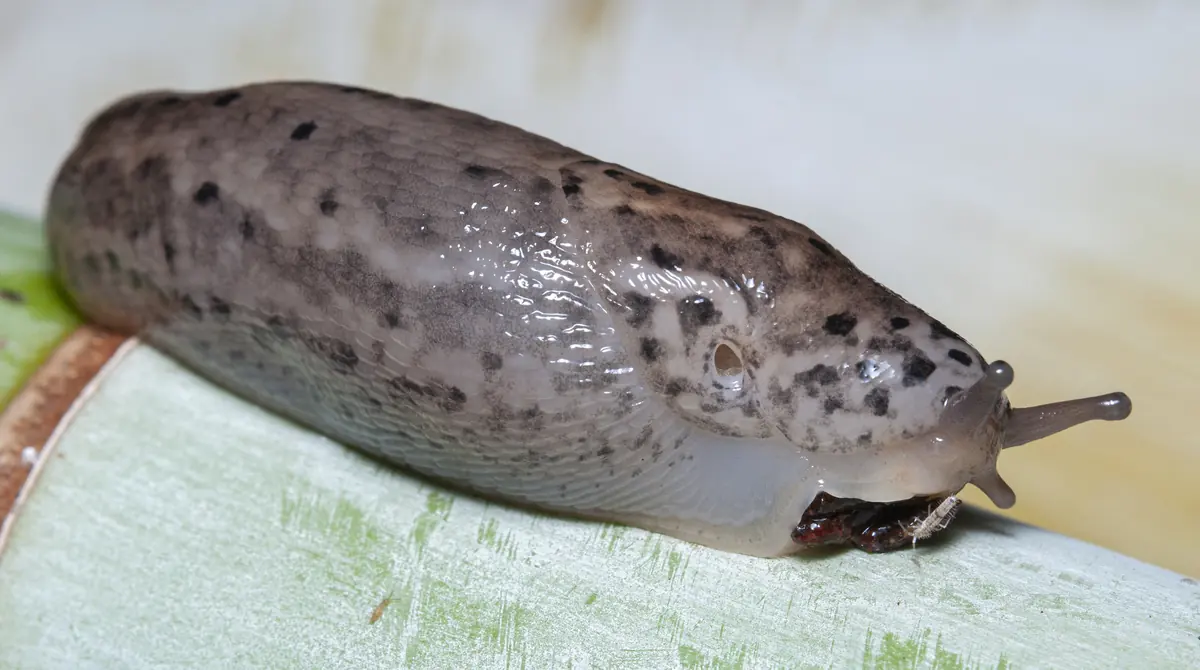
How to identify it
- Irregular holes chewed in leaves, often with smooth edges
- Silvery slime trails over soil, leaves and pots in the morning
- Seedlings eaten off at the base overnight
- Slugs hiding under mulch, pots and boards during the day
How to prevent it
- Water in the morning so the soil surface dries by nightfall
- Clear hiding spots like loose boards, dense weeds and excess mulch near seedlings
- Ring vulnerable seedlings with crushed eggshell, sawdust or a copper band
- Encourage frogs, lizards and blue-tongues by leaving rough corners of the garden undisturbed
Organic control, step by step
- Hand-pick after dark with a torch, which is the single most effective method
- Set beer traps, sinking a container so the rim sits at soil level and refilling every few days
- Lay boards or upturned grapefruit halves as overnight shelters, then collect and dispose of slugs each morning
- Scatter iron-based pellets (such as Multiguard), which are safe around pets and wildlife, unlike older metaldehyde baits
- Apply nematode treatments in damp soil for an ongoing biological knockdown
Plants it attacks
LettuceWatercressEndiveParsleyThai BasilStrawberrySweet PeaDahliaWombokSorrelSageAsparagusJerusalem ArtichokeRadicchioChicoryCeleriacFlorence FennelViola
Track it in the app. The free Planting Season planner lists the pests and diseases to watch for on every plant in your garden, tuned to your region.