Pumpkin beetle: identify, prevent, control
Updated June 2026
Worst on young cucurbits in warm weather, peaking spring to summer, September to February.
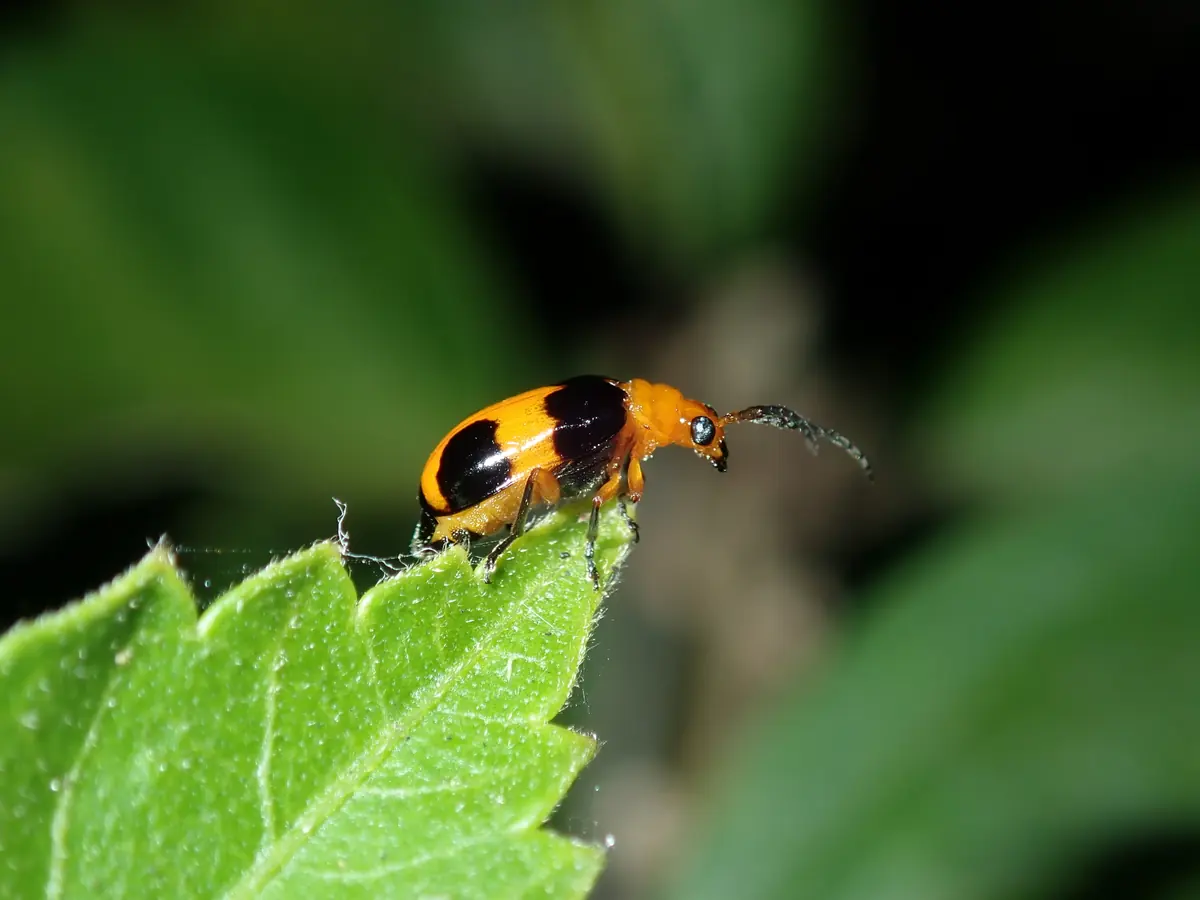
Pumpkin beetles are yellow-orange beetles that attack pumpkins, zucchini, cucumbers and melons. Adults chew flowers and leaves while the larvae feed on roots, and they hit young seedlings hardest, often stalling them before they get going.
How to identify it
- Yellow to orange oval beetles, sometimes with dark markings, on cucurbit leaves and flowers
- Round holes and chewed patches in leaves and petals
- Damaged flowers that fail to set fruit
- Seedlings stunted by adults above ground and larvae feeding on roots
Orange beetles with black markings are not always pests. Compare the helpful ladybirds in our Good Bugs vs Bad Bugs photo guide.
How to prevent it
- Cover seedlings with fine netting until they are large enough to cope, removing it at flowering for pollination
- Sow into warm soil so plants grow away fast through the vulnerable stage
- Clear old cucurbit plants and weeds where beetles shelter and breed
- Keep seedlings vigorous with good water and compost
Organic control, step by step
- Hand-pick beetles in the cool of the morning when they are slow
- Spray eco-neem to deter feeding on seedlings, repeating weekly
- Use pyrethrum at dusk for a knockdown when numbers are high, sparing daytime pollinators
- Protect flowers by avoiding sprays during the day when bees are working
- Remove the worst-affected seedlings and replace them rather than nursing them along
Plants it attacks
Track it in the app. The free Planting Season planner lists the pests and diseases to watch for on every plant in your garden, tuned to your region.