Grasshoppers: identify, prevent, control
Updated June 2026
Worst in late spring and summer, especially after wet winters, October to March.
Grasshoppers and locusts chew through leaves, stems and fruit and can arrive in destructive swarms after wet springs in inland and rural areas. They are hard to control once numbers are high, so exclusion is the most reliable defence.
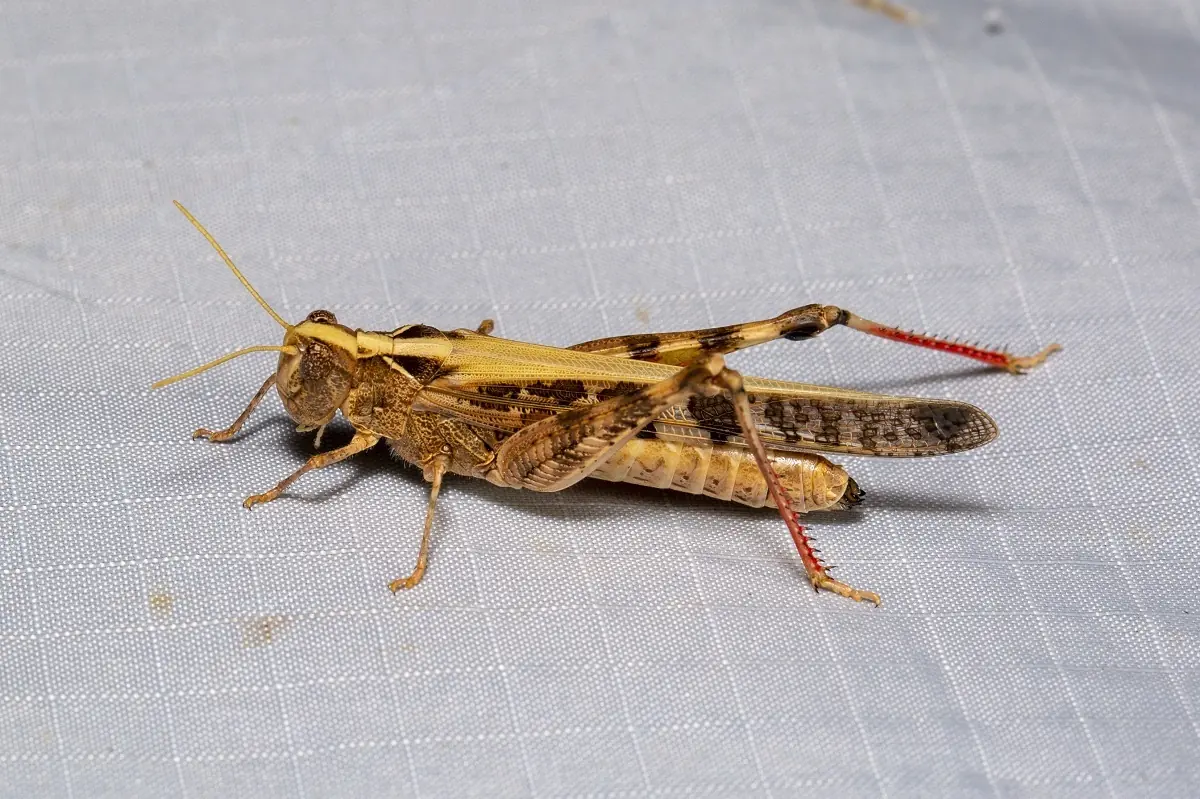
How to identify it
- Large irregular pieces chewed out of leaves and soft stems
- Plants stripped quickly when numbers are high
- Adults and nymphs jumping or flying up as you walk through the patch
- Damage spreading inward from garden edges near long grass
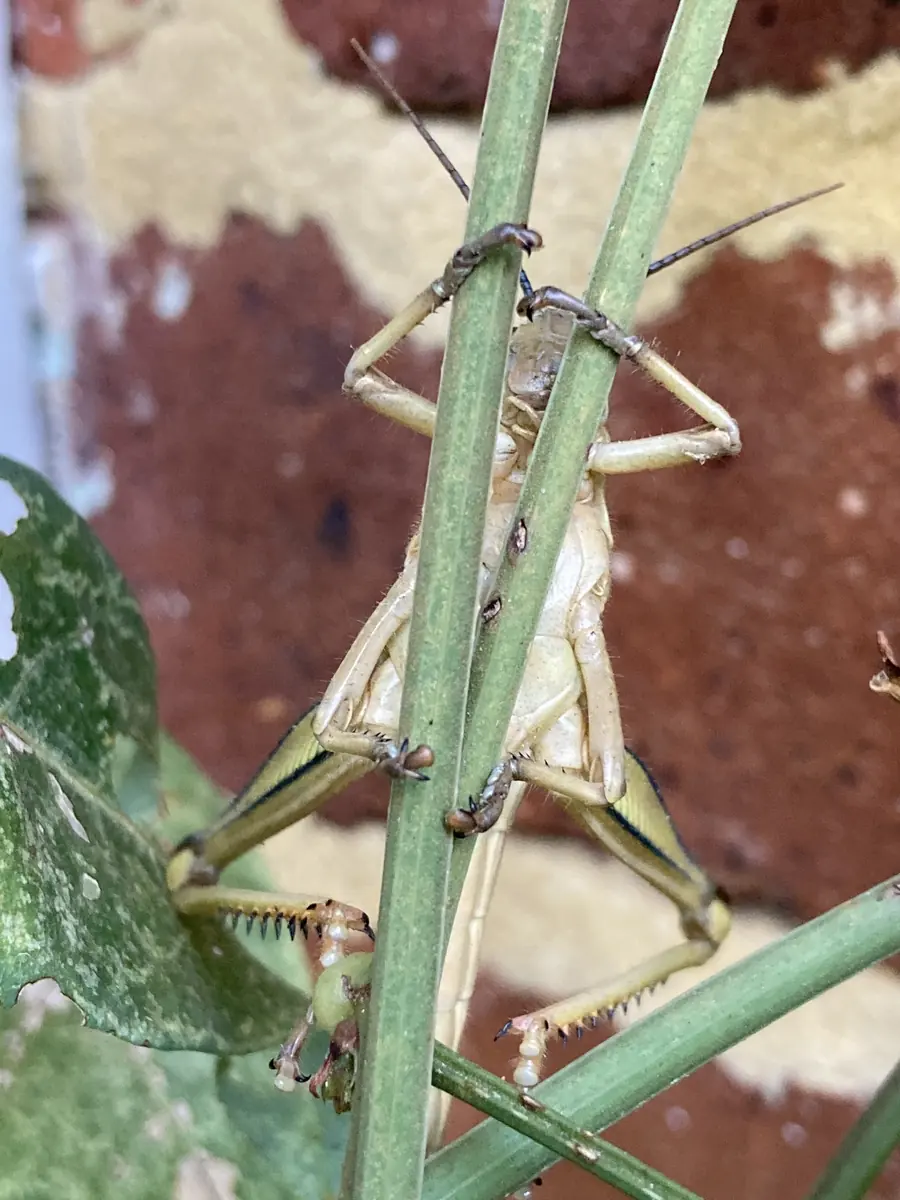
How to prevent it
- Cover valued crops with fine insect netting in outbreak years
- Keep surrounding grass and weeds short to reduce egg-laying and shelter
- Cultivate bare soil in autumn to expose and disturb egg pods
- Encourage birds and lizards, which are major natural predators
Organic control, step by step
- Hand-pick or sweep with a net in the cool of early morning when they are sluggish
- Spray eco-neem to deter feeding on prized plants, repeating after rain
- Use pyrethrum at dusk for a knockdown during heavy invasions
- Net crops as the surest protection, since sprays only dent large mobile populations
- Run poultry over cleared beds to clean up nymphs and eggs
Track it in the app. The free Planting Season planner lists the pests and diseases to watch for on every plant in your garden, tuned to your region.