Black rot: identify, prevent, control
Updated June 2026
Worst in warm, wet, humid weather, December to April, in subtropical and tropical regions.
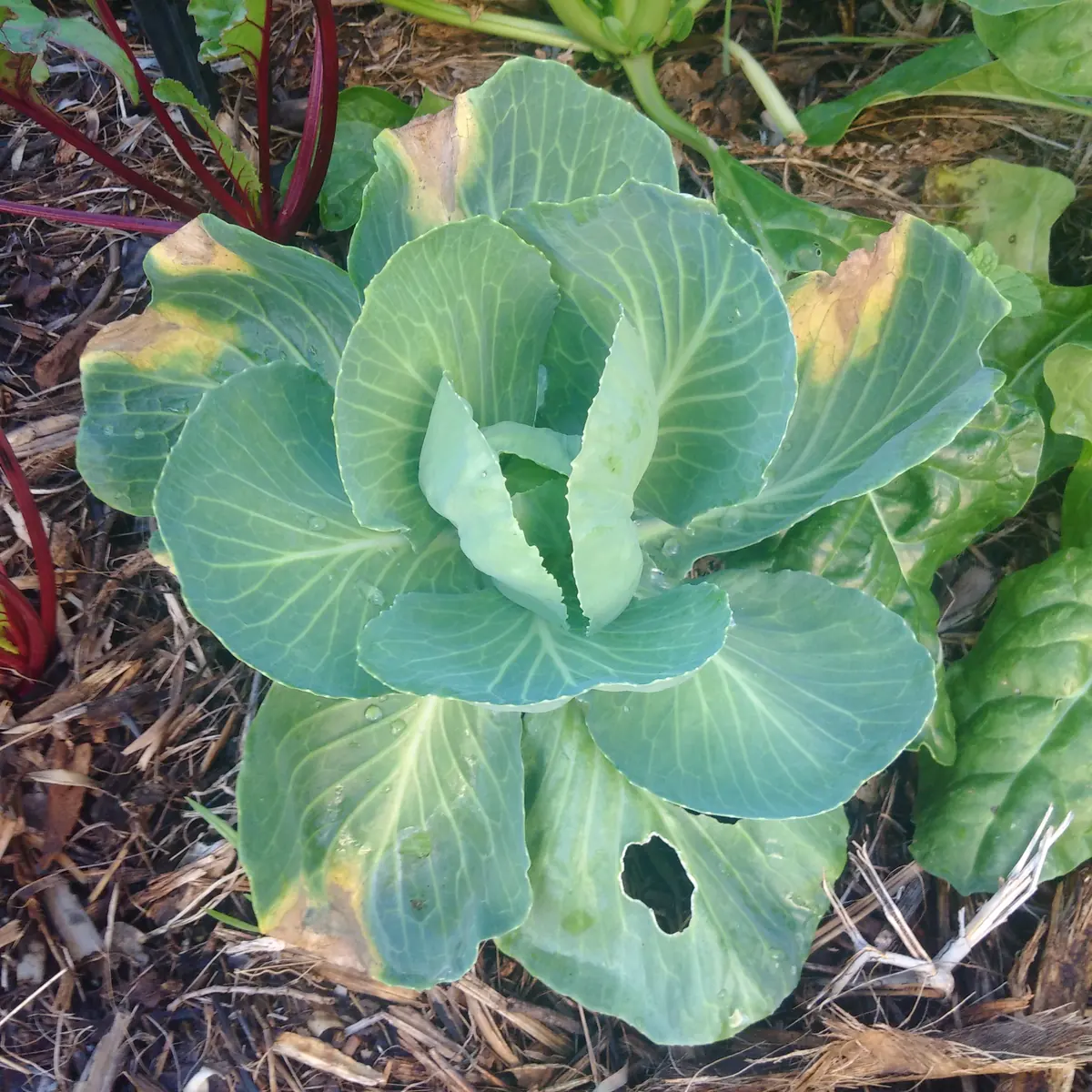
Black rot is a bacterial disease of brassicas that turns leaf edges yellow and blackens the veins. It spreads in warm wet weather through splashing water and infected seed, and a serious case can rot whole plants from the leaf margins inward.
How to identify it
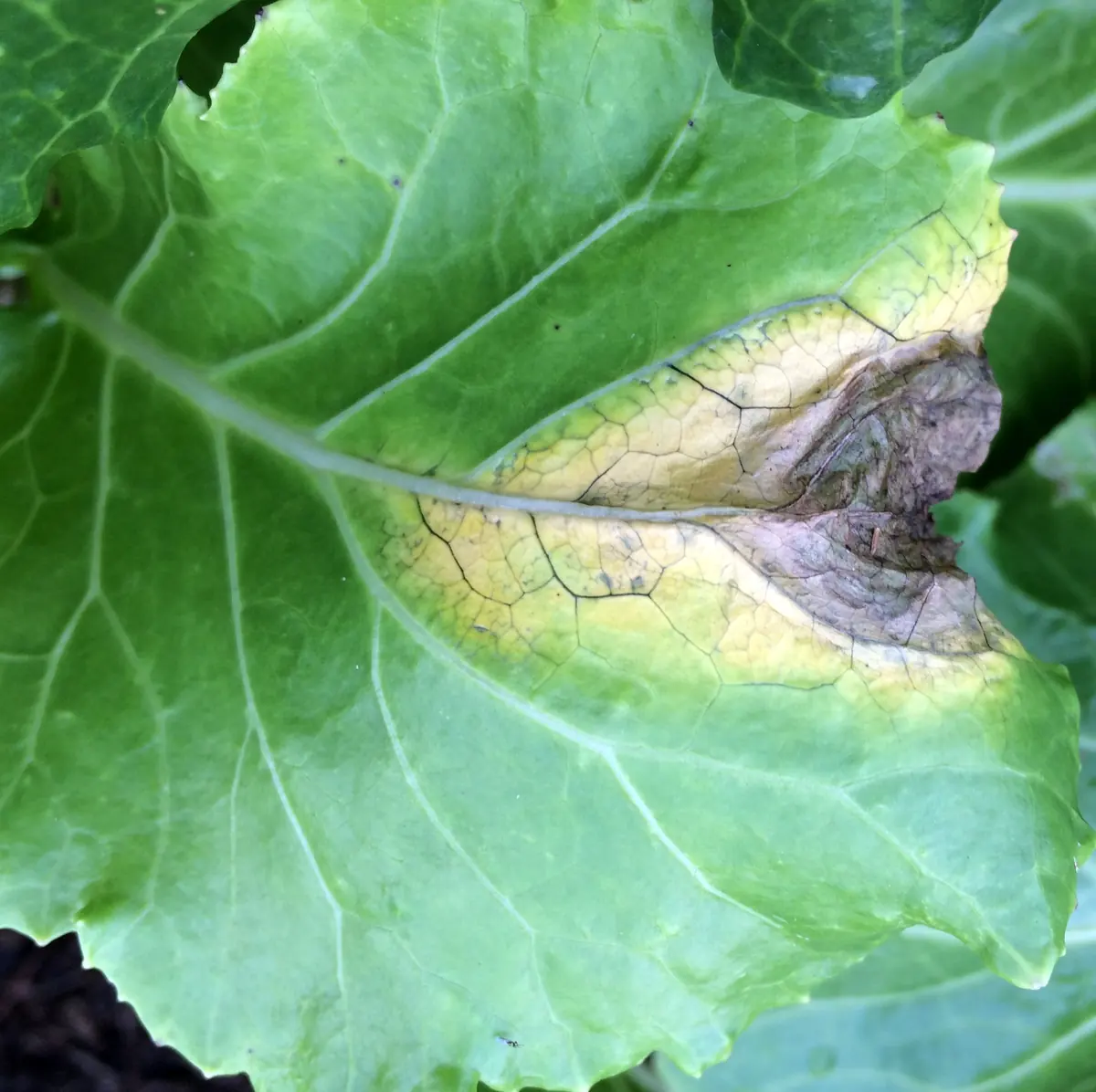
- Yellow V-shaped patches spreading inward from the leaf edges
- Blackened veins running through the affected tissue
- A foul smell as the rot advances and turns soft
- Stunted plants with leaves dropping under heavy infection
How to prevent it
- Use clean, certified seed, since the disease is often seed-borne
- Rotate brassicas and avoid replanting them into infected ground
- Water at the base and avoid wetting the foliage
- Space plants well and keep beds weed-free for airflow
Organic control, step by step
- Remove and bin affected plants promptly, never composting them
- Avoid working among wet brassicas, which spreads the bacteria
- Spray a copper-based product as a protectant in wet weather, following label rates
- Clean tools and boots to avoid carrying the bacteria to clean beds
- Rest the bed from brassicas for a couple of seasons
- Clear all crop debris at the end of the season
Plants it attacks
Track it in the app. The free Planting Season planner lists the pests and diseases to watch for on every plant in your garden, tuned to your region.